

How to Choose the Right Balsamic Vinegar: Giusti's Lineup Explained
/Parmigiano Reggiano, Prosciutto di Parma, and Balsamic Vinegar of Modena. What do these beloved Italian foods have in common? They all come from Emilia-Romagna, Italy's 'Food Valley' and the heart of Italian cuisine.
Of the three, traditional balsamic may be the least understood outside of Italy.
Modena, the city at the center of it all, is where authentic balsamic vinegar is produced. The oldest producer of Balsamic Vinegar of Modena is Giuseppe Giusti, founded in 1605 and led today by the 17th generation of the family. The company makes everything from everyday salad dressings to rare, long-aged bottlings that chefs and collectors treasure. Some of their most precious vinegars are meant to be sipped like a fine wine!
When I spent a few days in Bologna (the lively capital of Emilia-Romagna and a city famed for its own gastronomic treasures like tortellini, mortadella, lasagna, and ragù alla Bolognese), one afternoon I took the train to nearby Modena and stopped into the Giusti shop in the city’s beautiful Piazza Grande, the central square. I’ve been buying their vinegars for years, so it was a treat to taste a few of them so close to the source (my last-minute attempt to tour the estate didn’t happen since it was fully booked).
The visit to Giusti’s shop in Modena, however, gave me a perfect introduction to their historical collection (explained below). But it was a seminar and tasting hosted by Giusti in New York City last month that took me even deeper into their many high-quality vinegars.
Here's what makes Giusti's balsamic production special, and how to choose the right one for your kitchen. Plus, a fun cocktail twist for you to try at home.
1. From Vineyard to Barrel: How Giusti Vinegars Begin
Crafting great Balsamic Vinegar of Modena calls for the expertise, experience, and intuition of a master producer. Three key factors are the choice of grapes, the barrels, and time.
For Giusti, it begins with locally grown grapes (typically Lambrusco and Trebbiano) that are softly pressed to extract the grape juice (known as raw must). The must is slowly cooked to produce a sweet, dark brown, dense liquid, which is then aged over time in a series of barrels made from five woods: mulberry, cherry, chestnut, juniper, and oak. The quality and age of these casks, along with patience, allow natural processes to unfold, which give fragrant aromas and a beautifully rounded taste to the vinegar.
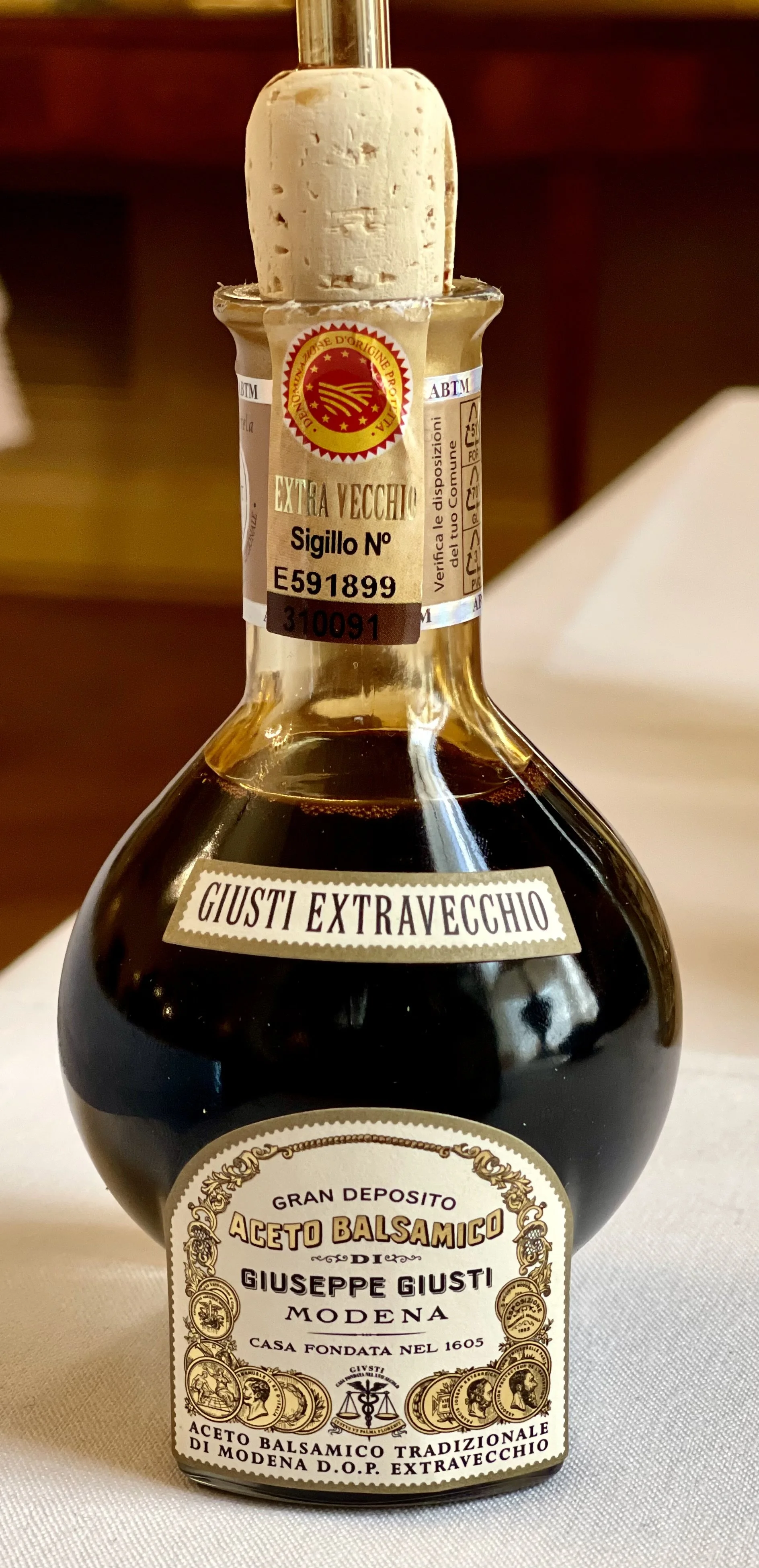
“Black Gold” in a bottle!
Here’s a quick breakdown of the key types and aging requirements for Balsamic Vinegar of Modena.
Affinato (Traditional Balsamic) – aged a minimum of 12 years
Extravecchio (Traditional Balsamic) – aged a minimum of 25 years
PDO (Traditional) Balsamic Vinegar of Modena – premium, artisan product; aged 12–25 years; made solely from grape must
PGI (Protected Geographical Indication) Balsamic Vinegar of Modena – younger (minimum 60 days); a versatile, more affordable blend of grape must and wine vinegar.
2. The Iconic Historical Collection
Giusti’s range of vinegars covers many culinary needs, and their medal system (on the label at the top) makes it easy to choose the right vinegar, with complexity of flavor and viscosity increasing as the medal level rises.
1 Silver Medal – the most basic, light, and acidic; great for salad dressings, marinades, and cooking.
2 Gold Medals – richer and more flavorful, with slightly more viscosity.
3 Gold Medals – the most versatile and a favorite among tasters; perfect for drizzling on vegetables, meats, and cheeses.
4 Gold Medals – even more concentrated and syrupy, ideal for finishing dishes.
5 Gold Medals – aged a minimum of 20 years; deeply rich, viscous, and complex, meant to be savored like a fine wine.
White Condiment - Available in flavors like sour raspberry and sweet-and-sour ginger; ideal on fish and seafood dishes, fruit, vegetables, salads, and fried food.
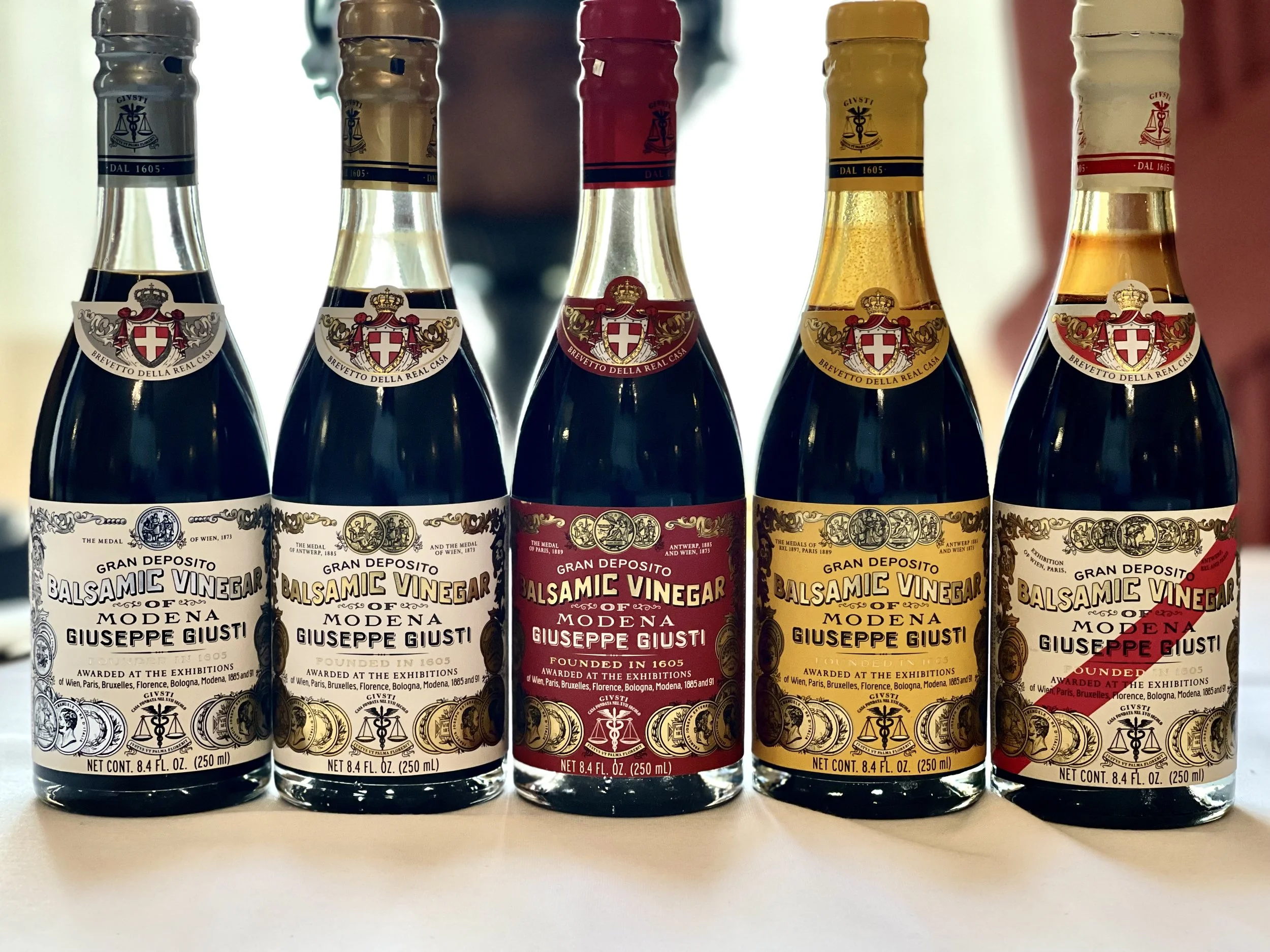
1 to 5-medal Balsamic vinegars
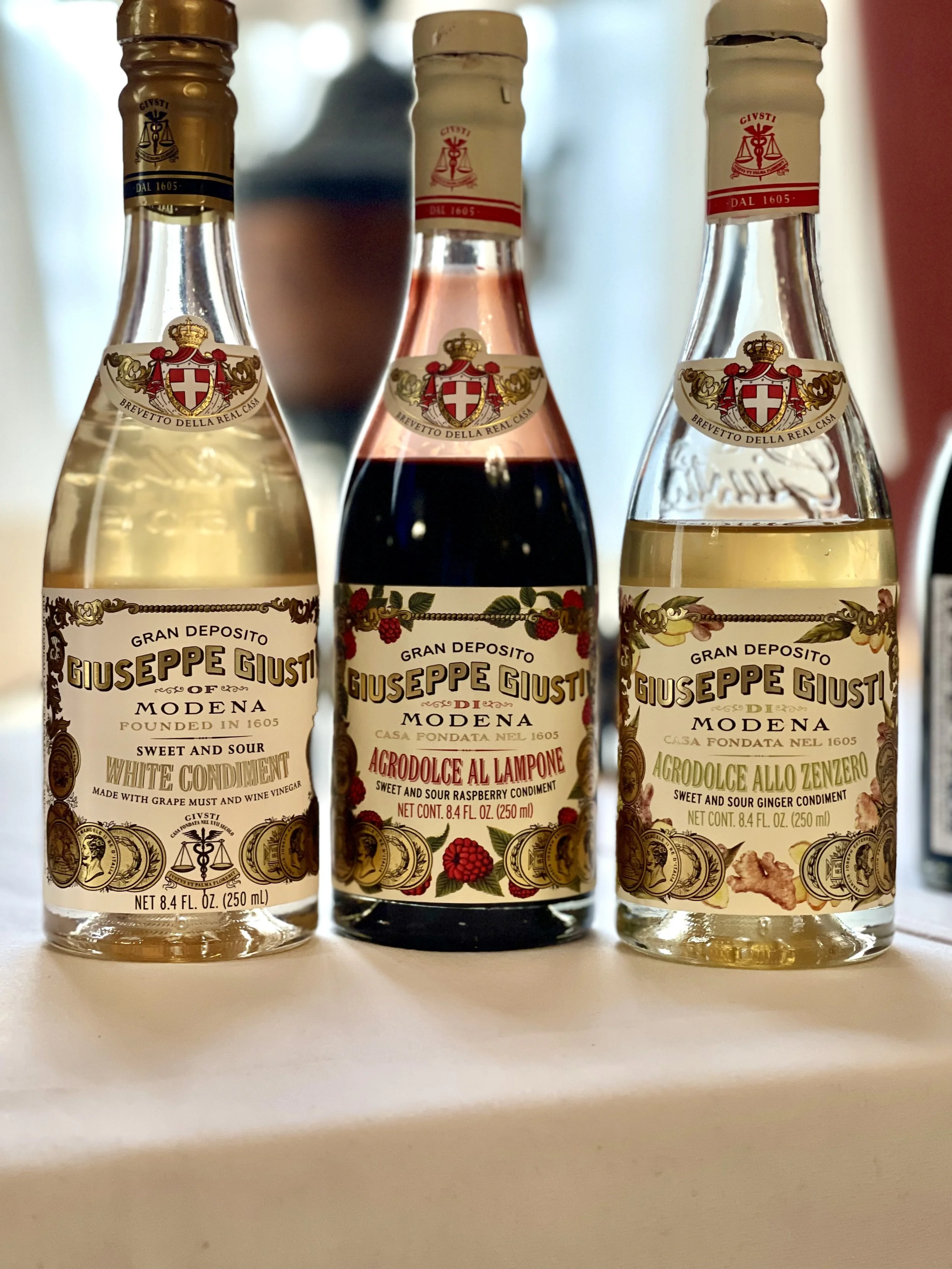
These white vinegars are aged but not cooked. Natural flavors are added to the white vinegar to make raspberry and ginger. These make a perfect addition to cocktails.
3. The Fruttati Line
Giusti also produces a line of fruttati condiments—small 3.4-ounce bottles of balsamic vinegar infused with raspberry, fig, or truffle. When the truffle version was poured at the NYC seminar, the room's reaction was immediate—audible gasps and murmurs of appreciation. It would be ideal for finishing dishes. The raspberry vinegar was also amazing: bright and fruity with a strong, fresh raspberry flavor.
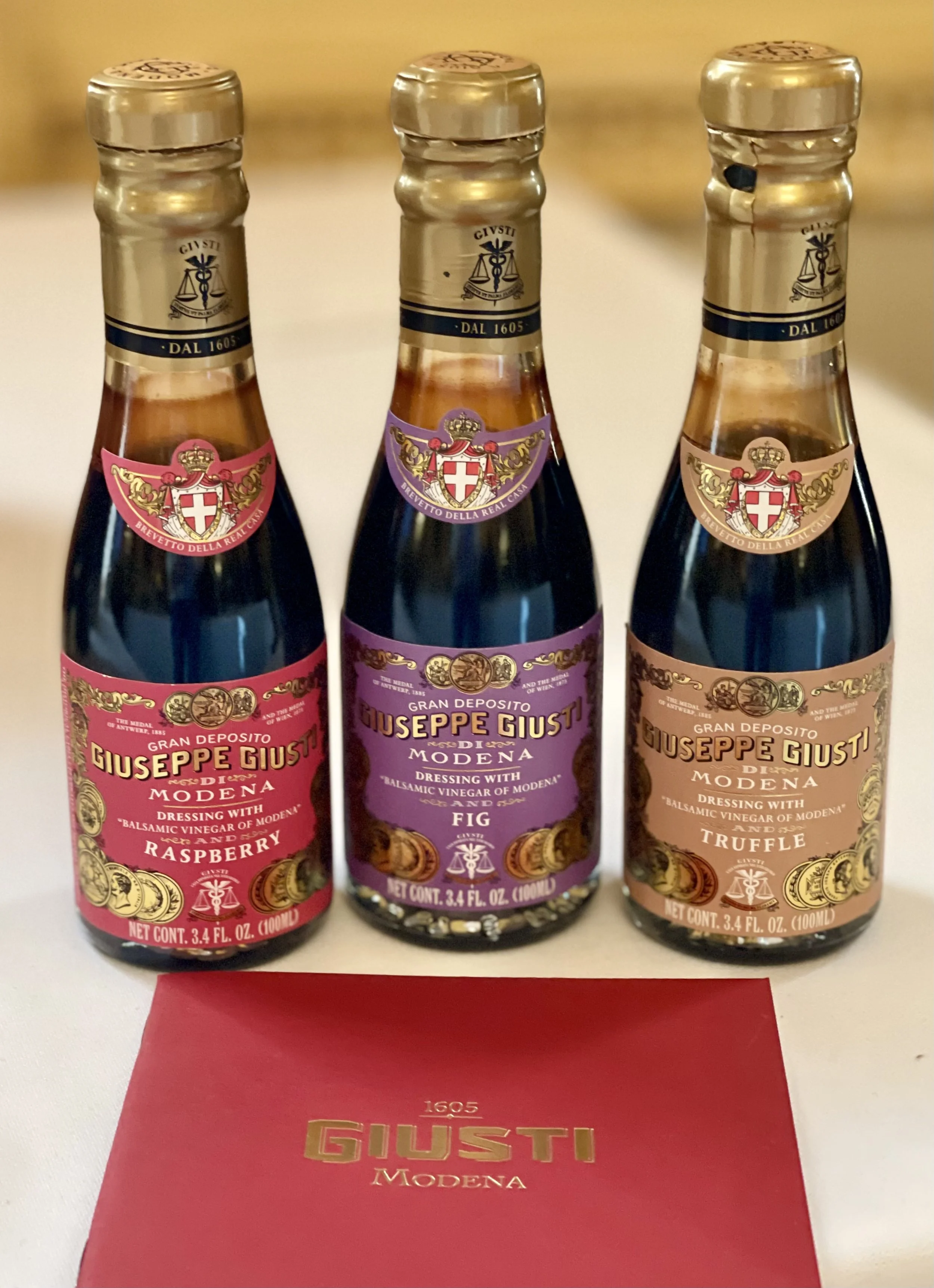
4. Beyond the Drizzle: A Celebrity Cocktail Twist
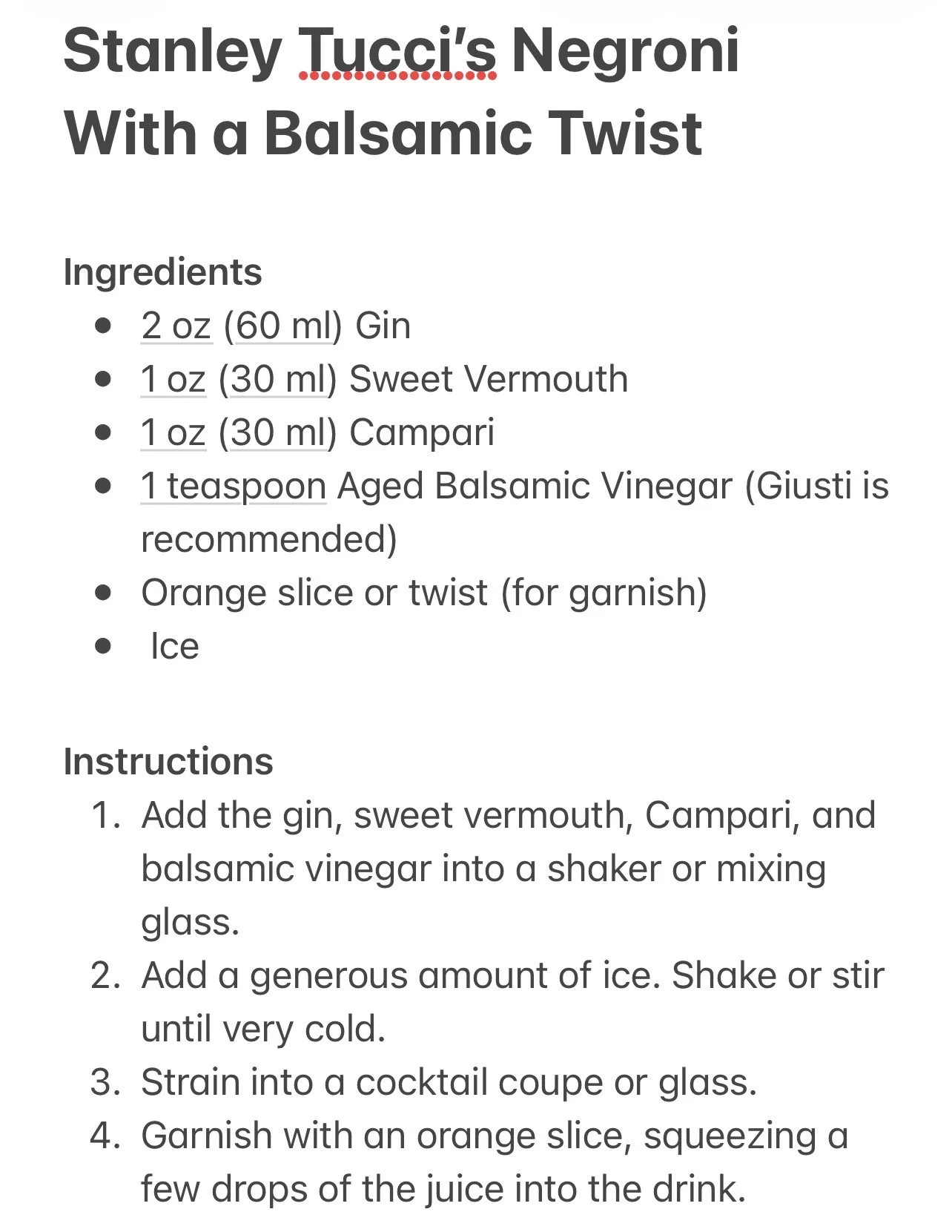
Balsamic can do so much more than dress a salad. Stanley Tucci visited the Giusti estate while filming Searching for Italy and created a Balsamic Negroni using one of their aged vinegars. Its sweet, tangy richness adds surprising depth to cocktails, desserts (I love it drizzled on ice cream), and plenty more.
In closing, I leave you with this historical tidbit: Back in the day in Modena, families would start a new batteria (a series of barrels) to celebrate a baby girl’s birth, tending it for years as part of her dowry. Balsamic vinegar of Modena was cherished not just as food, but as a family tradition passed from one generation to the next.
Many thanks to I Love Italian Food, an international network that promotes Italy’s authentic food and wine culture, for organizing Giusti’s New York seminar and tasting.