
Loire Valley Wines With Cheese: A Tasting at Murray’s
/If I were stranded on a desert island and the only wine was from the Loire Valley, I could be okay with that, especially if it came with plenty of cheese and a cool cave to keep it in.
I’ve been drinking Loire wines for years, and I’ve loved cheese my whole life, so a tasting of the two together at Murray’s Cheese in New York City was an easy yes. Lee Musho, one of the shop’s sommeliers and educators, led us through three flights of wine, each paired with two cheeses and condiments.
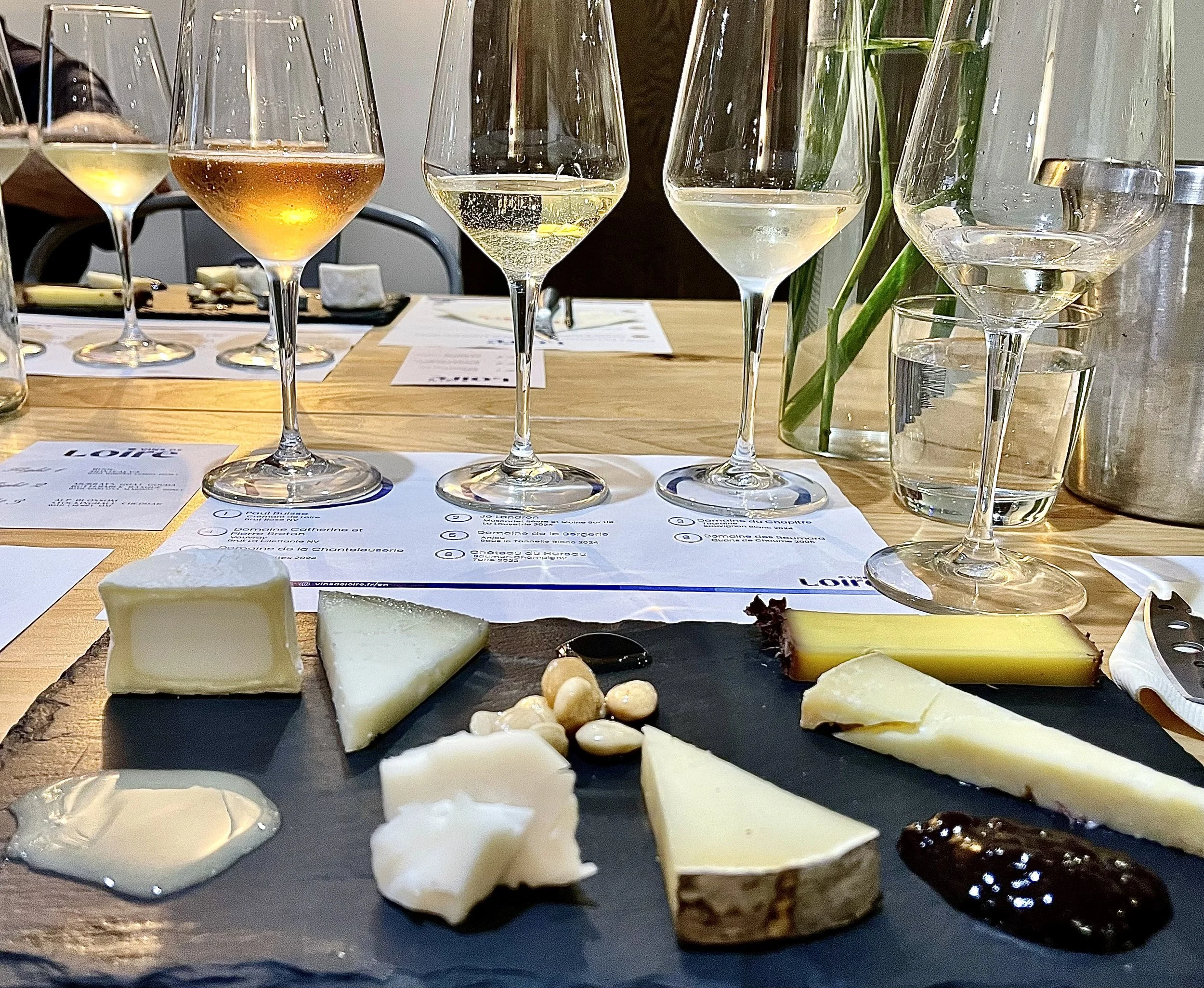
Quick note before we get into the nitty gritty of the tasting: The Loire Valley stretches across the northwest part of central France (see red area on map below). It follows the Loire River as it flows west to the Atlantic Ocean. The region’s cool climate produces fresh, lively wines in a range of styles, from crisp whites, rosés, and light reds to sparkling and sweet wines. With 42,000 hectares of vineyards (about 10,400 acres) and a variety of landscapes and soils, the region offers plenty of diversity in the glass.
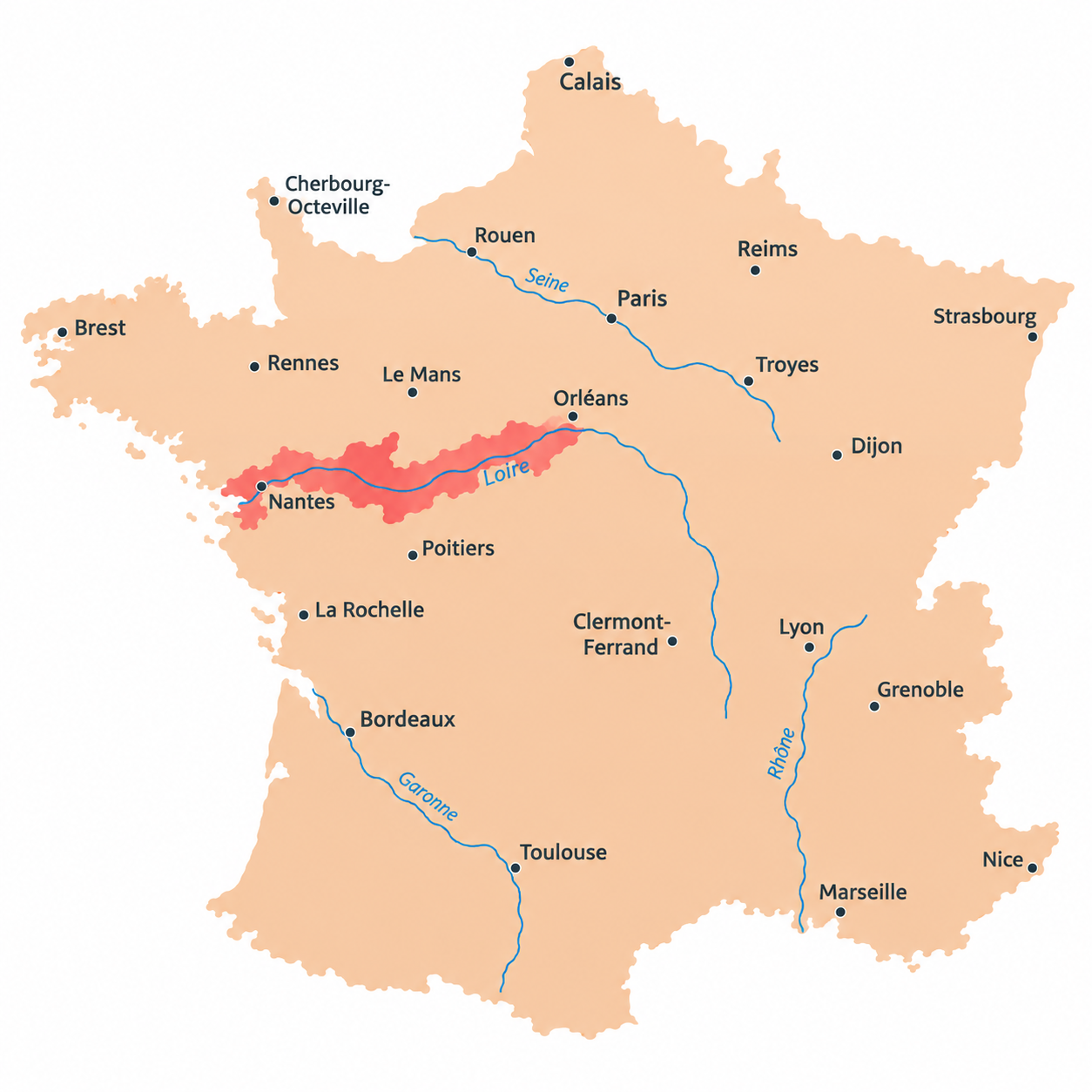
Flight 1: Goat Cheese and High-Acid Wines
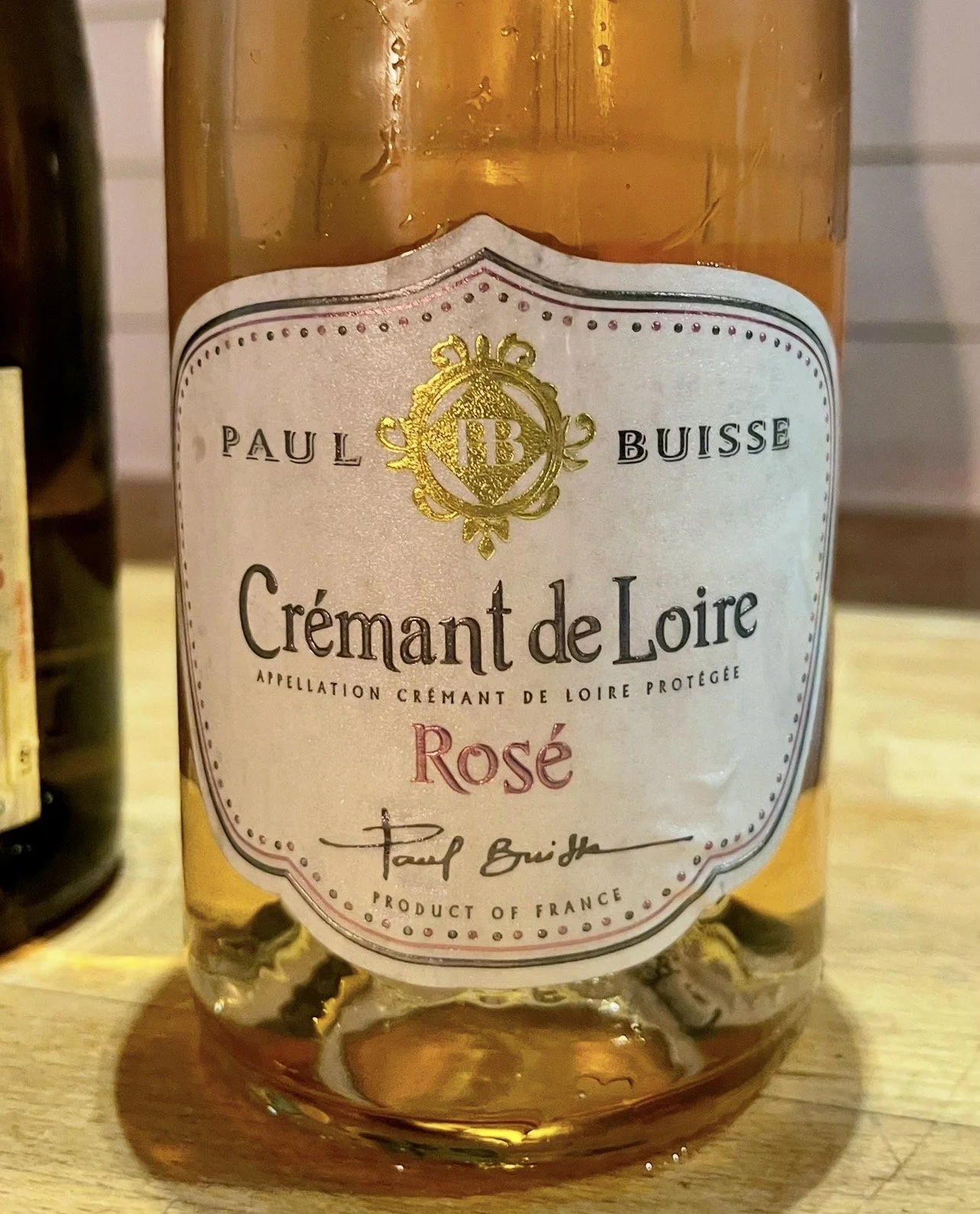
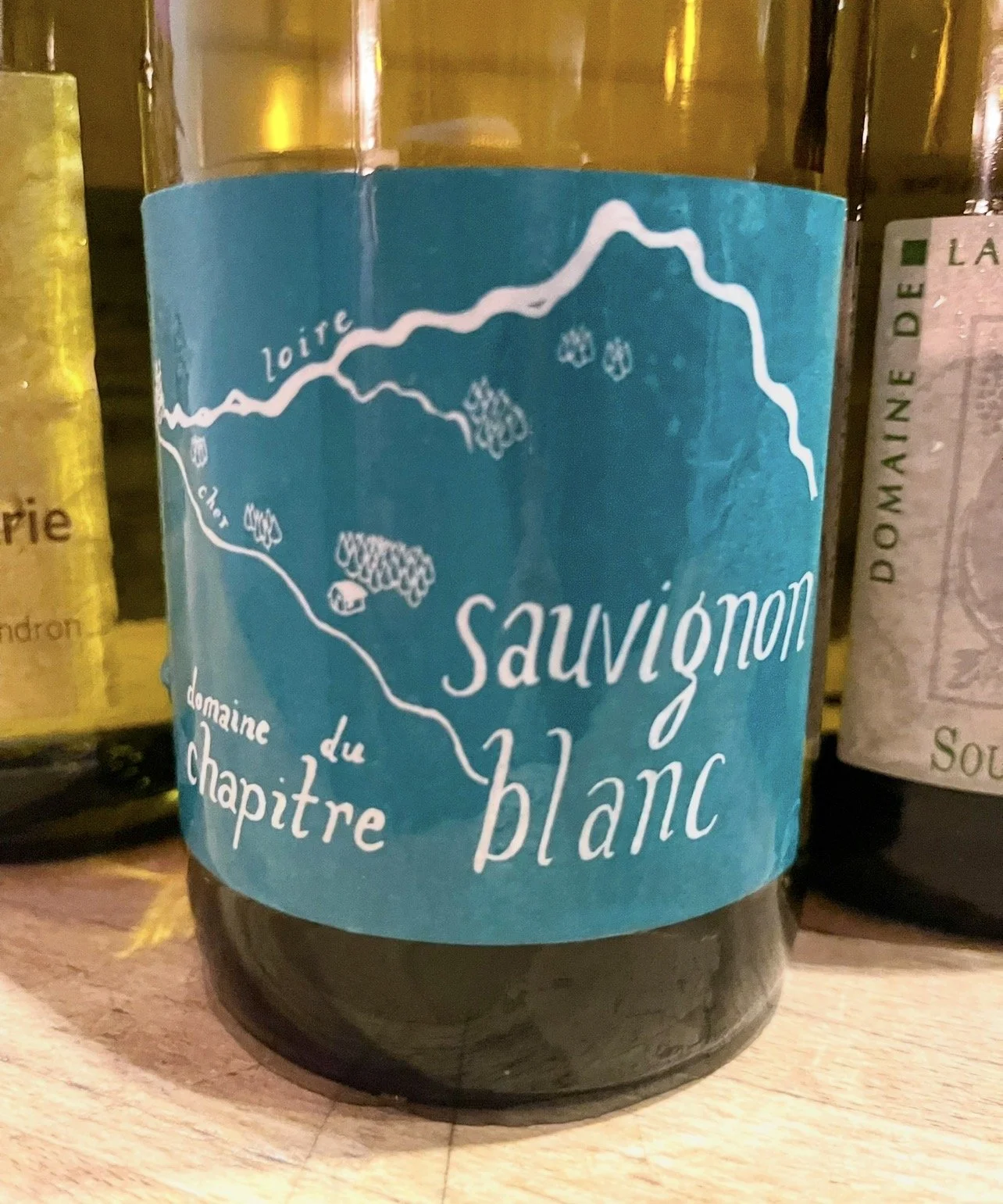
We started with a Crémant de Loire and two whites. Paul Buisse Brut Rosé NV (about $25) is a light salmon color with strawberry and raspberry aromas, and it was the perfect palate wake-up call. Jo Landron La Louvetrie 2024 Muscadet ($22) is a crisp wine from the river’s Atlantic end, and Domaine du Chapitre Sauvignon Blanc 2024 from Touraine ($21) is a rounder, more textured take on Sauvignon Blanc.
The two cheeses came with whipped lemon honey: Vermont Creamery Bijou, a soft-ripened, tangy, artisan goat's milk cheese, and Montealva, a dense Spanish goat's milk cheese with citrus and mushroom flavors.
The Paul Buisse rosé's bubbles cut through the cheese's creaminess like a knife, while the cheese brought out the wine’s berry fruit flavors. Jo Landron’s Muscadet was a happy surprise for me, smelling and tasting like oysters; its textural complexity from 6 months on fine lees worked beautifully with the cheese. The Chapitre Sauvignon Blanc offered passionfruit, grass, and grapefruit notes, with the lemon honey bringing the grapefruit into sharper focus. The wines’ lively acidity kept the sips and tastes going.
Flight 2: Chenin Blanc Three Ways
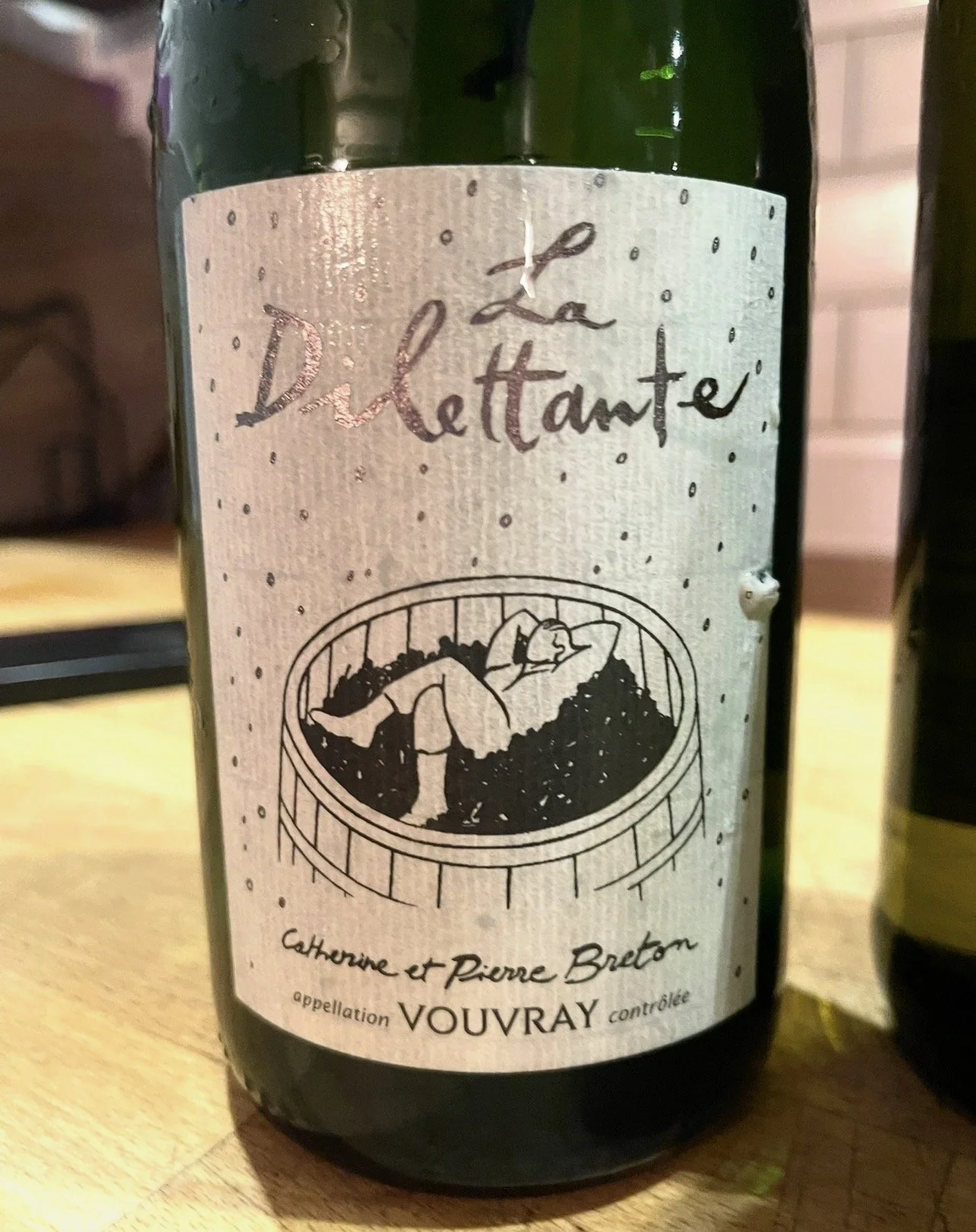
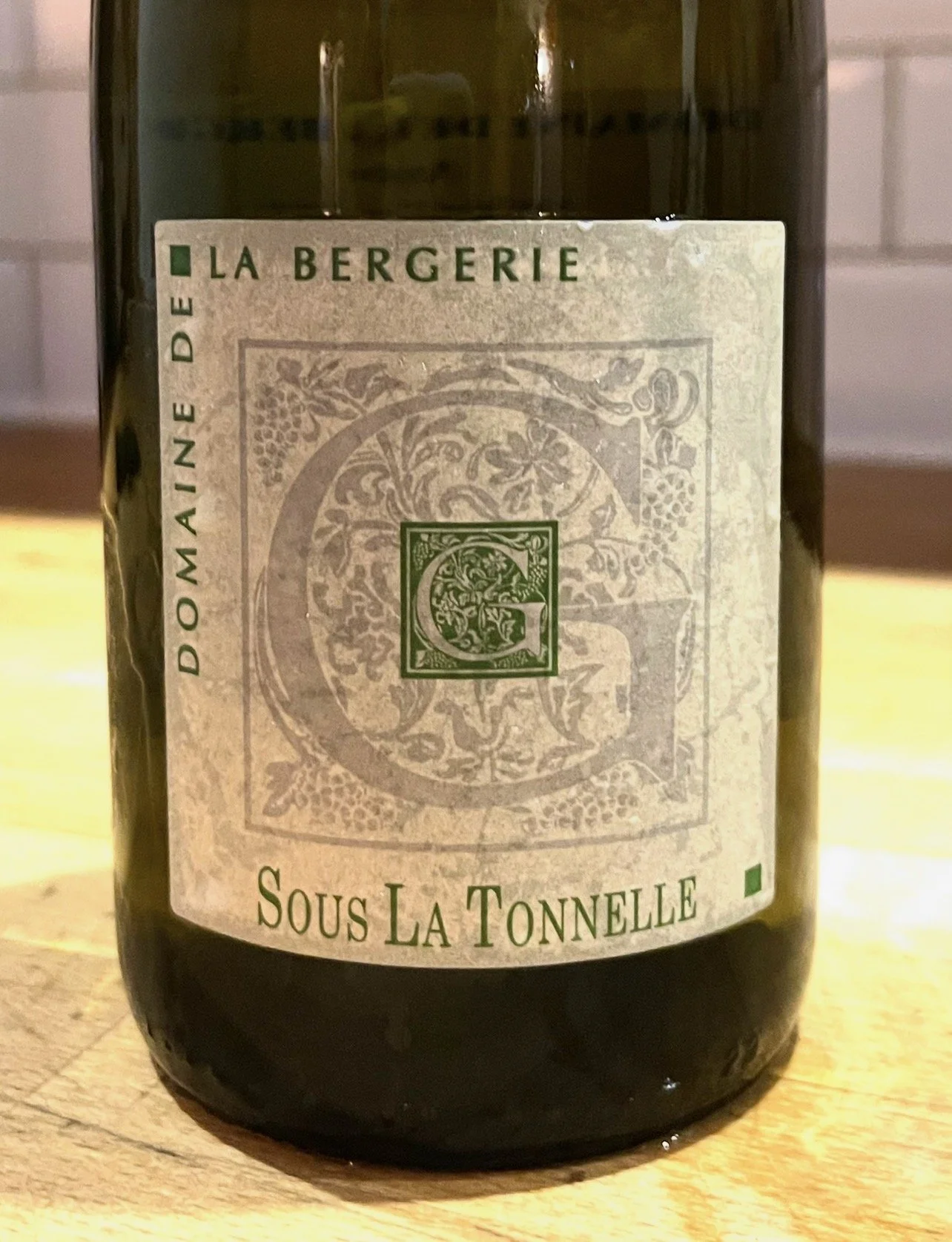
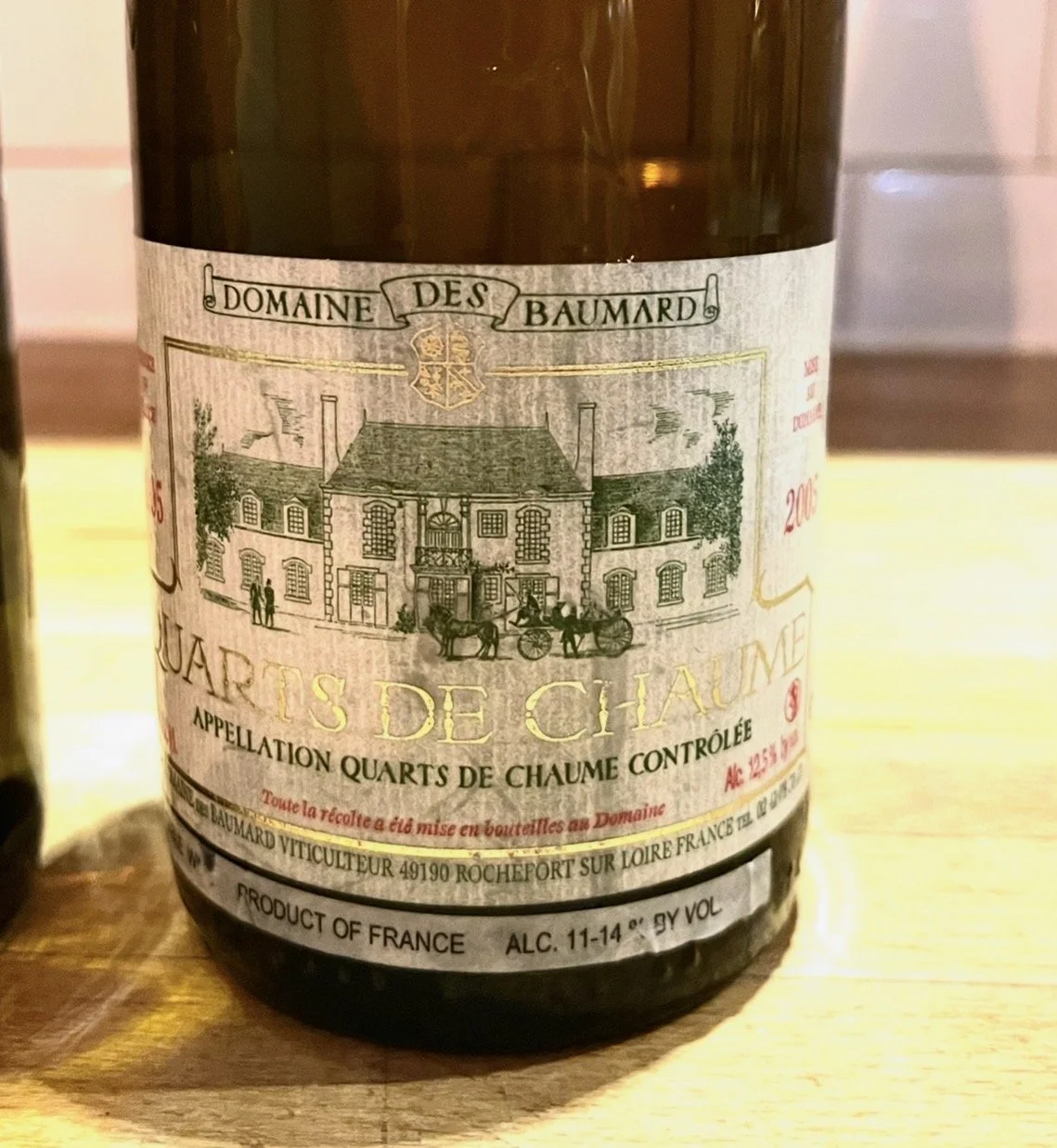
Next up were three very different Chenin Blancs: Domaine Catherine et Pierre Breton Brut La Dilettante NV, ($32), a bone-dry, biodynamic sparkling Vouvray, Domaine de la Bergerie Sous la Tonnelle Blanc 2024 ($28), a dry wine from Anjou, and Domaine des Baumard 2005 Quarts de Chaume ($100), a golden sweet wine with honey and flowers on the nose and the richness you’d expect from a dessert wine without being cloying.
We tasted them alongside Murray’s Honey Goat Gouda, a Dutch-style goat’s milk cheese, and Buttermilk Basque, a sheep’s milk cheese from the Pyrenees aged in Murray’s cave in Queens, NY. Marcona almonds and honey rounded out the spread. Of the two cheeses, the sheep’s milk was richer and denser than the goat’s milk because of its higher (almost double) fat content. My favorite cheese of the tasting was the Gouda, probably because I love the taste of honey so much.
The Catherine et Pierre Breton sparkling wine had a lovely yeasty character and paired especially well with the goat Gouda, since they both have a honeyed, earthy, fresh quality. The Bergerie Chenin has less acidity than you typically find with this grape. It wasn’t my favorite of the flight, though it was still enjoyable along with the two cheeses. The Quarts de Chaume was an incredible way to finish the flight. Its richness mirrored the cheeses’ dense texture, while the bright acidity and freshness (even at 21 years old!) kept the pairing from feeling too heavy.
Flight 3: Cabernet Franc Meets Its Match
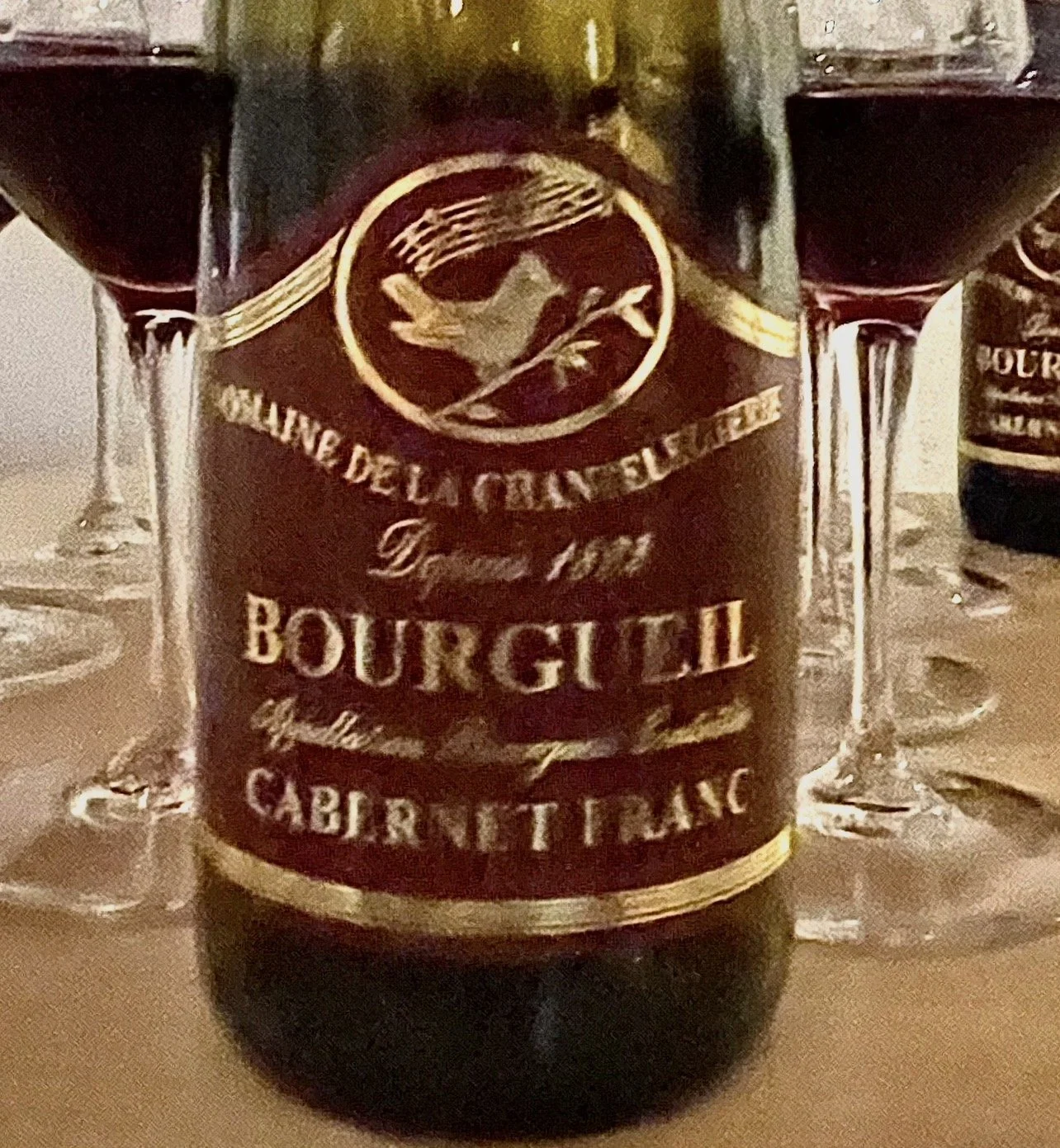
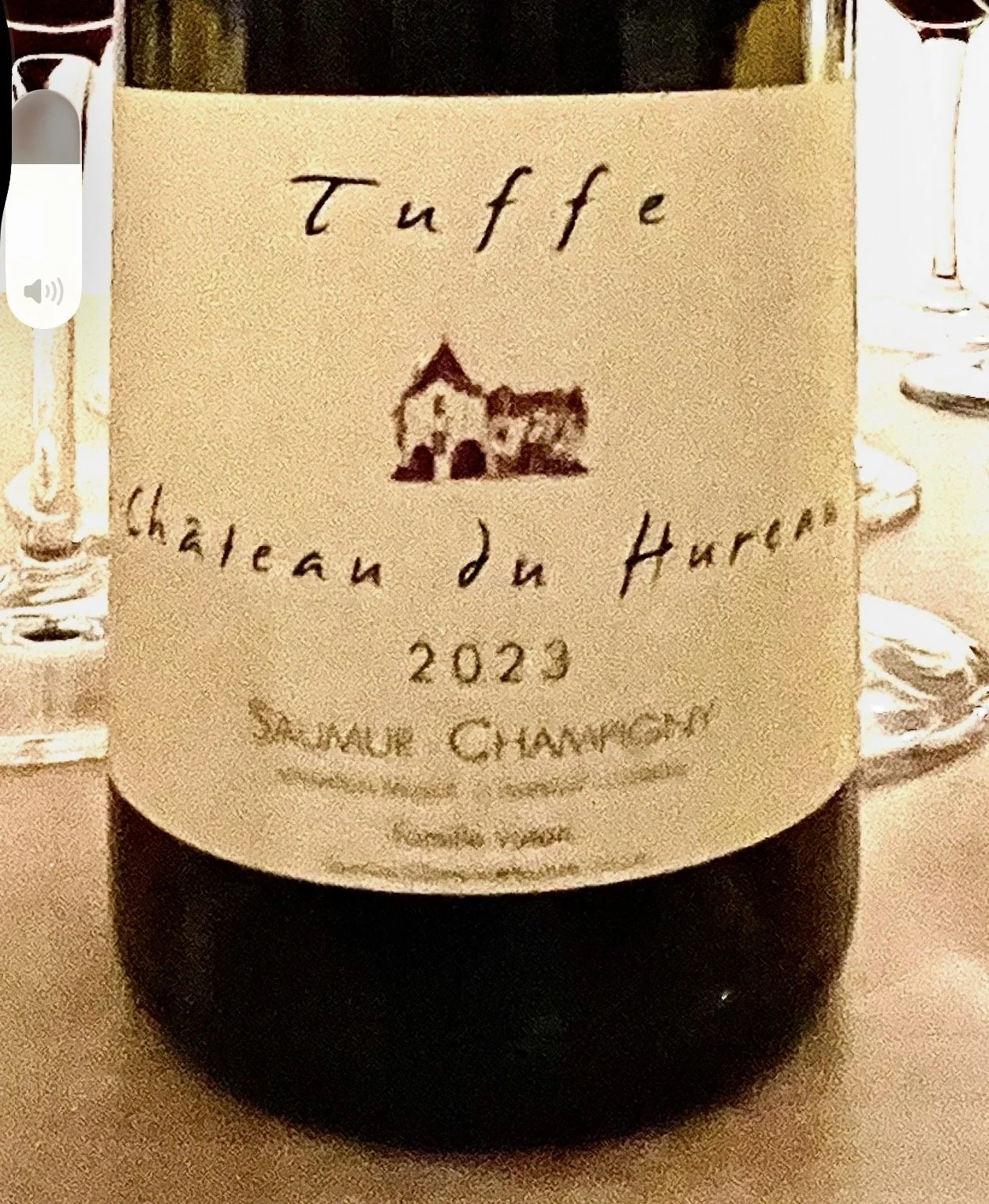
The final flight turned to Cabernet Franc, the Loire’s signature red grape, with Domaine de la Chanteleuserie Cuvée Alouettes 2024 from Bourgueil ($20) and Château du Hureau Tuffe 2023 from Saumur-Champigny ($23), both organically farmed, and together showing fruity and savory sides.
The Bourgueil was dry and light on its feet, with cranberry, pepper, and Cab Franc’s characteristic green bell pepper note (from pyrazines, a group of aroma compounds). Its tannins were low, making it easy to enjoy young. The Hureau was a bit fuller-bodied with more structure, but not heavy. It has freshness, with floral and red-fruit notes and soft tannins. Its vineyards’ tuffeau, a chalky limestone, helps explain its rather delicate character, despite a slightly richer profile.
The first cheese in this flight was Alp Blossom, an alpine-style cheese made from raw cow’s milk and aged seven months, with cornflowers and roses pressed into the rind. It’s floral outside and beefy, umami-packed inside. I also loved the second cheese, the award-winning Stockinghall Cheddar. Aged for a year in Murray’s Natural Rind Cave, it had notes of bacon and sour cream with a hint of pineapple. Its savory flavors made it a natural match for the Cabernet Franc, while the sour cherry jam served alongside picked up both wines’ black cherry notes.
So if I ever end up stranded on that desert island, I know what I’ll be hoping washes ashore: a few cases of Loire Valley wine, a good supply of cheese (lots of Honey Goat Gouda), and, of course, that cool cave.