
New York Winemakers Rally Around One Red Grape
/Most wine regions are defined by a signature grape that gives drinkers a clear sense of place. Burgundy has Pinot Noir, Germany has Riesling, Argentina has Malbec. A growing group of New York wine producers believes Cabernet Franc has the potential to become the state's signature red, and they're working together to make that case.
At a trade and media lunch at Café Carmellini in late 2025, eight winemakers from across the state gathered to explain why.
Gabriella Macari, of Long Island’s Macari Vineyards, welcomed the group, saying that the day was a historic one for New York wine. "We're not wearing our winery hats today,” she said. “We're all wearing our Cab Franc hats and have left our egos at the door. We’re here to sing the praises of this grape, the thread that weaves all of the state together."
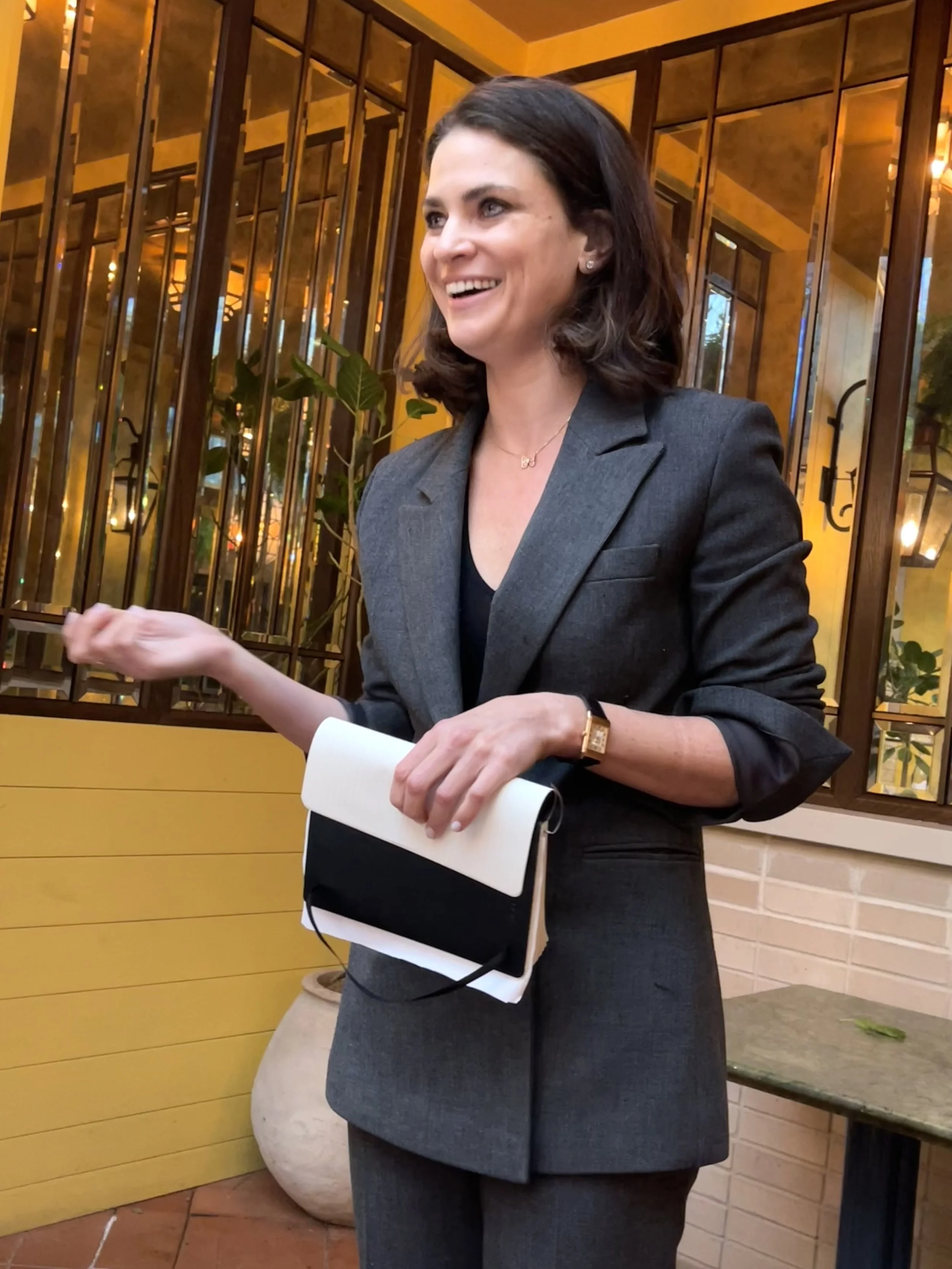
Gabriella Macari. All Photos by Lisa Denning
The winemakers present at the lunch are founding members of Cab Franc Forward, a grassroots initiative that has quickly gained traction. “Within two days of starting, 35 wineries from across New York State signed up for our inaugural grand tasting,” says Macari. “We filled a ballroom.” The participating wineries hail from New York’s three major wine regions: Long Island, the Finger Lakes, and the Hudson Valley.
At lunch, guests were offered three rosés, followed by eight reds. The wines ranged from the bright, structured styles of the Finger Lakes to the riper, maritime expressions of Long Island, with the Hudson Valley offering everything in between, demonstrating Cabernet Franc's adaptability to different terroirs and winemaking approaches. Additionally, winemakers bottle it as a single varietal or blend it, crafting everything from reds to rosés to sparklings.
Why Cabernet Franc? Why Now?
Josh Nadel, Master Sommelier and Beverage Director for Noho Hospitality Group, summed things up as an opportunity for the state’s wine industry. “When people think of Oregon, they immediately think of Pinot Noir. We’re at a point now where we can start shaping a similar association: when people think of New York, they’ll start asking for Cabernet Franc.”
Nadel noted that Cabernet Franc aligns with how people are drinking today. “People, especially the next generation of wine drinkers,” he said, “are drawn to exactly what Cabernet Franc offers: lower alcohol, minimal oak influence, transparency, freshness, and a sense of place. New York Cabernet Franc already checks the boxes people care about.”
Nadel cited the broader wine market as evidence that education and advocacy work. "Over the past 25 years,” says Nadel, “people have been convinced to drink Mencía, Grüner Veltliner, Savagnin, Trousseau—some pretty obscure grapes!"
If those grapes could find their audience, he argued, so can Cabernet Franc.
Macari sees New York Cabernet Franc as a wine defined by red fruit, texture, and depth—and one that deserves more attention. “These wines belong on more retail shelves, kitchen tables, and restaurant lists,” she said.
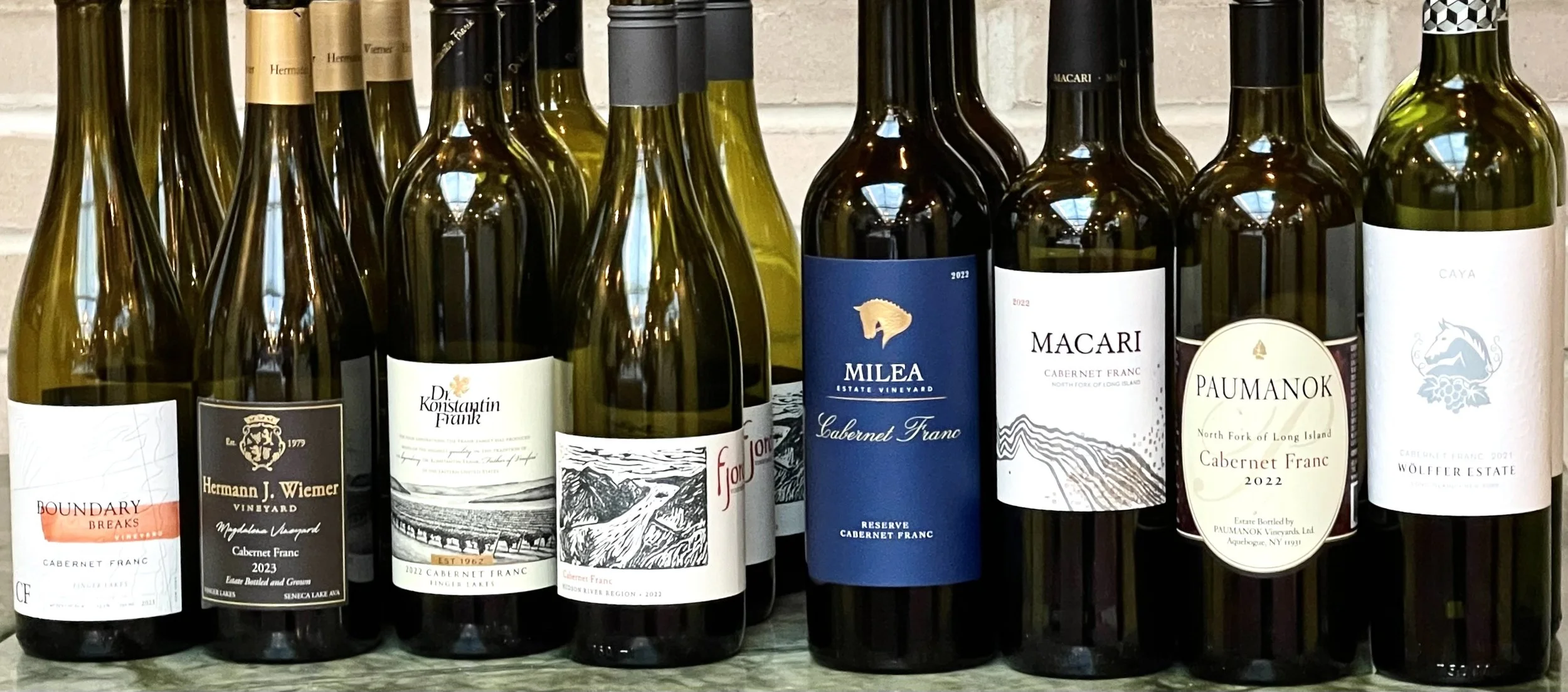
The Winemakers in Conversation
What emerged during lunch is that Cabernet Franc fits New York’s climate, food, and sensibility better than any other red grape.
That belief helped attract winemaker Byron Elmendorf, a California transplant who joined Macari Vineyards in 2020. Just one conversation with Gabriela Macari convinced him to make the move. “It was obvious Gabriela was ambitious and had visions for what could be done and really wanted to push the bar,” he said. “But the biggest selling point was that Macari has significant plantings of Cabernet Franc.”
Elmendorf had worked with the grape before, but with less satisfaction. “Cab Franc, for me, has always been one of my personal favorite varieties,” he said. “I had made it in California, but was never really happy with the results. The opportunity to make it in a cooler, maritime climate, where the aromas and flavors could really shine through, was a huge draw.”
Kareem Massoud, second generation at Paumanok Vineyards on the North Fork of Long Island, described Cabernet Franc as “a really reliable workhorse.” His parents planted their first vines in 1983, and over time, Cabernet Franc has proved itself.
“It fully ripens and allows us to craft the wines that are well-balanced, well-structured for their weight, and just delicious on their own or with whatever is on the table.”
For Massoud, Cabernet Franc speaks of place just as the region's food does. "On Long Island, that could be the duck from a farm just a mile down the road, tuna steaks from Montauk, or roasted vegetables from farmers that surround us," he says.
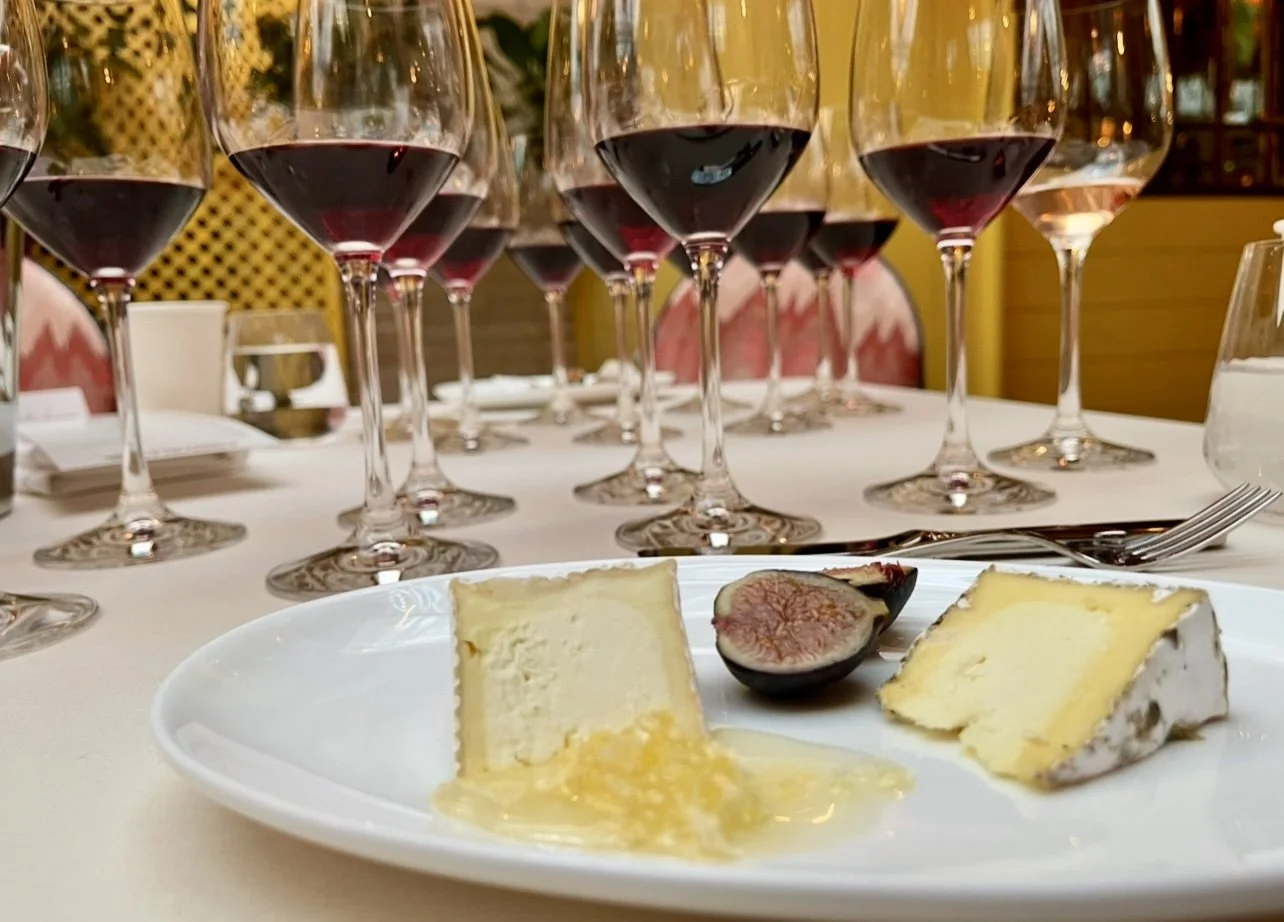
New York State Cheeses paired with Cabernet Franc.
Roman Roth, winemaker at Wölffer Estate in the Hamptons on the eastern end (South Fork) of Long Island, has 34 vintages under his belt. “My first goal in all my winemaking is to be food-friendly,” he said. He also noted how far the region has come, calling 2024 the best vintage he's ever seen for Cabernet Franc, with perfect ripeness paired with high acidity. "That's what keeps the wines from being fat and flabby," he said. "They're powerful, but vibrant and elegant."
Further upstate, in the Finger Lakes, Bruce Murray of Boundary Breaks initially planned to grow only Riesling when he founded the winery in 2008. However, a warm 2012 vintage prompted him to begin planting red grapes, such as Cabernet Franc, Merlot, and Cabernet Sauvignon. After working with the three varieties, Murray’s confidence lies mainly with one: “Cabernet Franc,” he stated, “is by far the best-suited red variety for our region.”
At Hermann J. Wiemer, a pioneering Finger Lakes winery whose first vines were planted in 1973, co-owner Fred Merwarth recalled first working with fruit from Magdalena Vineyard, one of the winery's warmer sites.
“Right away, we were struck by how Cabernet Franc stood out,” said Merwath. “It was eye-opening. The wine was just delicious.” With greater confidence in the variety, they’re now planting it at their coolest site. “We know we can get it ripe there, and we’ll see a different flavor profile.”
For Meaghan Frank fourth generation at the historic Dr. Konstantin Frank, Cabernet Franc represents both continuity and promise. Her great-grandfather was the first to successfully plant Vitis vinifera east of the Mississippi River, and the winery has been growing Cabernet Franc for over 50 years.
“We champion varieties like Cabernet Franc where our cool climate is an asset, not a liability, and we truly believe the best is yet to come,” she said. As for Cab Franc Forward, she summed up the group’s mindset by saying, “If you want to go fast, go alone. If you want to go far, go together.”
That collaborative spirit extends to Fjord Vineyards in the Hudson Valley as well. Casey Erdmann, co-owner with her husband Matthew Spaccarelli, spoke about building vineyards from the ground up. They began planting Cabernet Franc in 2011, often “knocking on neighbors’ doors asking if we could clear abandoned apple orchards to plant vines.” Each time, the answer was yes.
“That’s something I love about New York,” she said. “It’s a very collaborative community.”
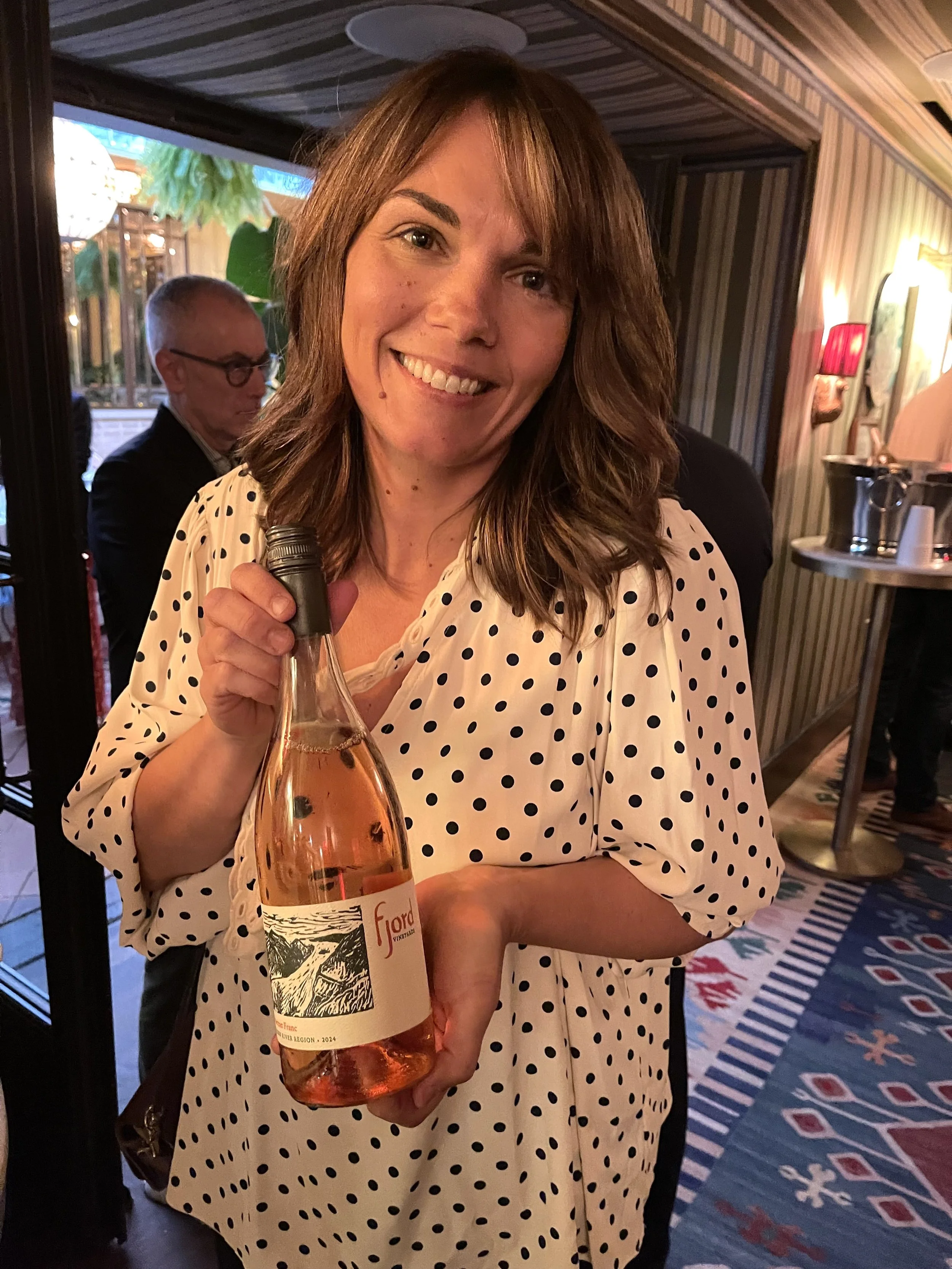
Casey Erdmann
Cabernet Franc has become Casey and Matthew’s favorite variety to grow, and the region’s geography is why. "The nooks and crannies of the Hudson Valley draw in warm, maritime air from the Hudson River," Erdmann explained, "and that's what helps us ripen our Cabernet Franc."
Darren Chertcoff is the winemaker of Milea Estate in the Hudson Valley, founded in 2015. He calls the winery the “new kid on the block.” When he first arrived from the Napa Valley, he immediately noticed a strong sense of camaraderie in this east coast valley: “I feel like there’s much more community here where I can just pick up the phone and call other winemakers with questions.”
Max Rohn, CEO of Wölffer Estate, sees that collaborative spirit translating into tangible market initiatives. "We're now pouring and showing each other's wines in the market," he said.
The next Cab Franc Forward event is a grand tasting on February 3rd at the Prince George Ballroom in New York City: 11 AM to 4 PM for trade and media, 6 to 8 PM for consumers (tickets on eventbrite.com).
The lunch ended with barrel samples from the 2024 and 2025 vintages, and the energy in the room said it all. These winemakers are building something together.
As Kareem Massoud put it, “Our colleagues are technically competitors, but they’re also like an extended family, and we celebrate that as much as the wines.”
Read more about New York Cabernet Franc in my article on Grape Collective: Forward Thinking: How Cab Franc is Changing New York’s Red Wine Conversation