
On the Edge: Discovering California’s SLO Coast Through Cadre Wines
/Whenever I’m visiting winemakers, one of my favorite questions is what their relationships are like with their neighbors: collaborative or competitive? More often than not, it’s the former. Wine is, at its core, a communal business, one in which the success of the region benefits everyone in it.
That’s why, during a recent Zoom tasting with John Niven of Cadre Wines on California’s SLO Coast, it stood out when he shared a lesson from his grandfather: “Promote the region first, and your wine second.” It’s a philosophy Niven has clearly embraced. “You can’t understand Cadre until you understand the SLO Coast,” he says, “and what a special place we come from.”
What exactly is the SLO Coast AVA?
Established in March 2022, the San Luis Obispo Coast (SLO Coast) AVA spans 60 miles of cool-climate vineyards, incorporating Edna Valley and Arroyo Grande Valley as sub-appellations. It’s the coolest AVA in California, driven not by latitude but by proximity to the Pacific, with nearly all of its vineyards sitting within six miles of the ocean.
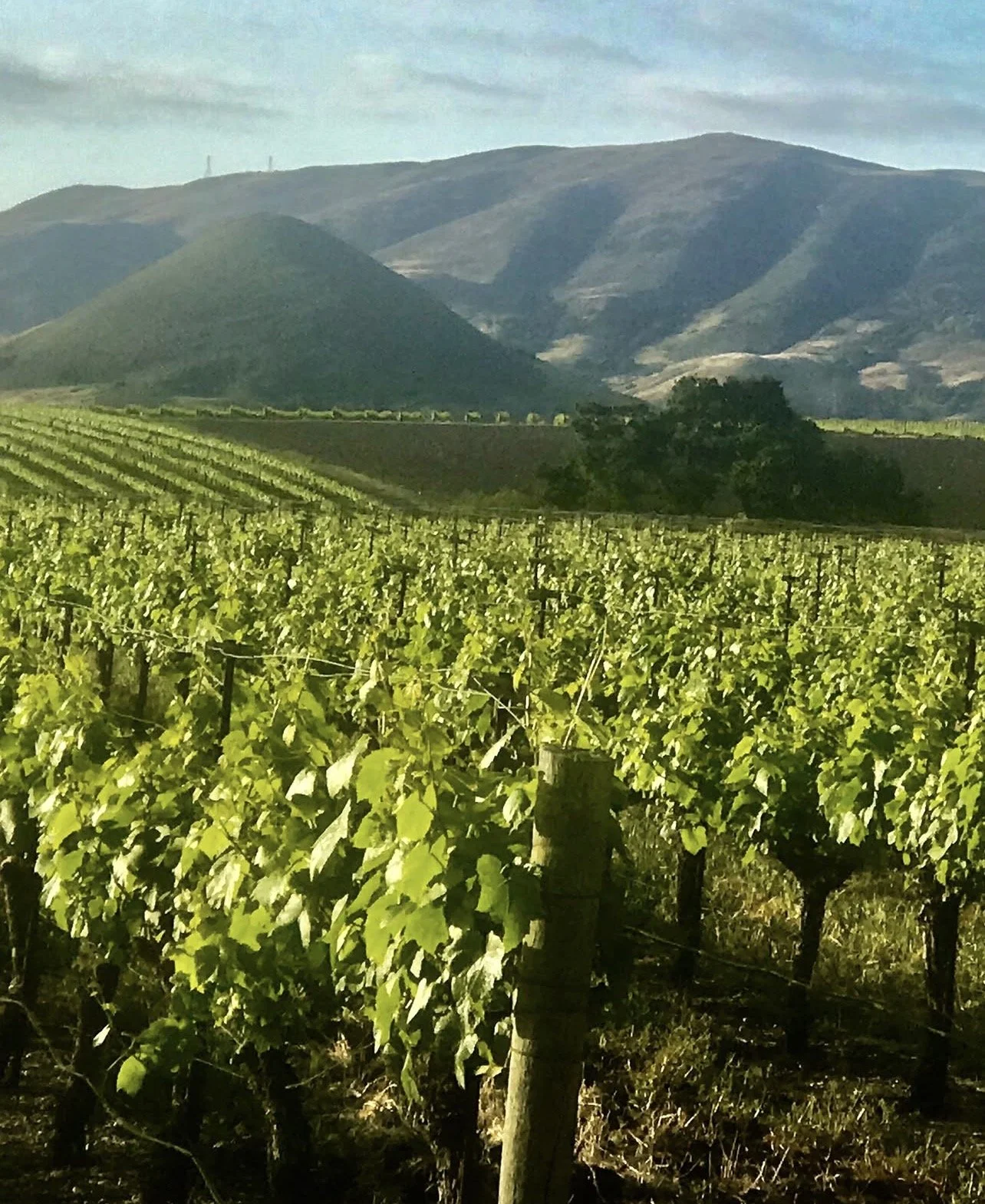
Photo courtesy of @slocoastwine
Mornings begin in fog, followed by a brief window of midday warmth before coastal winds sweep in each afternoon, keeping temperatures in check. That rhythm, combined with an early bud break and harvests that can stretch into November, creates one of the longest growing seasons in the state. The resulting wines are brimming with energy, natural acidity, and a distinct saline edge. “All that yummy stuff,” as Niven puts it.
Beneath the vines, the soils tell an equally interesting story. Seventeen million years ago, the valley floor was an ocean. Today, it’s a mix of sand, volcanic rock, limestone, and Diablo clay. This ancient foundation, along with constant ocean influence, shapes the wines’ signature minerality.
“We’re not only farming this land,” says Niven. “We’re farming and harvesting the Pacific Ocean.”
From Groceries to Grapes
Cadre is, above all, a family story. John Niven’s grandfather, Jack, built a grocery empire before selling it in the 1960s and turning to grape growing. In 1973, he planted the now-historic Paragon Vineyard in Edna Valley, a site that helped establish the region’s potential for cool-climate viticulture.
He had enlisted two leading viticulture experts—Professor Winkler of UC Davis and Professor Petrucci of Fresno State—to independently evaluate the land. Both came back with the same conclusion, propelling Jack to move forward. By the late ’70s, he had partnered with Chalone to form Edna Valley Vineyards, helping put the region’s Chardonnay on the map, while a small home planting would eventually become Baileyana winery. Over decades, the family built a portfolio of vineyards and brands before ultimately selling everything in 2019.
However, John Niven wasn’t done. “We had yet to show the world the true potential of the SLO Coast,” he says. “So Lucy and I took out a second mortgage and started Cadre.”
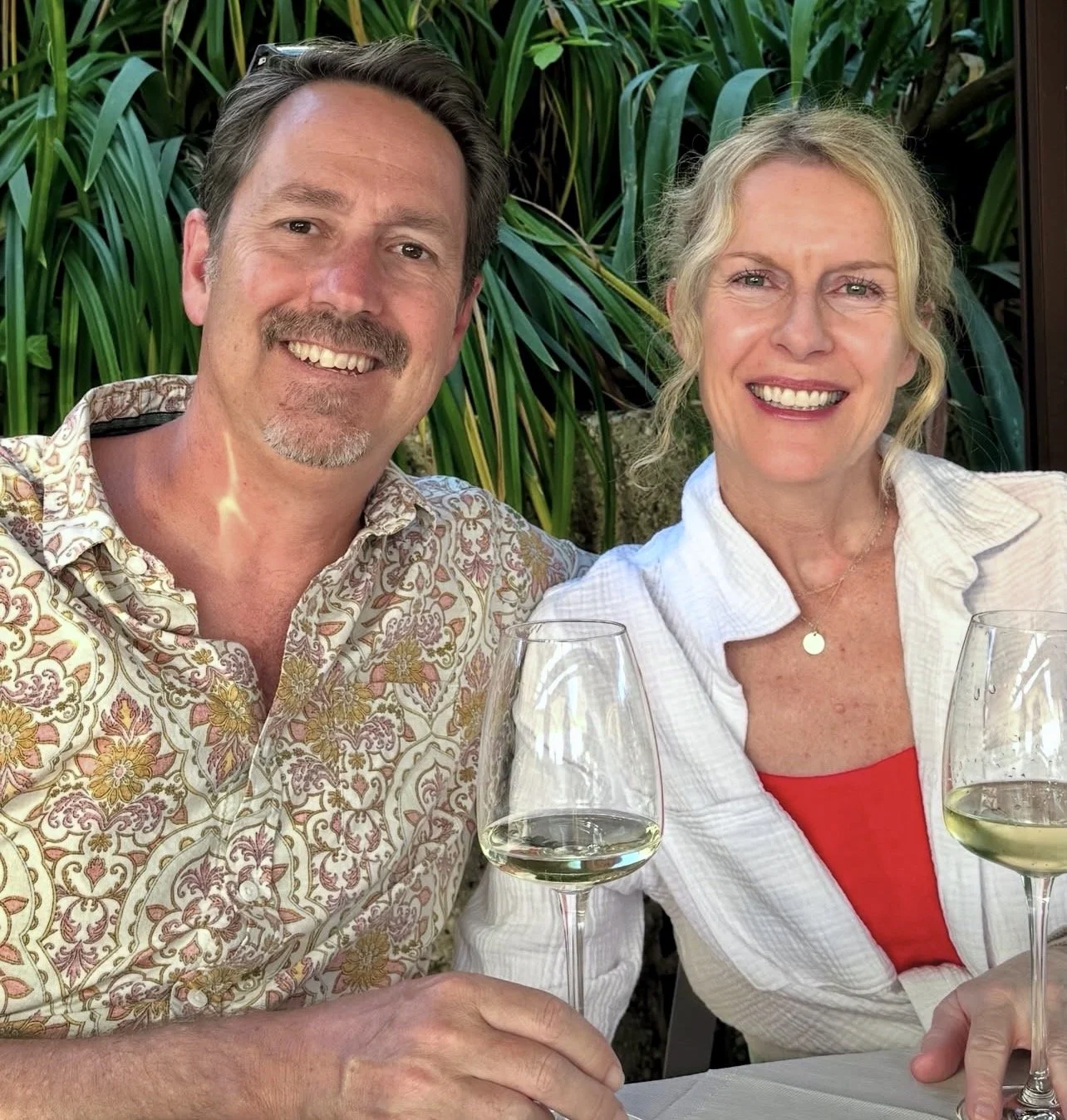
John and Lucy Niven. Photo courtesy of @cadrewines
The transition wasn’t easy, but they were passionate about the project. Niven secured contracts on his favorite vineyard blocks, kept the longtime vineyard manager, and arranged to make wine nearby. Cadre, founded in 2020, is, as he puts it, “lean by design.” No winery, no vineyard—just the same place and people. It sources grapes primarily from Davenport Vineyard, a slice of the original Paragon vineyard. He has also expanded to additional newer sites across the SLO Coast.
Starting out, Niven saw that most producers were focusing on Chardonnay and Pinot Noir, but he saw a different opportunity. Those two varieties, he felt, shouldn’t “get to have all the fun.” Instead, he built Cadre around just three aromatic whites: Sauvignon Blanc, Albariño, and Grüner Veltliner, though he’s already looking ahead to expand the range.
The white varieties now being explored across the SLO Coast, from Cadre’s lineup to Grenache Blanc, Viognier, Vermentino, and more, reflect exactly what Niven set out to prove: that this edge-of-the-Pacific climate is capable of far more than expected.
Wines Tasted
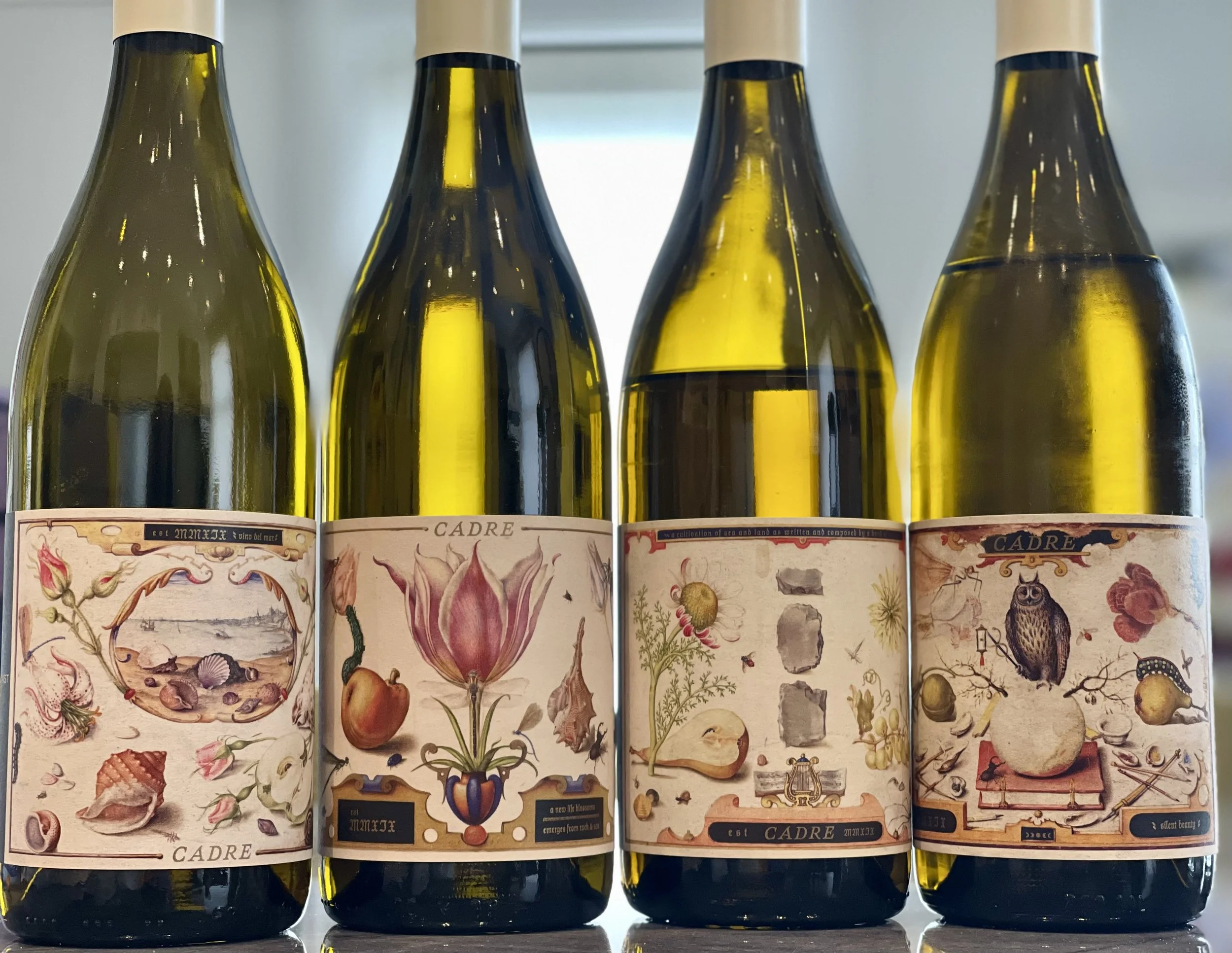
The eye-catching labels deserve a mention too. Inspired by 16th-century Flemish artist Joris Hoefnagel, the botanical, watercolor illustrations reflect Edna Valley’s native flora, fruit, and shells.
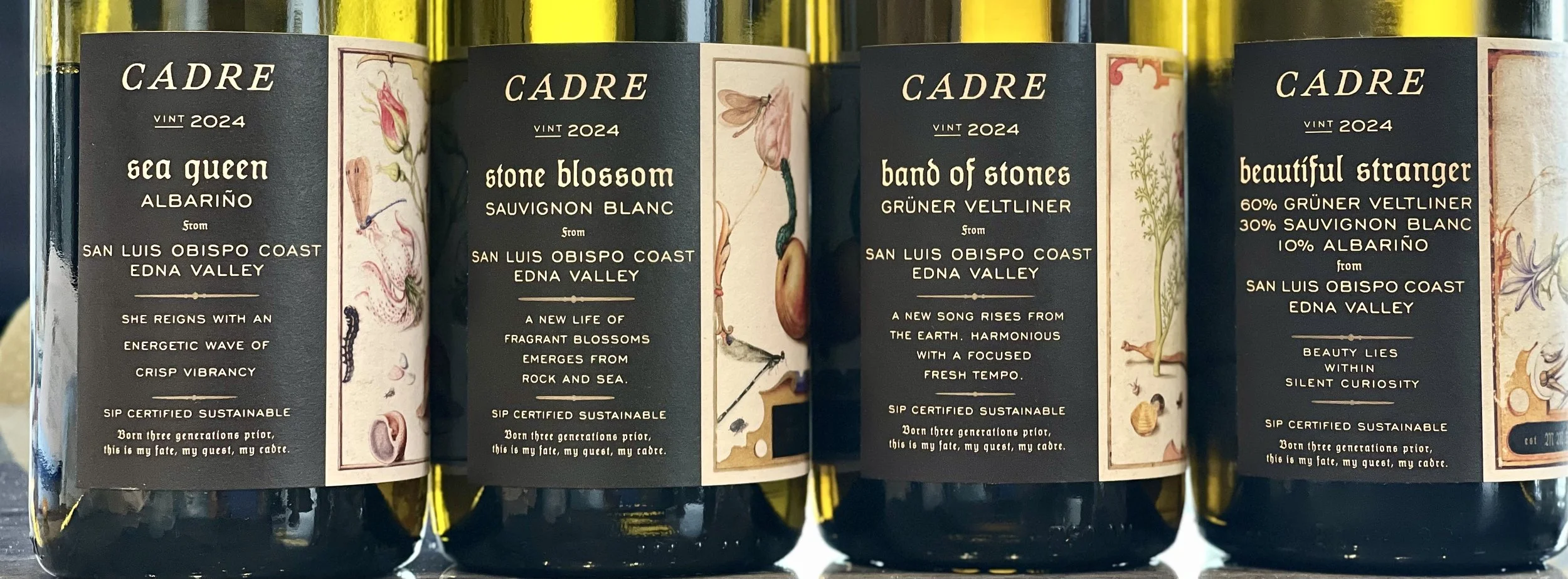
2024 Cadre Wines “Sea Queen” Albariño ($30)
Albariño has been grown here for years, but Niven helped push it further, sourcing cuttings from Spain’s Rías Baixas and betting on the grape’s natural affinity for the coast. After time spent in Spain and Portugal, he became convinced the variety has a kind of “genetic memory” for maritime climates.
“Once it came here, those vines kind of woke up,” he says. “Like, ‘I’ve never been here before, but it feels like home.’”
As in Rías Baixas, the ocean leaves its mark. The wine is crisp and saline-driven, with citrus, green apple, and stone fruit layered with subtle tropical notes and a thread of florality. Bright, balanced, and complex, with a lingering mineral finish. Pair it with oysters, and you'll understand exactly what Niven means about harvesting the Pacific Ocean.
2024 Cadre Wines “Stone Blossom” Sauvignon Blanc ($30)
Nearly all of California’s Sauvignon Blanc comes from warm climates. Cadre’s vines are part of the small minority grown in cool conditions. “Our Sauvignon Blanc doesn’t really align with California,” Niven says, pointing instead to places like the Loire Valley, Alto Adige, and New Zealand.
“Stone Blossom” is fresh, precise, and restrained. Salty citrus leads, backed by lime zest, crushed herbs, and a subtle thread of passionfruit and stone fruit. There’s a chalky edge that keeps everything focused and alive.
2024 Cadre Wines “Band of Stones” Grüner Veltliner ($30)
When Niven first proposed planting Grüner Veltliner, his family thought he’d lost it. “They thought it was a vine disease,” he laughs. But he stuck with it, and today it’s one of Cadre’s most distinctive wines. In a time of increasing climate volatility, it’s also the most reliable. Niven calls it “the steady Eddie.”
The wine delivers classic Grüner character—white pepper, citrus pith, and spice—alongside grapefruit, ginger, and a lift of tropical fruit. It’s textural yet crisp, with a subtle bitterness that adds structure and keeps you coming back for another sip.
2024 Cadre Wines “Beautiful Stranger” ($30)
This wine is exactly what its name suggests: striking, intriguing, and unexpected. It's a blend of all three Cadre whites: Grüner Veltliner (60%), Sauvignon Blanc (30%), and Albariño (10%). Inspired by Alto Adige blends, Niven uses Grüner for texture, Albariño for lift, and Sauvignon Blanc to anchor it all.
Aromas of white flowers, citrus zest, and spice lead into a palate of salted Meyer lemon, grapefruit pith, stone fruit, and fresh herbs. Zippy yet textural, with a long mineral finish. This gorgeous outlier clearly shows what Cadre is aiming for: the Pacific’s imprint, translated into the glass.
Looking Ahead
As the tasting wrapped up, Niven shared his vision for the SLO Coast as a world-class white wine region. “Hopefully you agree with me when I say that the SLO Coast deserves to be in the conversation as one of the great white wine regions of the world,” he said. “We’re not quite there yet in terms of recognition, but that’s the goal.”
Cadre wines can be purchased on their website and at various retailers and online shops.