
Roero: The Sandy Side of Piedmont
/For many wine lovers, Piedmont begins and ends with Barolo and Barbaresco. But just across the Tanaro River lies Roero, a region where sandy soils produce two of Italy's most distinctive, great-value wines: the white Arneis and a lighter, more accessible expression of Nebbiolo.
Across the River, A Different Piedmont
Located just north of Alba, Roero’s 19 municipalities form part of the UNESCO World Heritage Site known as the Vineyard Landscape of Piedmont: Langhe-Roero and Monferrato. Roero's varied landscape includes woods and orchards right next to the vines, many of which are planted on steep slopes. A popular destination for nature lovers is the Rocche del Roero, a striking landscape of sandstone formations carved by river erosion and tectonic shifts over hundreds of thousands of years.
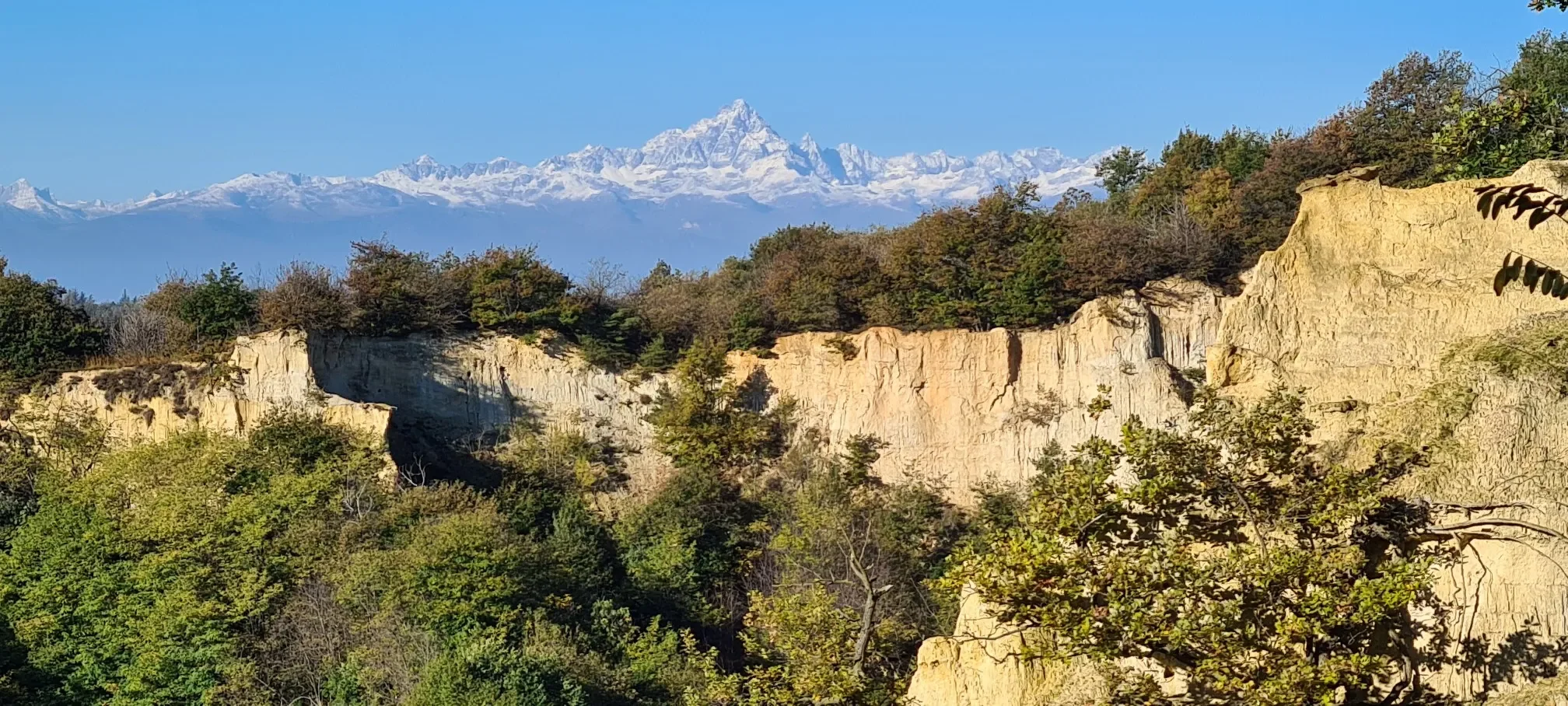
Rocche del Roero Sandstone Trail with sweeping Alpine views. Photo courtesy of komoot.com..
Geology and Climate
If one word defines Roero, it's sand. Roero's geology is younger than that of the neighboring Langhe, shaped over millions of years by the collision of the African and European tectonic plates, shifting sea levels, and the changing course of the Tanaro River. Together, these forces left behind layers of marine sand, fossilized shells, limestone, and clay that continue to shape the region's wines.
Climate also plays an important role. Roero receives relatively little rainfall—among the lowest totals in southern Piedmont—while cooling breezes from the nearby Maritime Alps create significant day-night temperature swings. That combination helps preserve acidity and aromatics while allowing the grapes to ripen slowly and evenly.
Two of Italy’s Best
Wine has been grown here for centuries, with records showing that vineyards were planted by the 15th century. Today, the appellation includes 134 official vineyard sites, known as MGAs (Menzioni Geografiche Aggiuntive).
The Roero DOCG is best known for two wines: Roero Arneis, a crisp, aromatic white, and Roero Rosso, a less tannic style of Nebbiolo. Today, roughly three-quarters of Roero's vineyards are planted with Arneis, with the remainder primarily Nebbiolo.
The name Arneis comes from the Piedmontese word for "rascal,” referring to how difficult the grape can be to grow and vinify. By the 1970s, Arneis had nearly disappeared from the region. Producers, including Alfredo Currado of Vietti and Bruno Giacosa, recognized its potential and helped turn the obscure variety into one of Piedmont's signature white wines. It's easy to see why: few whites this age-worthy and food-friendly are as affordable.
Most Roero Arneis is made in a fresh, unoaked style with lively acidity and flavors of pear, white peach, citrus, chamomile, and almond. Some producers also craft an oaked Riserva, adding richness, texture, and a round, waxy mouthfeel, with a hint of vanilla.
Roero Rosso is made with at least 95% of the grape (though most producers use 100%) and aged for a minimum of 20 months, or 32 months for Riserva. Expect lifted aromas of rose, dried flowers, cherry, strawberry, and warm baking spices, often accompanied by savory herbs and subtle mineral notes. On the palate, Roero Rosso is fresh and elegant, with bright acidity and silky tannins that are gentler than those typically found in neighboring Barolo, yet still provide enough structure for the wines to age gracefully.
As Alan Tardi, James Beard Award-winning wine writer, put it during a recent wine tasting seminar: "Roero’s red wines have more finesse than structure." And for Nebbiolo lovers on a budget, it's hard to find a better entry point.
Built for the Table
The seminar was part of Sip and Savor: Pairing European Wines and Deli Meats, a three-year EU-funded campaign by the Consorzio Tutela Roero and Istituto Valorizzazione Salumi Italiani (IVSI) to introduce North American audiences to European wines and cured meats.
Roero Arneis and Roero Rosso were paired with traditional Italian salumi: Prosciutto Crudo, Mortadella, Salame Milano, and Coppa, and the wines' bright acidity and balance went well with the rich flavor of the cured meats.
Roero Arneis is equally at home alongside seafood, grilled shrimp, roast chicken, creamy risotto, fresh burrata, and vegetable-forward dishes. Its lively acidity and subtle almond finish also make it an excellent match for herb-driven cuisine and mild, creamy cheeses.
Roero Rosso shines with classic Piedmontese fare such as tajarin pasta with ragù, mushroom risotto, veal, roasted pork, grilled lamb, and aged cheeses like Parmigiano Reggiano and Pecorino. Its silky tannins and vibrant acidity also make it an excellent partner for charcuterie, earthy mushroom dishes, and truffle-season specialties.
Bottles to Seek Out
A quick note before you shop: these are some of the best-value wines coming out of Piedmont. Here are a few worth seeking out.
Roero Arneis
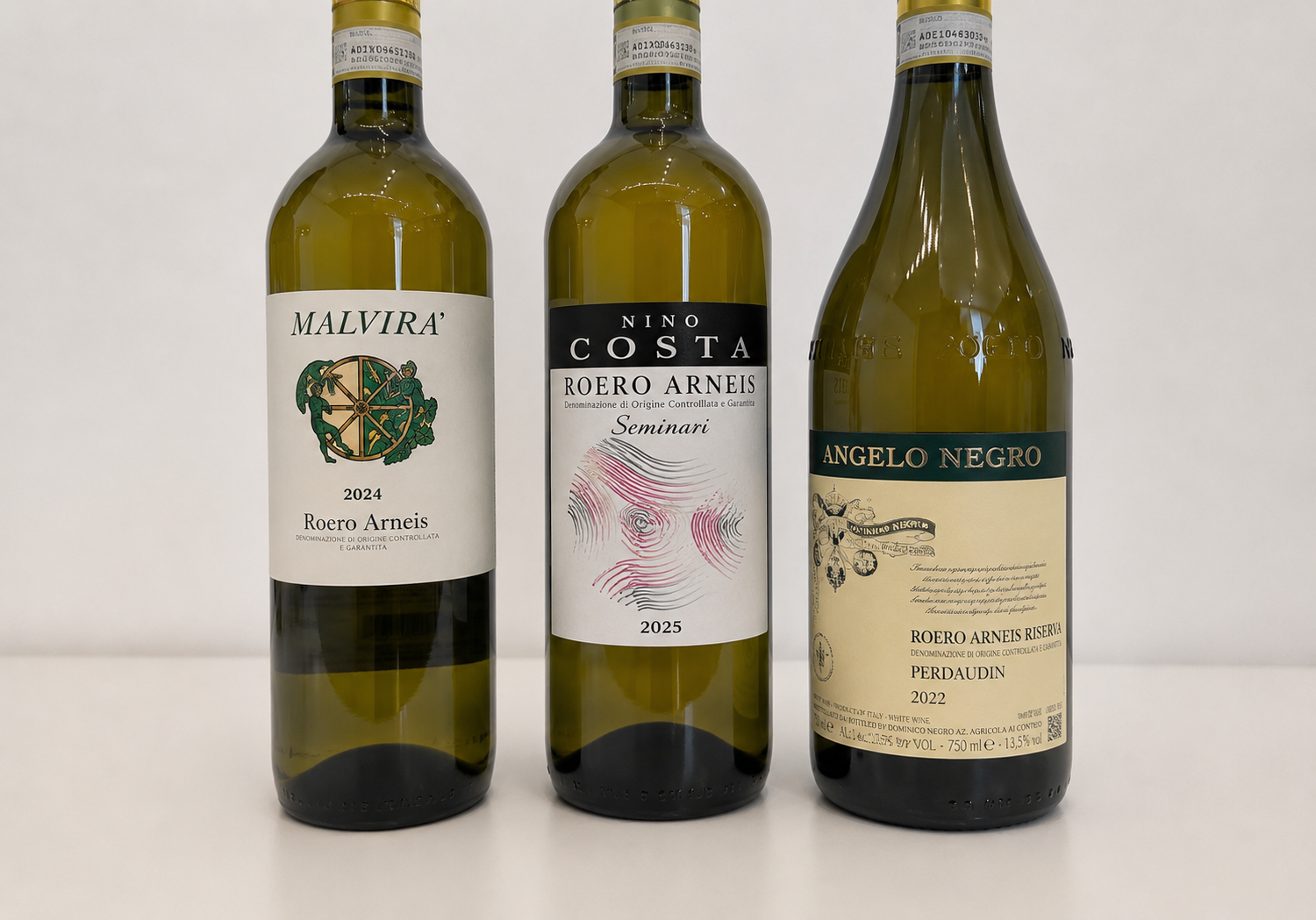
Malvirà Roero Arneis 2024 — Dry and crisp with notes of apple, honey, and white flowers. An excellent introduction to the appellation and one of the best values at around $22.
Nino Costa Roero Arneis 2024 — Organically farmed with vibrant fruit and freshness; peach, almond, and citrus (lime); good acidity and salinity. $22.
Angelo Negro "Perdaudin" Roero Arneis Riserva 2022 — Organically farmed, showing the complexity and aging potential of the Riserva style. Green apple, pear, citrus (grapefruit, lemon, lime), white flowers. Excellent acidity, balanced by rich fruit and medium-plus body. $33.
Roero Rosso
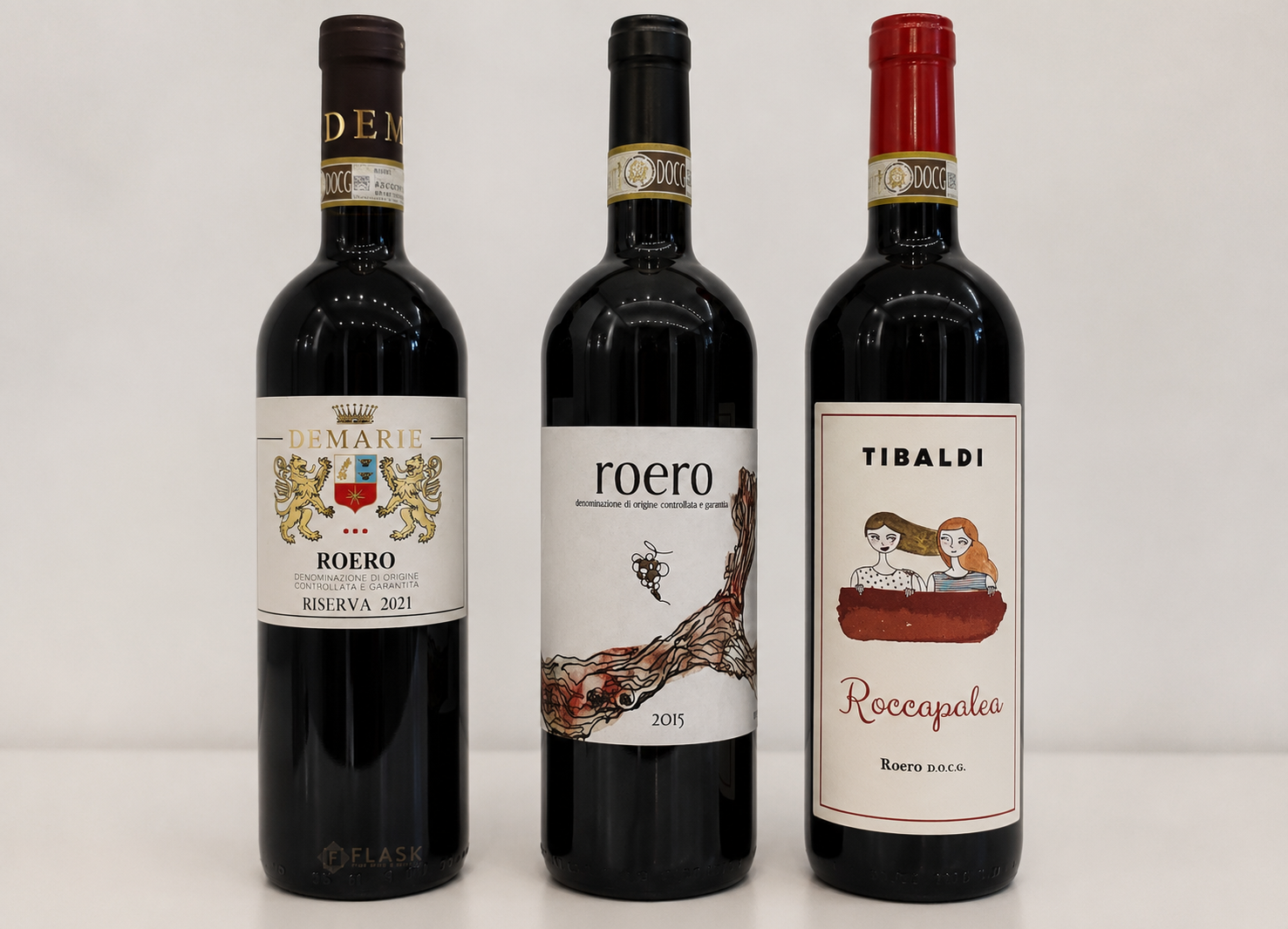
Demarie Roero Riserva 2021 — A beautifully structured Riserva with notes of cherry, tobacco, rose flowers, and dried figs. Strong but silky tannins, full-bodied, with a fresh, long, earthy finish and an underlying minerality. A steal at $30.
Benotti Rosavica Roero Rosso 2021 — Organically farmed. Cherry, plum, licorice, leather, and tobacco. Fresh and juicy. $40.
Tibaldi Roccapalea Roero Rosso 2021 — Certified organic. Cherry and strawberry, rose petal, black pepper, and black tea. Strong tannins and medium-bodied. Tart and spicy. Drink now. $33.