
Sipping Your Way Through December—Day 10
/J. Hofstätter Barthenau Vigna S. Urbano Pinot Nero 2020
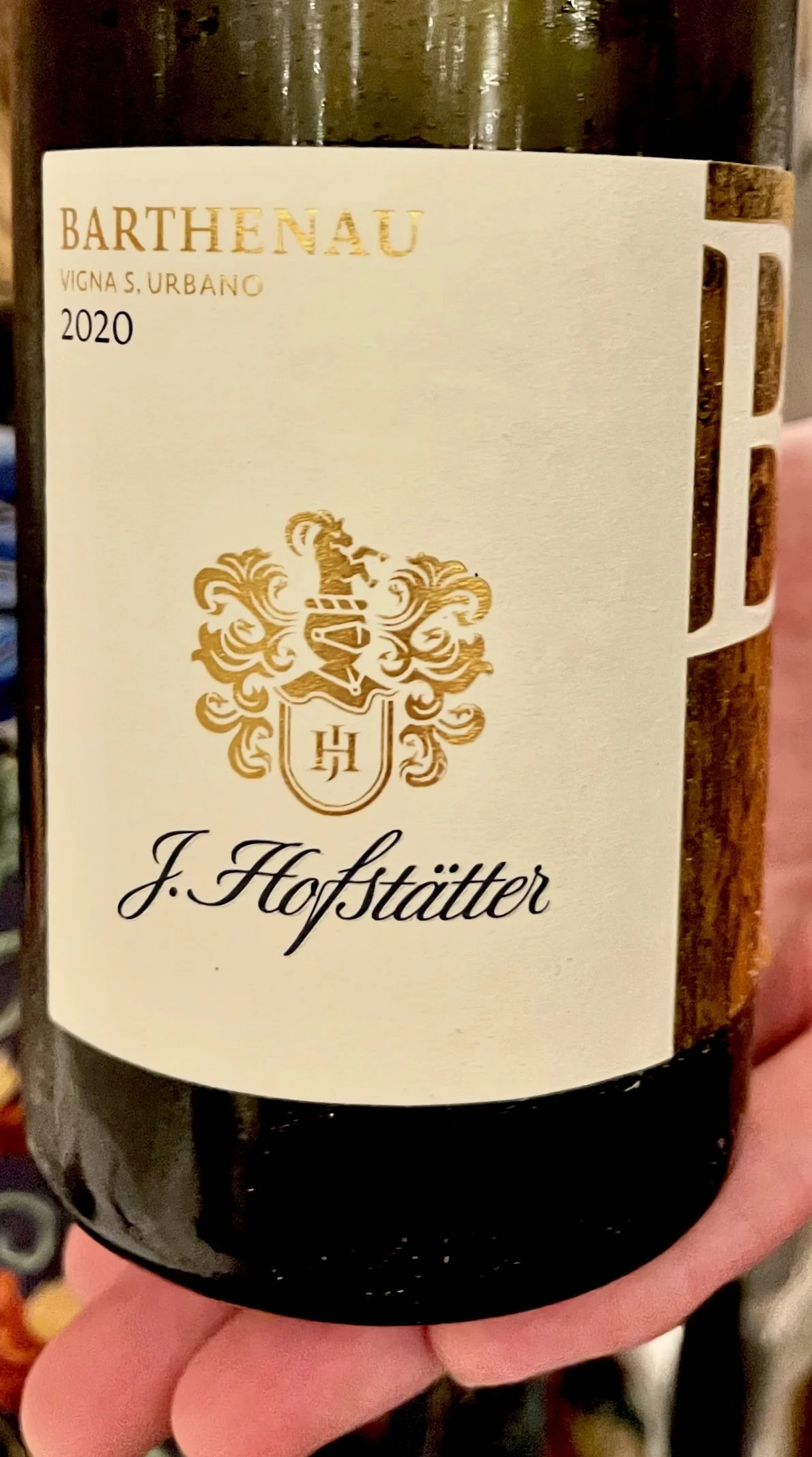
Photo by Lisa Denning
The 2020 Barthenau Vigna S. Urbano Pinot Nero (Pinot Noir) is a mediumto full-bodied wine that immediately catches your attention. It’s bright and red-fruited, with notes of cherry and raspberry, alongside hints of rose, earth, mushroom, and clove spice. The tannins are silky, the acidity gives the wine a nice lift, and the finish goes on and on. Just delightful!
The wine’s character comes straight from the Barthenau estate in Mazon, one of Alto Adige’s most prized areas for Pinot Noir. The vineyards sit on the eastern side of the Adige Valley, where clay and limestone soils, cool nights, and steady breezes help the grapes ripen slowly. These are some of the region’s oldest Pinot Noir plantings, first put in the ground in the late 1800s by Ludwig Barth von Barthenau.
I first met Martin Foradori Hofstätter, the fourth-generation, in New York in 2018, and he told me about his strong connection to the Barthenau estate. As a child, it was his “summer playground.” His family moved there for the summer as soon as school ended, and they stayed until the last days before school started again. He spent so much time there that he still knows every vine and every tree.
Pinot Noir has been grown there since the 1800s, and when his grandfather bought the Barthenau property in 1941, the vineyards were already established. Martin’s father went on to devote his life to the grape, helping shape Mazon into what is now widely recognized as Italy’s top area for Pinot Noir.
More recently, I enjoyed this Pinot Noir in Alto Adige at a press dinner hosted by Martin’s son, Niklas Foradori, the fifth generation. Tasting the wines alongside local specialties like pasta stuffed with nettles in a hazelnut butter brought everything I had discussed with his father back into clear focus.
One last detail worth noting: the word “Vigna” on the label. It signals a legally defined single-vineyard designation, a system introduced by Paolo Foradori (Martin’s father) in 1987. It was the first time Alto Adige produced single-vineyard wines, which explains why this bottle feels so tied to a specific place.
Find the wine for about $71 on wine-searcher.com.