
Four Levels, One Grape: Discovering the Many Faces of Chablis
/“I've never had Chablis and been in a bad mood,” said Amy Racine, Beverage Director for JF Restaurants, during a recent dinner at the Times Square EDITION. “It’s such a joyful drink.”
I couldn't have said it better. Chablis is most definitely a wine that brings good feelings to the table. The evening, hosted by the Bourgogne Wine Board, took us on a journey through the four appellations of Chablis: Petit Chablis, Chablis, Premier Cru, and Grand Cru. Tasting them side by side was a great way to see how each level has its own personality, even though the wines are all made from the same grape.
What Exactly Is Chablis?
One of the biggest misconceptions about Chablis is that it's a grape. It's not. It’s a small town, a wine region, and a wine from the northernmost part of Bourgogne (aka Burgundy). Every bottle of Chablis is made from Chardonnay. But unlike the rich, buttery style many people associate with this grape variety, Chablis is known for its bright acidity, citrus and green apple flavors, and flinty mineral character. Much of that comes from the region's cool climate and its famous Kimmeridgian soils consisting of ancient limestone filled with fossilized seashells that once lay beneath a prehistoric sea.
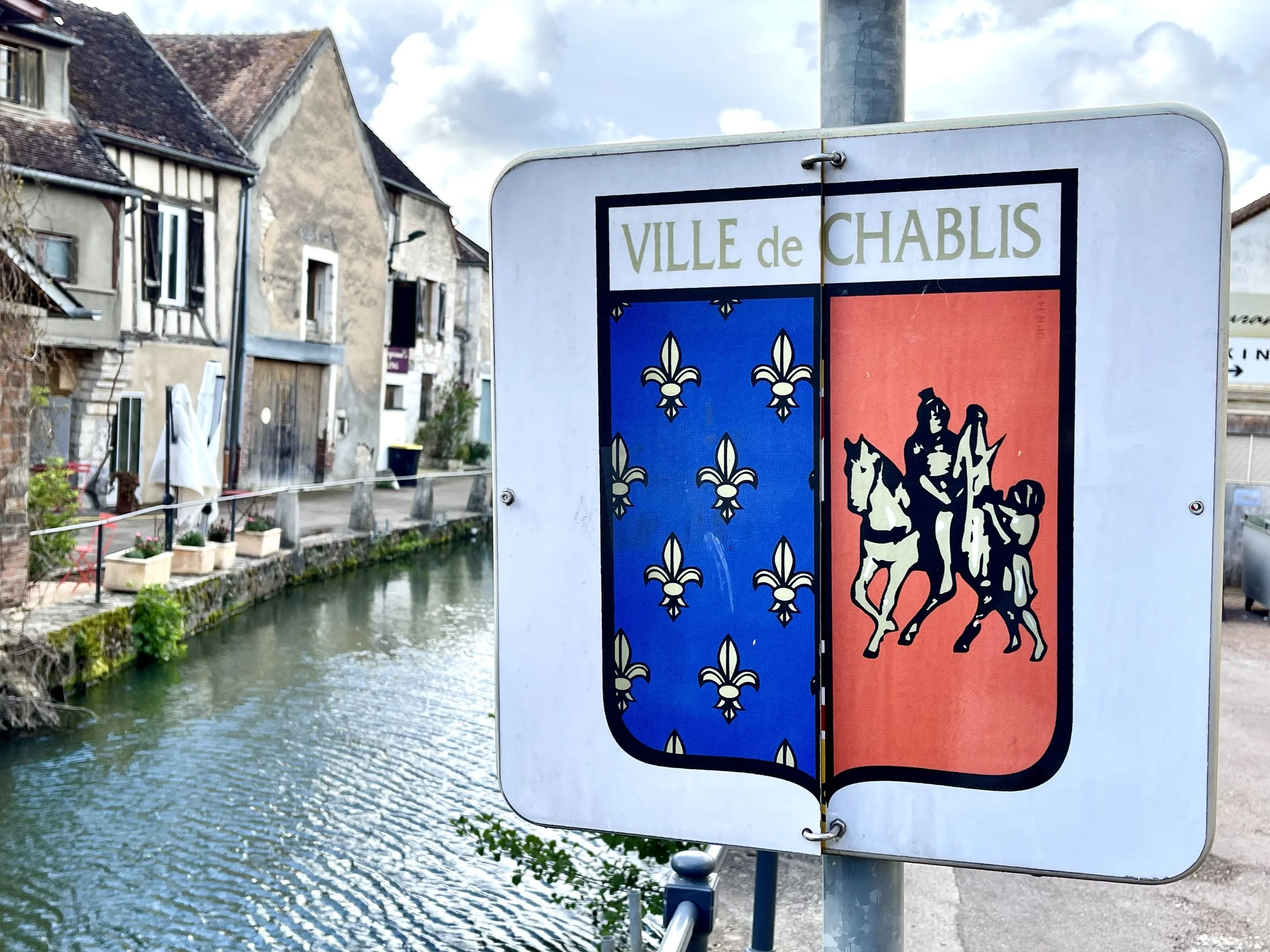
The Serein River not only flows through the town of Chablis, it shapes the slopes and microclimates in the surrounding vineyards. All photos by Lisa Denning.
The region is divided into the following four appellations.
Petit Chablis: Fresh, Bright, and Easygoing
Petit Chablis makes up about 20.5% of Chablis production. It's the lightest, freshest style, usually fermented and aged in stainless steel, producing dry wines with crisp citrus, green apple, white blossom aromas, mouthwatering acidity, and a clean mineral finish.
The evening began with two Petit Chablis wines: the 2024 Daniel Dampt & Fils Petit Chablis ($25) and the 2023 Isabelle et Denis Pommier Petit Chablis ($34).
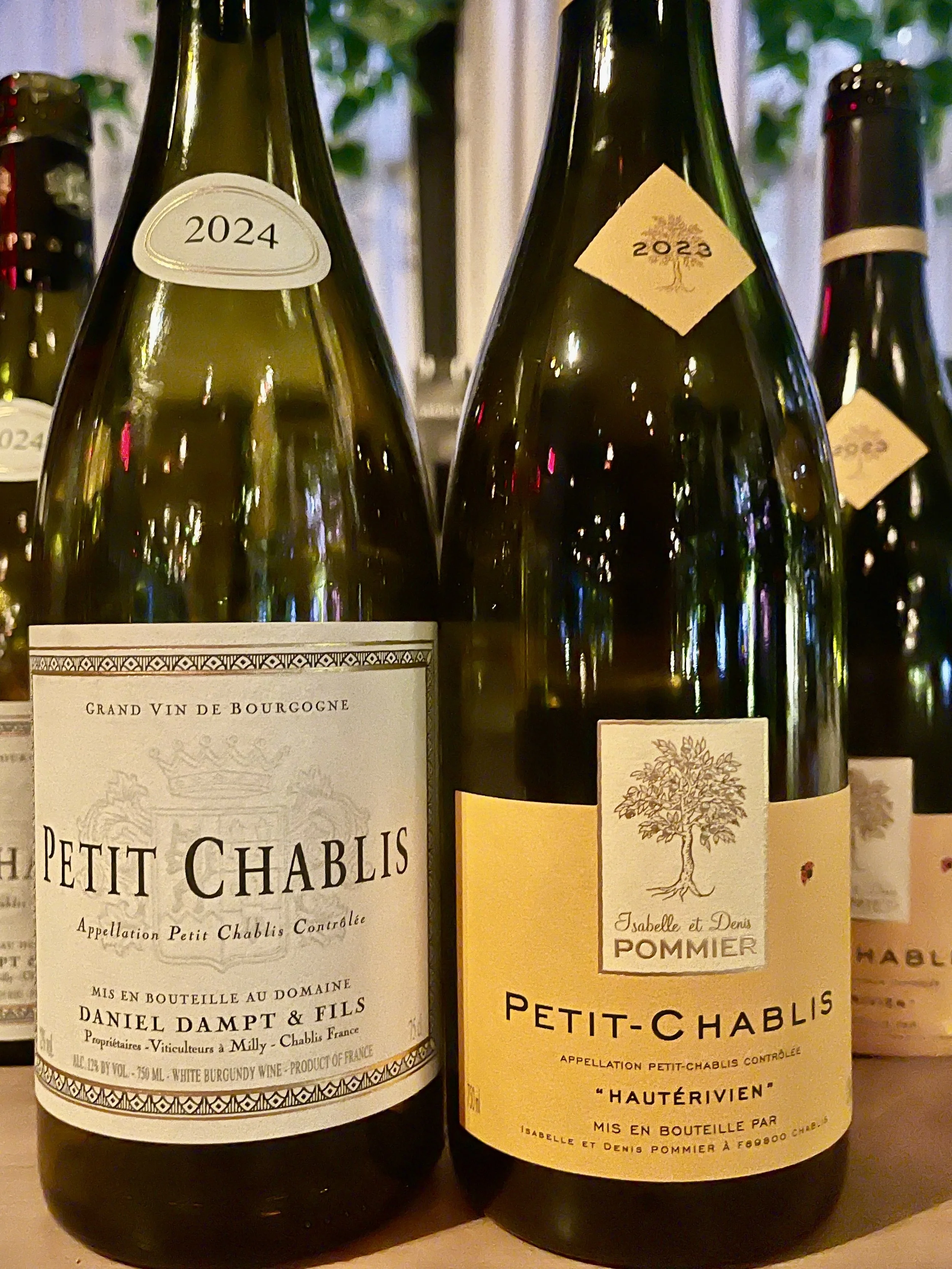
All photos: Lisa Dening
Although the two wineries are located only minutes apart, the wines were noticeably different, reflecting the influence of vineyard location, vintage, farming, and winemaking.
Racine described the 2024 Daniel Dampt as a classic expression of the appellation: crisp, steely, and unoaked. The organically farmed 2023 Isabelle et Denis Pommier, on the other hand, is from clay-rich vineyards and spent longer aging on its lees, giving it added texture and a richer mouthfeel.
The vintages also contributed to their different personalities. The cooler 2024 vintage produced a leaner, brighter wine with higher acidity, while the warmer 2023 vintage yielded a rounder, more generous style. Side by side, the two wines showed that even within Petit Chablis, there's far more diversity than many people expect.
However, both wines' bright acidity and mineral backbone paired beautifully with lobster beignets topped with Kaluga caviar and a chèvre tart.
Chablis: The Heart of the Region
The next step up the ladder was the 2023 Domaine Jean-Marc Brocard Chablis ($28), the appellation that accounts for roughly 65 percent of the region's production. If most Petit Chablis are bright and easygoing, Chablis offers greater depth, more concentration, and a longer finish, while retaining the region’s classic freshness.
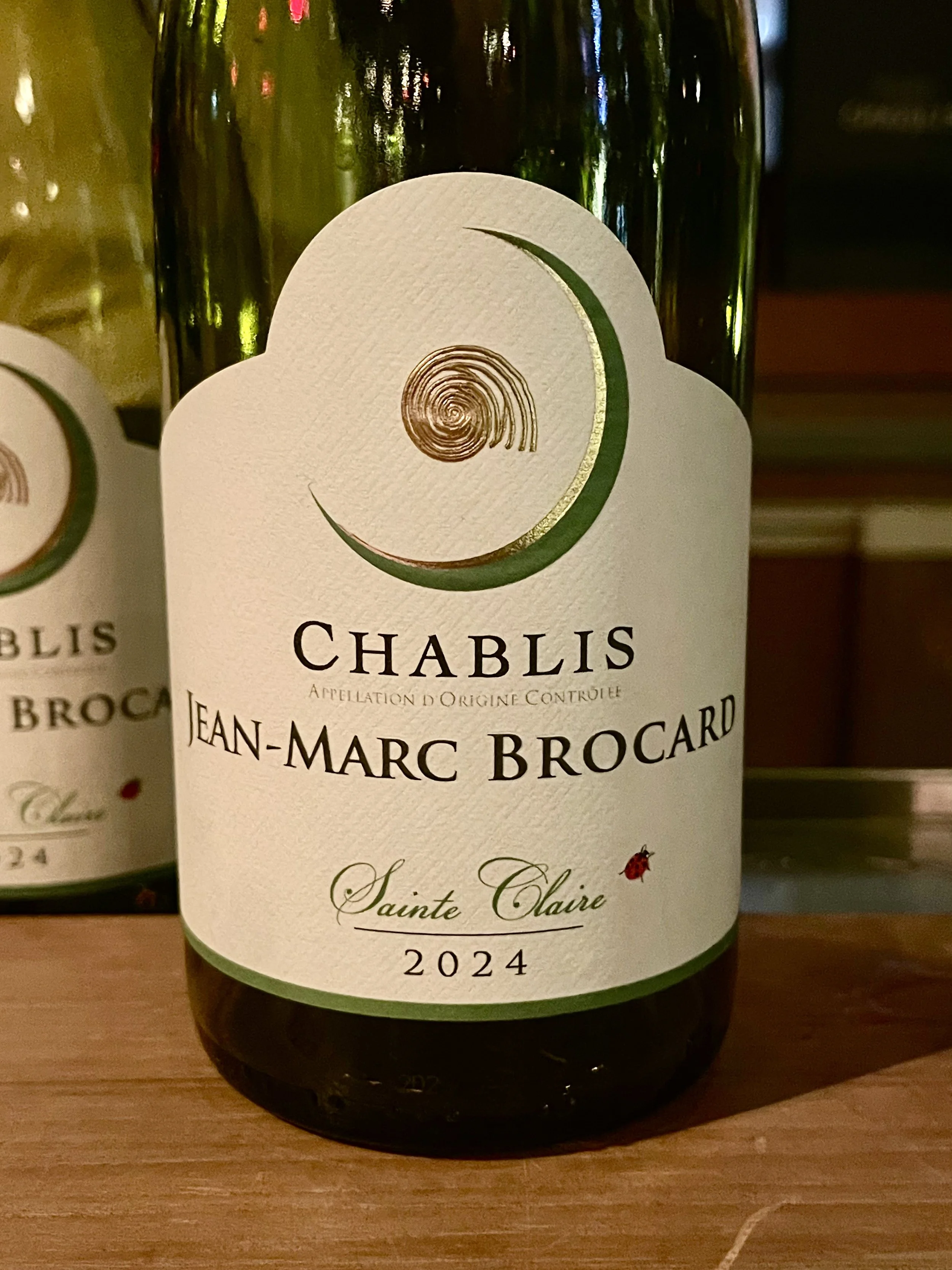
Brocard is also the first producer in Chablis to practice biodynamic farming, a method that promotes ecological balance, prohibits synthetic chemicals, and uses natural preparations in the vineyards and cellar.
Chablis wines, such as the Brocard, pair wonderfully with seafood thanks to their high acidity, mineral character, and lack of heavy oak. The Brocard was especially good with the razor clam ceviche, its oyster-shell-like minerality a great match for the dish's flavors.
Premier Cru: Where Individual Vineyards Begin to Shine
Representing less than 15 percent of Chablis production, Premier Cru wines come from some of the region's finest vineyards. We tasted the 2023 Domaine Laroche Les Vaudevey Premier Cru ($75) alongside the 2023 Domaine William Fèvre Montée de Tonnerre Premier Cru ($110). Although both carry the same designation, they offer different expressions. Les Vaudevey comes from a cooler valley with less direct sunlight and shows a more restrained style, while Montée de Tonnerre, from a warmer, sunnier site, has greater richness and concentration.
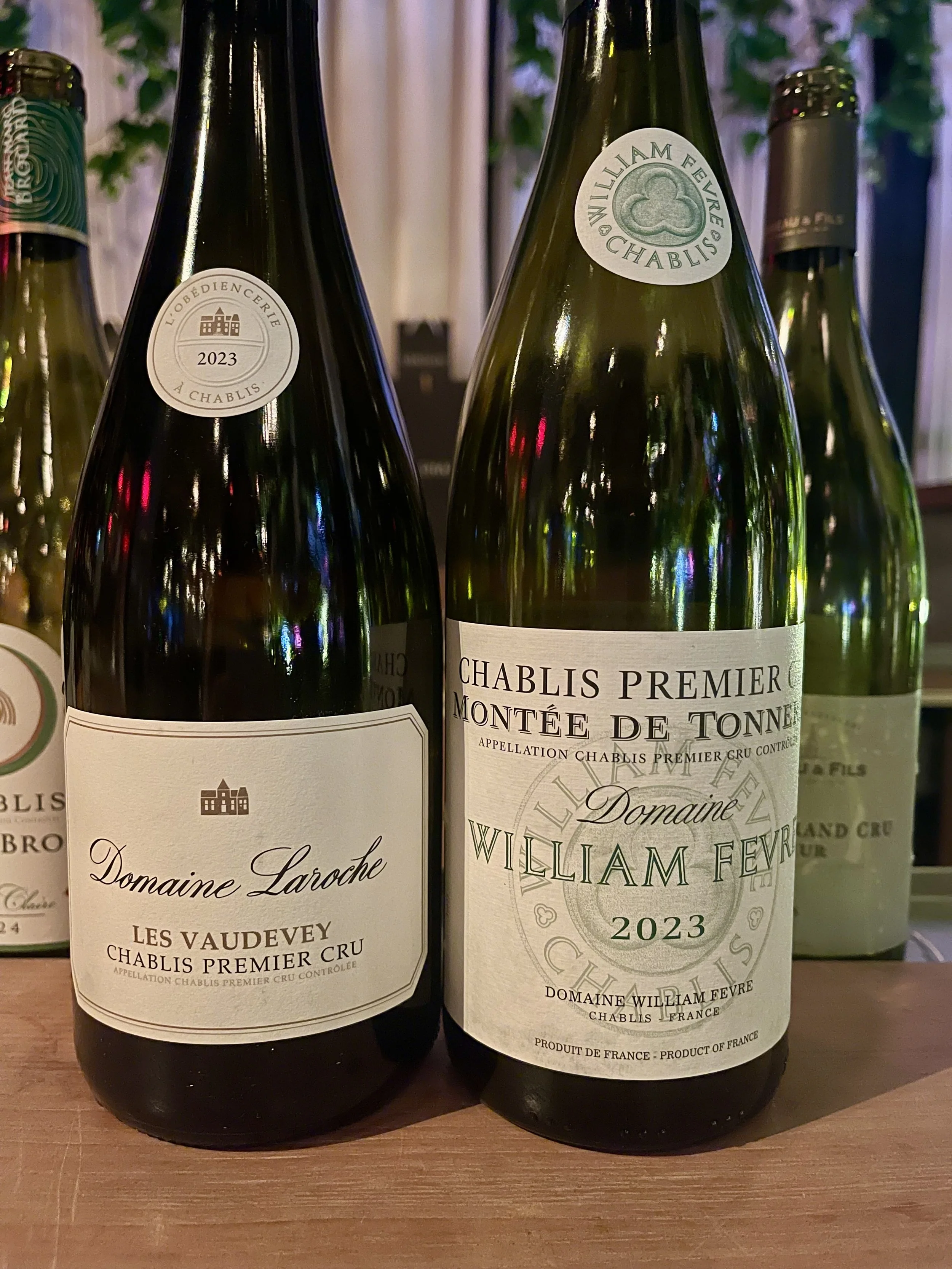
Sampling them side by side made it easy to appreciate how even neighboring vineyards can produce wines with very different personalities. They were paired with one of the evening's highlights: housemade sweet pea agnolotti with asparagus, pea shoots, and Parmigiano Reggiano.
Grand Cru: The Pinnacle of Chablis
Finally, we reached the top of the ladder with the 2019 J. Moreau & Fils Valmur Grand Cru ($140). Chablis has just seven Grand Cru climats (specific, named plots of vineyard land with distinct terroirs): Blanchot, Bougros, Les Clos, Grenouilles, Preuses, Valmur, and Vaudésir. They are located on a single southwest-facing (ie., sun-drenched) hillside overlooking the town. Together, they account for only a small percentage (about 1%) of the region's production and are known to age well for 15 years or longer.
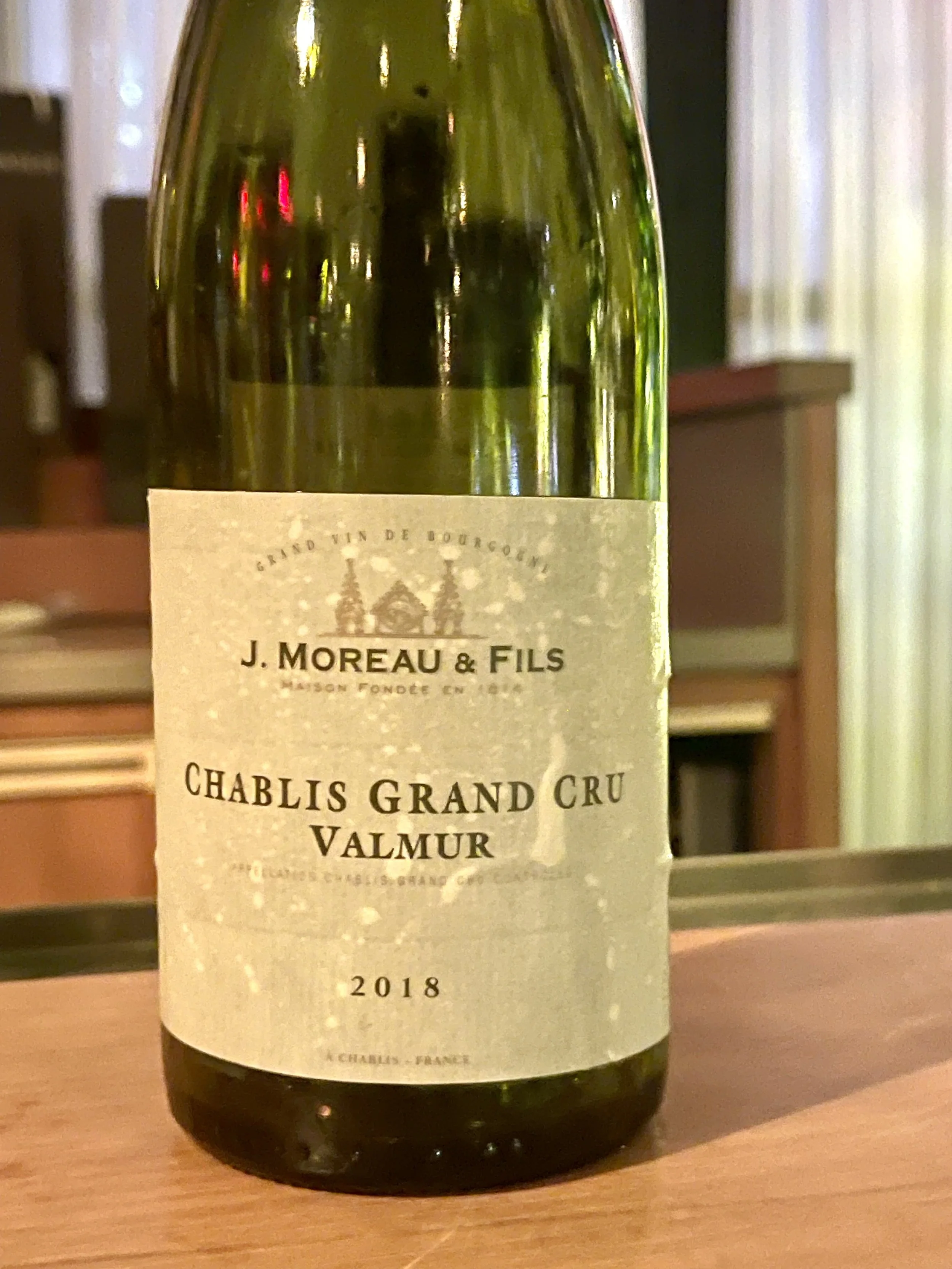
Chablis Grand Cru wines tend to be rich, powerful, and bone-dry, with flinty minerality, vibrant citrus fruit, and a creamy yet crisp texture. While each Grand Cru has its own personality, Valmur is known for its richness and generous texture. By comparison, Les Clos, perhaps the most famous of the seven, is typically more powerful and structured, with great aging potential.
The J. Moreau & Fils Valmur was expressive, with greater texture and complexity than the wines that preceded it, while still retaining Chablis’ lively acidity. Paired with Chef Warren's foie gras mousse tucked into a zucchini blossom alongside New York sole with brown butter crumble, both the wine and the dish were equally memorable. From my tasting notes of the wine: saline, rich, apple and lemon curd, Delish! Long finish.
By the end of the night, and four appellations in, one thing was clear: Chablis, at every level, makes a meal better.