
Beaujolais Wine: From Everyday Favorites to Age-Worthy Crus
/I’ve long been a big fan of Gamay from France’s Beaujolais region. It’s the combination of vibrant red fruit and mineral earthiness that gets me every time. The wines are among the world’s most food-friendly, made for the way people dine today. Think relaxed meals rather than haute cuisine: roast chicken at a neighborhood bistro, oysters and steak frites at a bustling brasserie, or burgers on the back patio.
But don't let their easy-drinking style fool you. Beaujolais runs the gamut, from light and zippy to rich, structured, and surprisingly complex. Even better, the wines often come at hard-to-beat prices, especially when considering the prices you’ll pay just a few miles north in Burgundy.
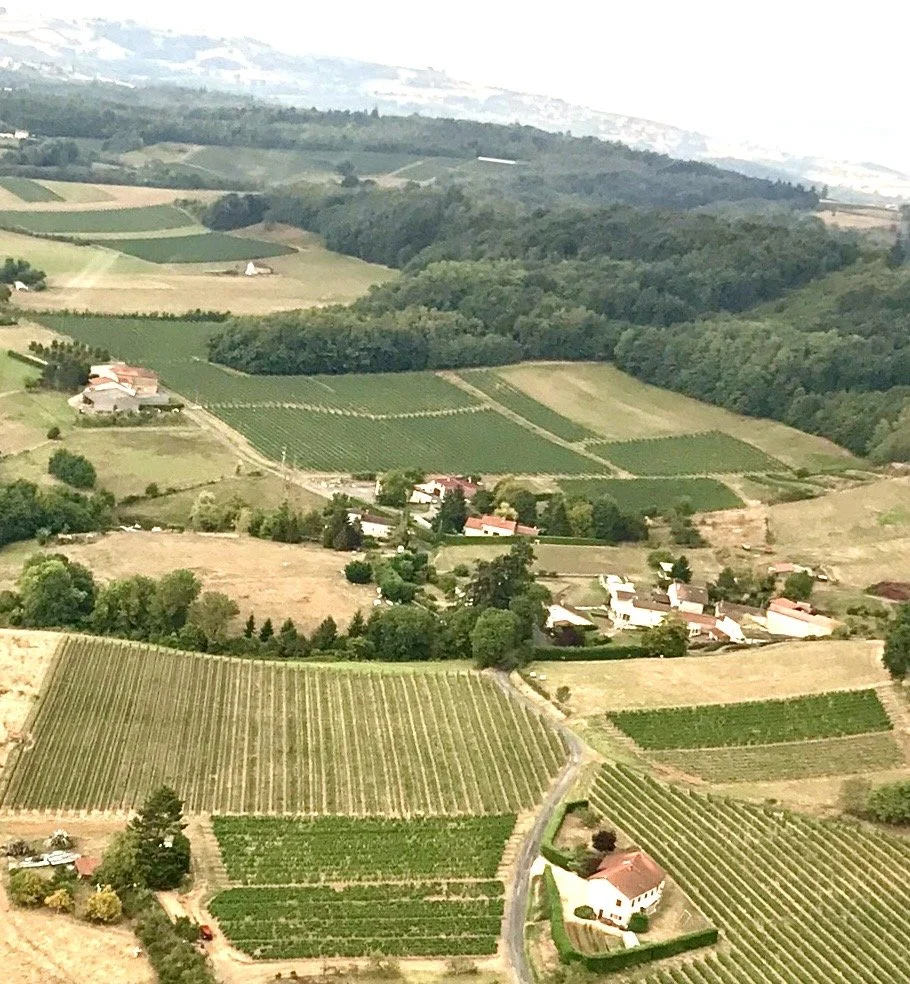
Helicopter views. All photos by Lisa Denning
“Beaujolais are wines for every occasion,” says Anaëlle Joret, Head of Economic Observatory & Export Market Manager for Inter Beaujolais in Canada and the U.S. “They share a common thread of freshness, deliciousness, and charm.”
But those shared qualities tell only part of the story. To understand why Beaujolais can produce such different expressions of Gamay, you have to look at the landscape itself.
A Wine of Place
The Beaujolais wine region sits between southern Burgundy and the northern Rhône. Nearly all Beaujolais is made from Gamay, a red grape variety; however, it doesn't taste exactly the same everywhere it’s grown. Move a few miles in any direction, and the wine changes with the ground beneath it: granite here, limestone and clay there, the occasional patch of old volcanic rock. That variation is part of why a 2009–2018 study mapping 15,000 vineyard parcels found more than 300 distinct soil types, a diversity that helped earn Beaujolais UNESCO Global Geopark status.
Whatever the soil, Gamay wines show vibrant fruit notes, usually cherry, raspberry, and strawberry, along with hints of violet and, at times, spice, earth, or smoke. But the grape is also extremely expressive of where it's grown.
“Gamay allows us to unlock the tremendous potential of our region's mosaic of soil types,” Joret explains. On granite, the wines are often lighter, more perfumed, and floral. Limestone and clay tend to produce wines with more body, structure, and depth. Volcanic soils can add a distinctive savory, mineral edge. Same grape, yet noticeably different wines in the glass.
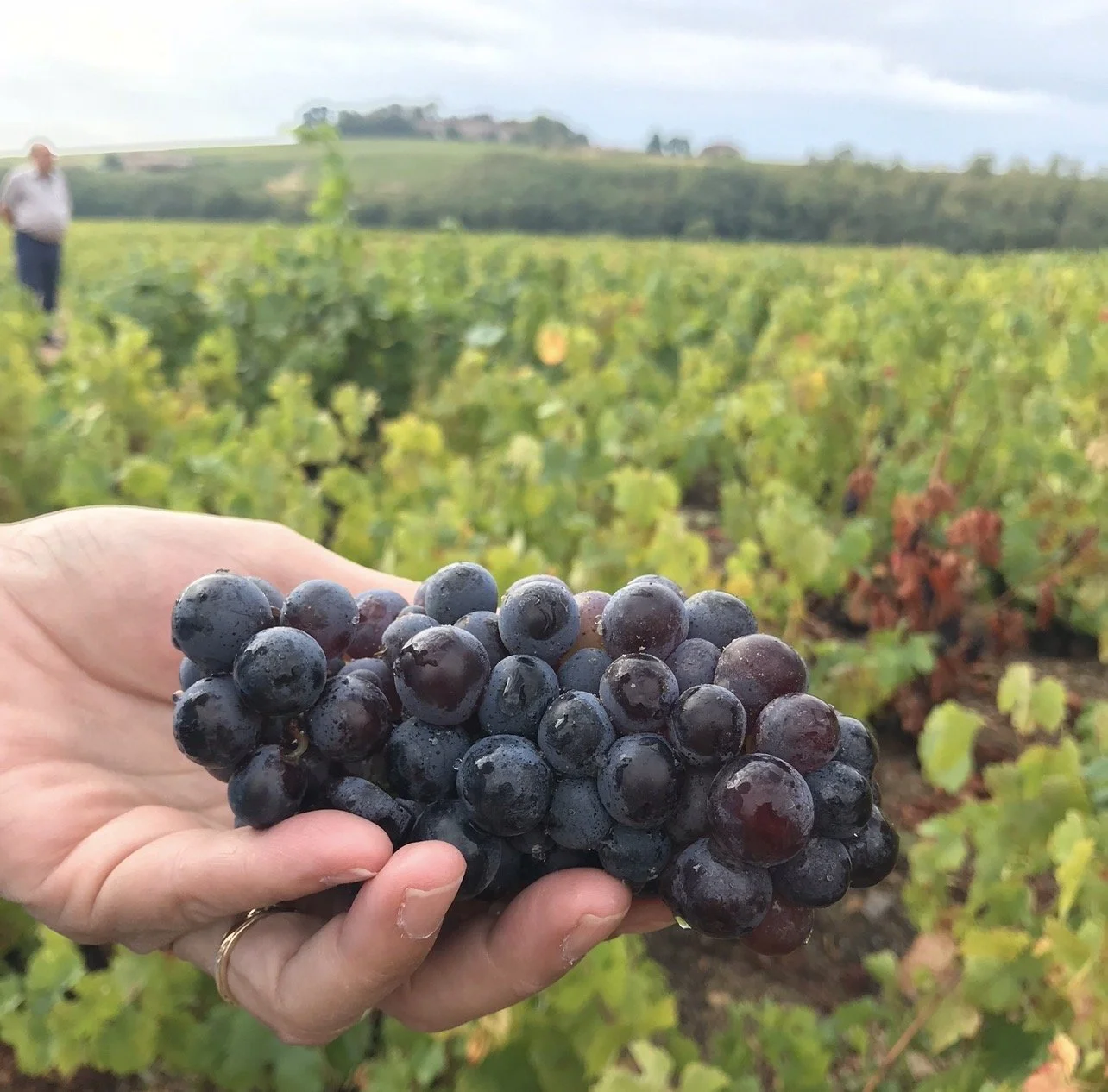
Gamay grapes are thin-skinned and grow in tight clusters. As they ripen, they turn a deep, bluish-black crimson color.
Three Tiers, One Region
Beaujolais breaks down into three levels of wine.
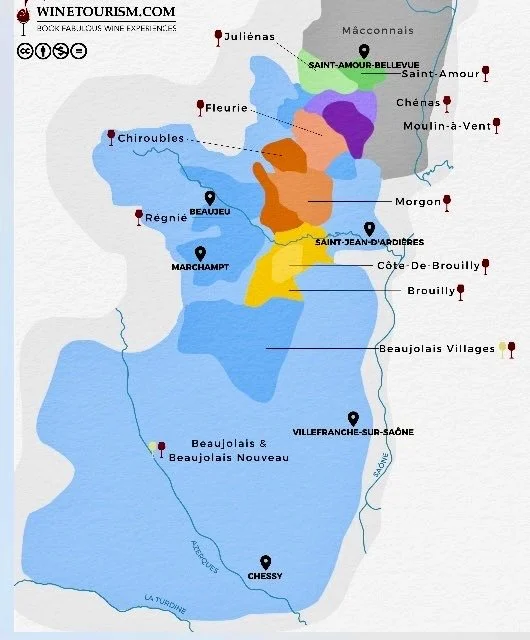
The Beaujolais AOC appellation has officially existed since 1937. Today, the wines come in 3 colors: 90% red, with the remaining 10% white and rosé. It’s the everyday bottle: light, juicy, and crisp with a floral and fruity bouquet; best served slightly chilled with raw vegetable salads, charcuterie boards, pizza, roast chicken, and even a raspberry tart.
Beaujolais-Villages comes from 38 villages, many of which surround the ten crus. These wines are often blends from multiple villages, and because many vineyards are planted on granite and schist soils, they offer a step up in depth and structure while remaining fresh and easy to drink. They're excellent with roast chicken, grilled sausage, or a burger.
Beaujolais Nouveau is classified as either Beaujolais AOC or Beaujolais-Villages, depending on where the grapes are grown. These light, young, fruity wines are released each November and are famous for the lively celebrations that surround them, but they represent only one expression of what Beaujolais can be.
The ten Beaujolais crus sit at the top of the region's quality pyramid. Each is bottled under its own name and reflects its own combination of soils (mostly ancient granite and schist), elevation, and exposure. While every producer has a unique style, here's a general guide to what you can expect from each cru.
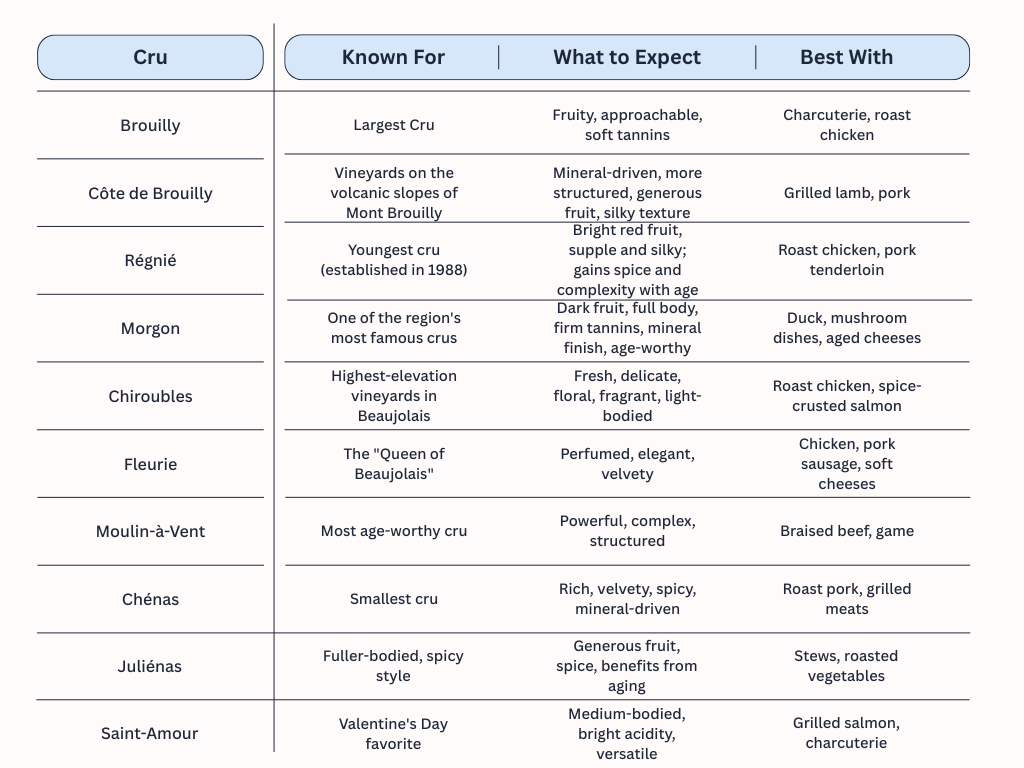
Which Beaujolais Cru Is Right for You?
Wondering which bottle to reach for? Here's a quick cheat sheet based on the styles you already enjoy.
If you enjoy elegant, Pinot Noir-like reds, try Fleurie or Chiroubles. I
f you like bold, savory reds, try Morgon.
If you want fresh, easy-drinking wines, try Brouilly, Régnié, or Chiroubles.
If you love floral, perfumed wines, try Fleurie or Chiroubles.
If you prefer more structured, Burgundy-style reds, try Moulin-à-Vent or Morgon.
If you gravitate toward mineral wines, try Côte de Brouilly, Chénas. Moulin-à-Vent, or Morgon.
If you're looking for cellar-worthy bottles, try Moulin-à-Vent or Morgon.
If you want a versatile food wine, try Saint-Amour or Brouilly.
The region also produces Beaujolais Blanc. Made entirely from Chardonnay, it represents only a small fraction (about 2%) of the region's production. Typically fermented in stainless steel rather than new oak, these wines are crisp, mineral-driven and citrusy, with texture and freshness. As Chardonnay prices continue to climb in many regions, Beaujolais Blanc remains one of France's greatest values.
From a simple, fruit-forward Beaujolais to a structured Moulin-à-Vent and a crisp Beaujolais Blanc, the region has far more than many people realize. As Anaëlle Joret puts it, Beaujolais delivers “the best balance of price, quality, and sheer drinking pleasure.”
My advice? Pick a bottle, pull up a chair, and find out for yourself.
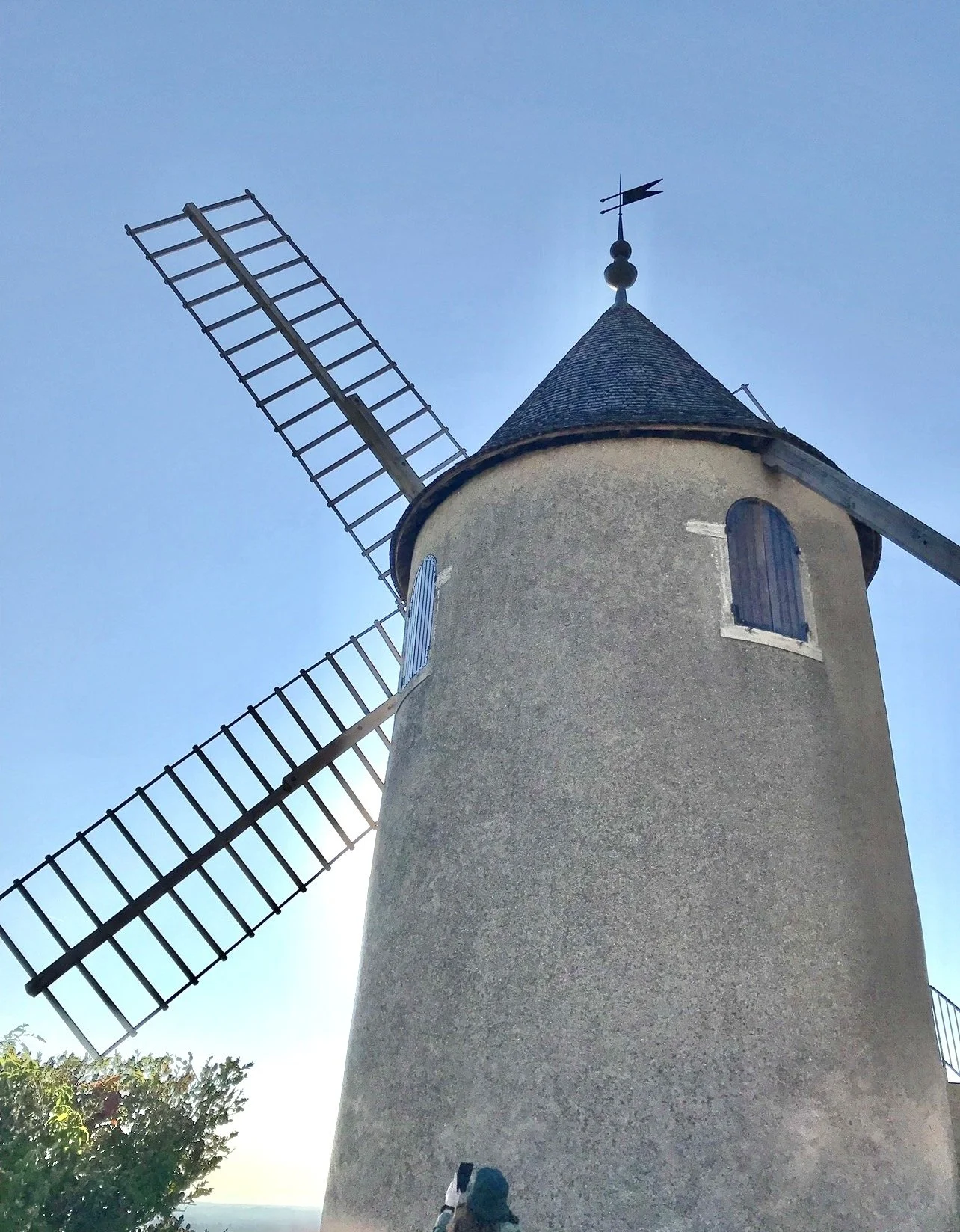
Dating to the 15th century, this stone windmill in Les Thorins is the iconic symbol of Moulin-à-Vent.

The Lady of the Madone church (officially the Chapelle de la Madone) in Fleurie.