

Lake Garda Wines: Always Something New to Discover
/Lake Garda may be one of Italy’s most beautiful wine regions, but there’s more going on here than postcard views. Tucked between the Alps to the north and the Po Valley to the south, the lake’s deep waters play a role in the vineyards, tempering extremes and helping the wines strike that balance between freshness and ripeness, structure and lift.
Beyond the scenery and the climate, though, this is a region focused on telling its story more clearly and making sure wine lovers are listening.

Giovanna Prandini. Photo: @perladelgarda.official
A recent Zoom presentation led by Giovanna Prandini, vice president of the Lake Garda Wine Consortium and co-owner of Perla del Garda, took a closer look at the evolution of this 30-year-old wine denomination (DOC, or controlled appellation of origin): why it was created, what it aims to communicate, and how the region positions its wines today.
Lake Garda: A Quick Refresher
For those unfamiliar, Lake Garda is Italy's largest lake, situated in northern Italy. It spans three regions—Lombardy, Veneto, and Trentino—though the Garda DOC wine appellation covers only the first two. The Consortium was established to promote and protect the wines of ten historic areas that encircle Lake Garda (Italy’s largest lake) across the provinces of Brescia, Mantova, and Verona. Those areas include Valtènesi, San Martino della Battaglia, Lugana, Colli Mantovani, Custoza, Bardolino, Valpolicella, Valdadige, Durello, and Soave.
Underlying everything is the lake itself. "We are between the Mediterranean and the Alps," Prandini noted. "We are in the northern part of Italy, but the lake mitigates the climate and gives us the possibility to grow lemon and orange trees. Usually, this kind of production is not typical of northern Italy."
The lake’s depth tempers temperature extremes in the vineyards today, helping the grapes ripen steadily while preserving freshness. Long before that, retreating glaciers shaped the landscape, leaving behind complex morainic soils—hills layered with rocks, sand, clay, and organic matter. Together, the lake’s influence and this geological diversity give the wines a distinctive salinity and minerality, which Italians call lacustre, a subtle but unmistakable lake character.
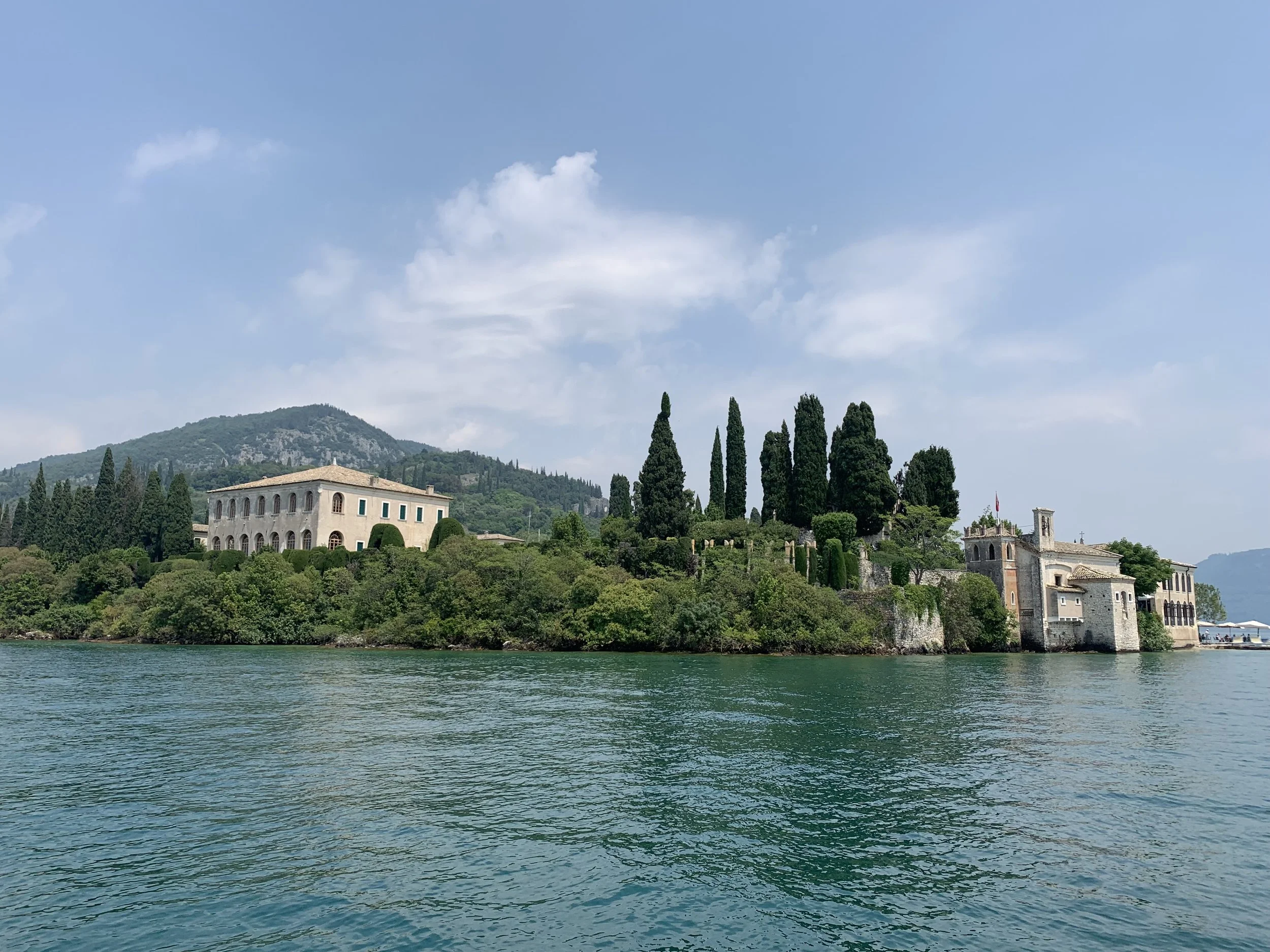
Along the shores of Lake Garda in the summer. Photo: Lisa Denning
The landscape offers a striking contrast: snow-capped mountains rising behind vineyards that slope toward brilliant blue water, all bathed in ample sunshine for ripening. The area has been growing grapes since the days of the Celts and Romans. Today, with nearly 31,100 hectares under cultivation, about 250 producers, and numerous cooperatives, it produces almost 20 million bottles annually.
Understanding the Garda DOC "Supergroup"
Garda DOC operates unlike most Italian wine appellations. It functions as an umbrella over the 10 historic appellations, with each area maintaining its own consortium. The Garda DOC was created in 1996 to recognize excellent wines made from international grapes such as Chardonnay, Merlot, and Cabernet Sauvignon that didn't meet the traditional appellations' requirements.
"We are trying to build commercial opportunities for, especially, international grapes that are not allowed in the historical denomination appellations," Prandini explained. “For example, Lugana must be made with Turbiana grapes, and Bardolino requires indigenous varieties like Groppello. But many producers also grow Chardonnay, Riesling, Merlot, and Cabernet on their properties.”
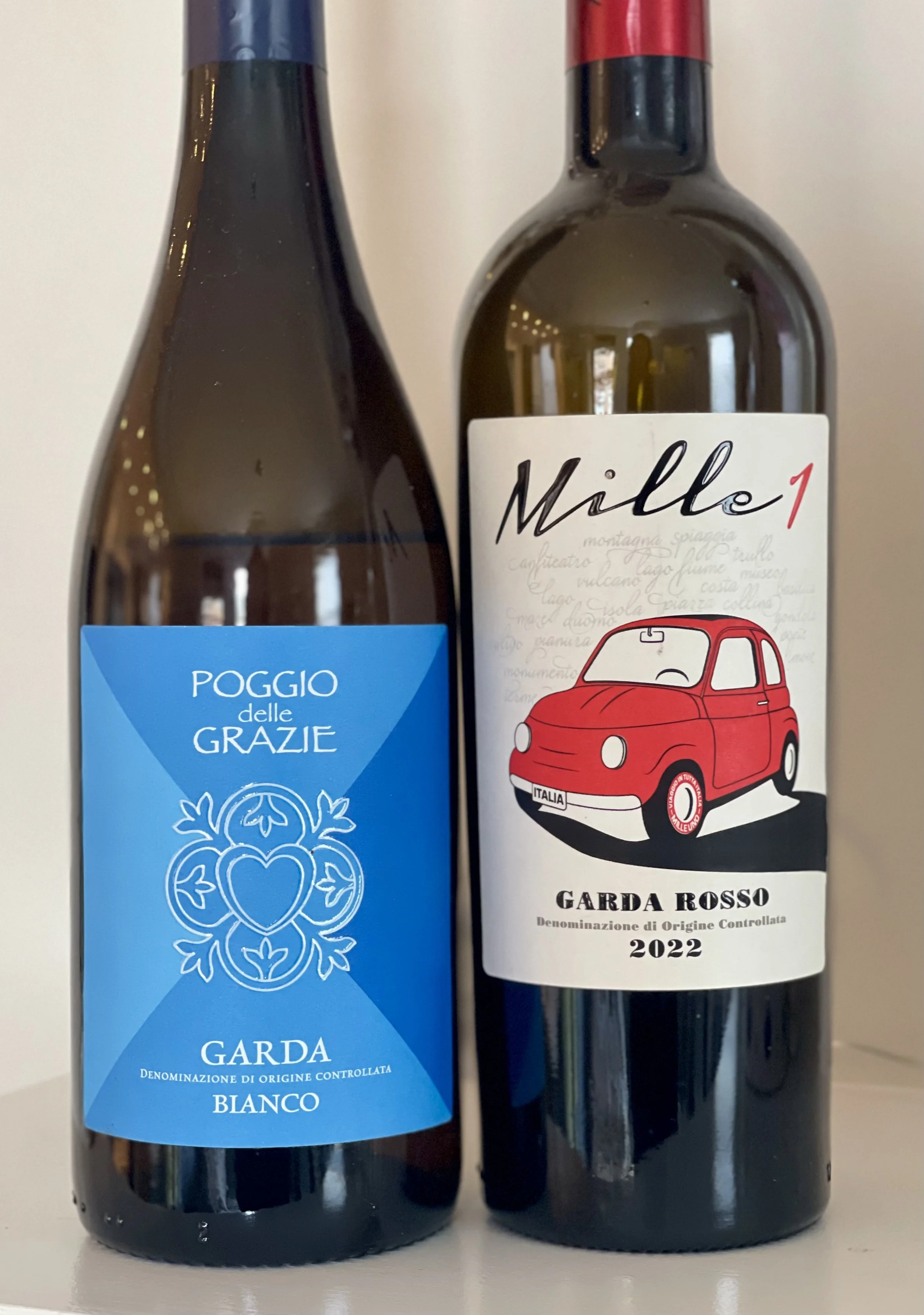
At left, Poggio delle Grazie Garda Bianco 2024, made from a 60/40 blend of Friulano and Trebbiano. A crisp, citrusy white wine with low, 11.5% alcohol. At right, Pratello Mille 1 Garda Rosso 2022, made with 40% Rebo, 40% Merlot, and 20% Corvina. Medium+ body, fruity (cherry, strawberry) with a savory finish (herbs and tobacco). Photo: Lisa Denning
In the past, these international-variety wines could only be labeled as simple IGT wines, even when they were of excellent quality. Garda DOC changed that, giving them prestigious DOC status. Producers now have the flexibility to align each wine with the designation that best reflects its grapes and intent.
Interestingly, while the region is famous for indigenous varieties like Garganega and Corvina, Pinot Grigio leads production volume in the Garda DOC, followed by Chardonnay.
Innovation Meets Tradition
In October 2024, Garda DOC demonstrated its forward-thinking approach by introducing Italy's first low-alcohol DOC wine, Garda Garganega, at just 9% alcohol. This is noteworthy, given that climate change is pushing alcohol levels ever higher across the wine world.
It also became the first Italian appellation to adopt "Crémant" for its traditional-method sparkling wines. When asked about this, Prandini explained: "Some of our producers used to produce wine with a style that reminded people of Crémant, so Garda was the first appellation to use this kind of descriptor. The idea was to make something that was easy for people to recognize."
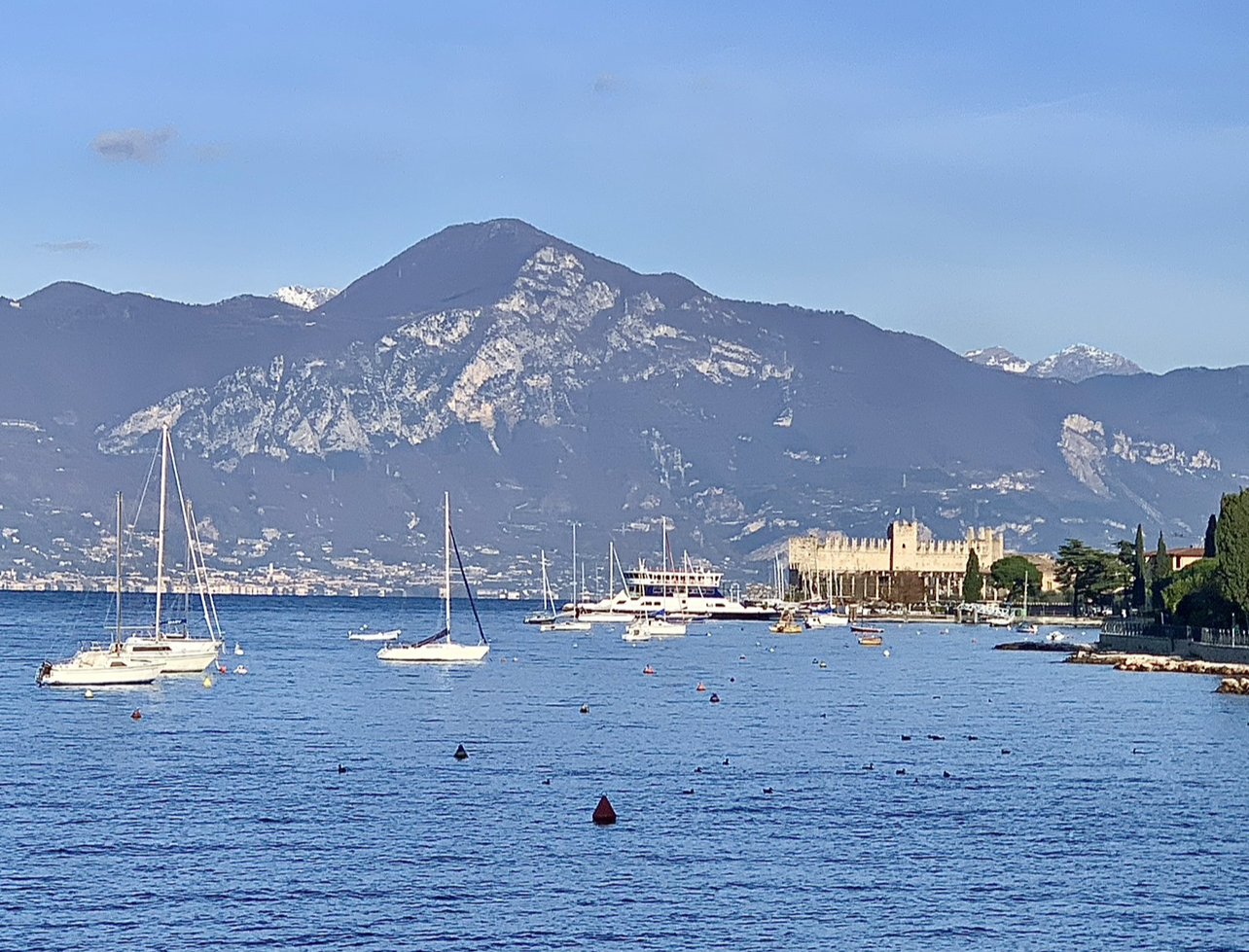
December at Lake Garda
Plan Your Visit
Even after two press trips and years of tasting these wines, I came away from Prandini's presentation with fresh insights. That's the beauty of wine regions like Lake Garda. They reward repeated visits and continued study.
If you haven't been there yet, I highly recommend adding it to your Italian wine travel list. The combination of stunning scenery, excellent wines, outstanding food, and warm hospitality makes it an unforgettable destination. While exploring the charming lakeside towns, hiking in the hills, or visiting family-run wineries like Perla del Garda, there's always something up-to-date to learn about this region.
For more inspiration on planning your Lake Garda wine adventure, check out my other articles: Lake Garda: A Wine and Food Lover's Delight and In and Around Bardolino: Lake Garda's Best Spots for Eating and Drinking.
Many thanks to Susannah Gold of Vigneto Communications for organizing this informative Zoom seminar.