
North Fork Notes: Talking Food and Bubbles at Sparkling Pointe
/Last summer, I spent a month with my family in Greenport, New York, on Long Island’s North Fork (the Hamptons being the South Fork). Normally, I would’ve cajoled a family member or two into visiting a bunch of wineries with me, but this year was a bit different. We had my sweet little granddaughter, Elsie, in the house (three months old at the time), and we all stayed in far more than usual to tend to her.
Even though I made it to only one winery the whole month, I couldn’t have picked a better one. I love sparkling wine, and Sparkling Pointe is New York’s only winery that makes 100% bubbles. Even better, as a Champagne freak, I love that it's all made the traditional way. A few years back, I’d fallen for Sparkling Pointe’s Topaz Imperial Rosé after receiving a sample, and I've been wanting to visit the winery ever since.
The North Fork turns out to be a good place to make bubbly wine. Cool breezes off the water help grapes stay fresh and retain their natural acidity, which is essential for sparkling wine. Rain can be a challenge, bringing the risk of mildew and rot, but an earlier harvest helps avoid disease while keeping sugar levels low. That also helps keep the alcohol in check, even after the second fermentation in the bottle.
All photos by Lisa Denning
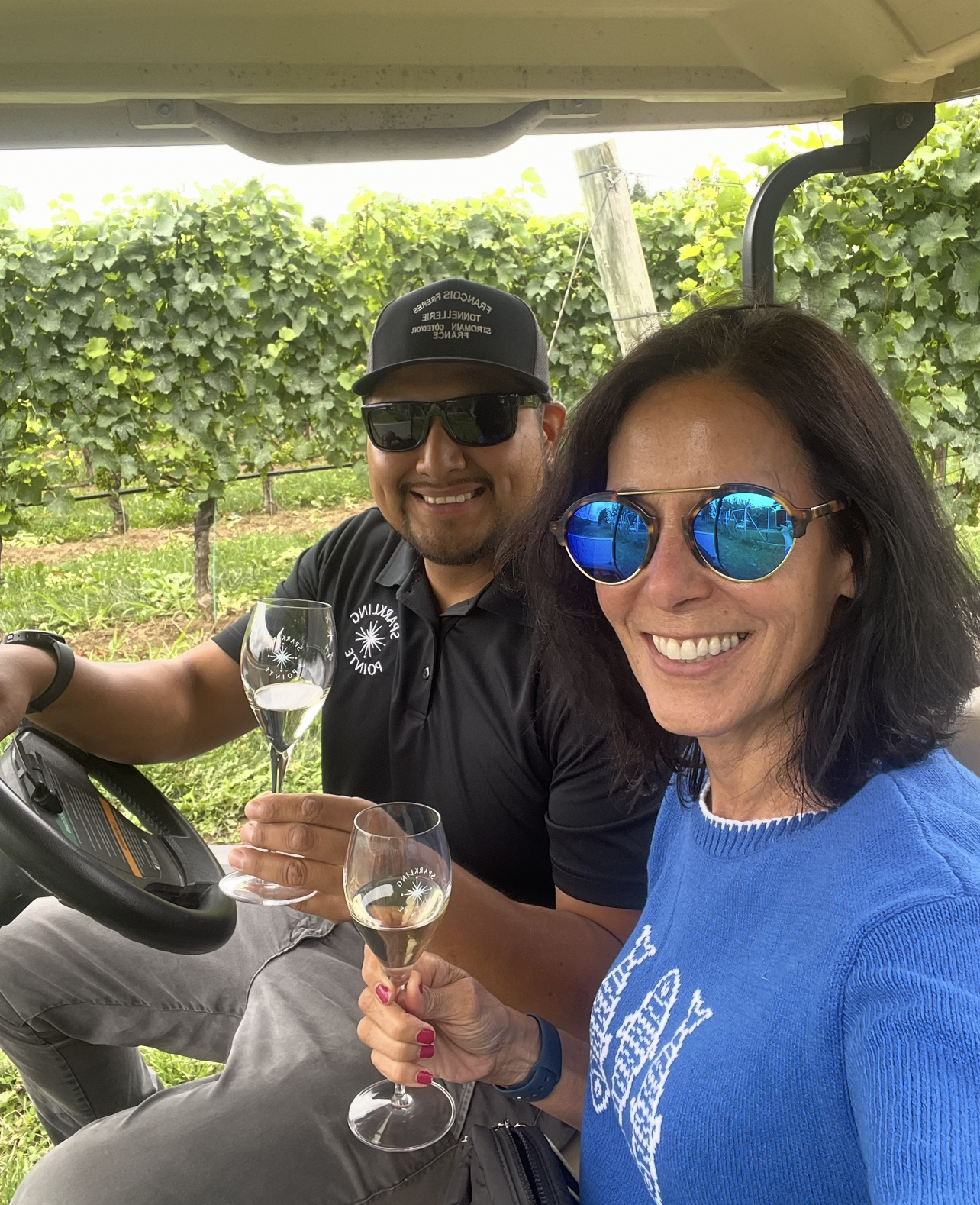
Assistant winemaker Leo Mora greeted me warmly and then invited me to hop into a golf cart, glass in hand, and head out to the vineyards. As we made our way through the rows, Leo pointed out different grape varieties and talked about the winery’s work with Pinot Noir clones brought over from Oregon, along with some experimental grape varieties Cornell University is developing. The team at Sparkling Pointe is clearly interested in finding new ways to get the most out of the vineyard, which, of course, makes for great-tasting wines.
Our conversation soon turned to one of my favorite subjects: food and wine. It turned out that Leo, like most people in wine, was just as passionate about that combination!
Last December, he tried to recreate his mother's chicken mole tamales recipe. “I didn't quite get there,” he told me. “My version is a work in progress.” But he did love the wine alongside it: Sparkling Pointe's dry, zippy Brut Nature. “Man, that was a great pairing,” he reminisced, smiling.
A Passion for Sparkling Wine
Sparkling Pointe’s founders, Tom and Cynthia Rosicki, had practiced law before deciding to build a winery and vineyards on a former farm in Southold in the early 2000s. They planted the same three grapes as are grown in Champagne: Chardonnay, Pinot Noir, and Pinot Meunier. People told them these fussy grapes wouldn’t survive the North Fork’s damp climate and that the fruit would rot. “They persevered because they saw the possibilities,” Leo said. “From my first visit here, it was very clear that this place was different.”
The Rosickis also planned ahead. The original building was designed to expand, and the geothermal cellar keeps it at a steady temperature year-round. “Everything was so well thought out, despite the pushback they got,” Leo said. “People eventually realized this was a smart move: putting your weight behind a project like this, being completely unique in the region, and making really great wines from the very beginning.”
Cynthia has since passed away, and the Cuvée Cynthia is named for her. “Her and Tom’s love of sparkling wine is what brought this place together,” Leo said.
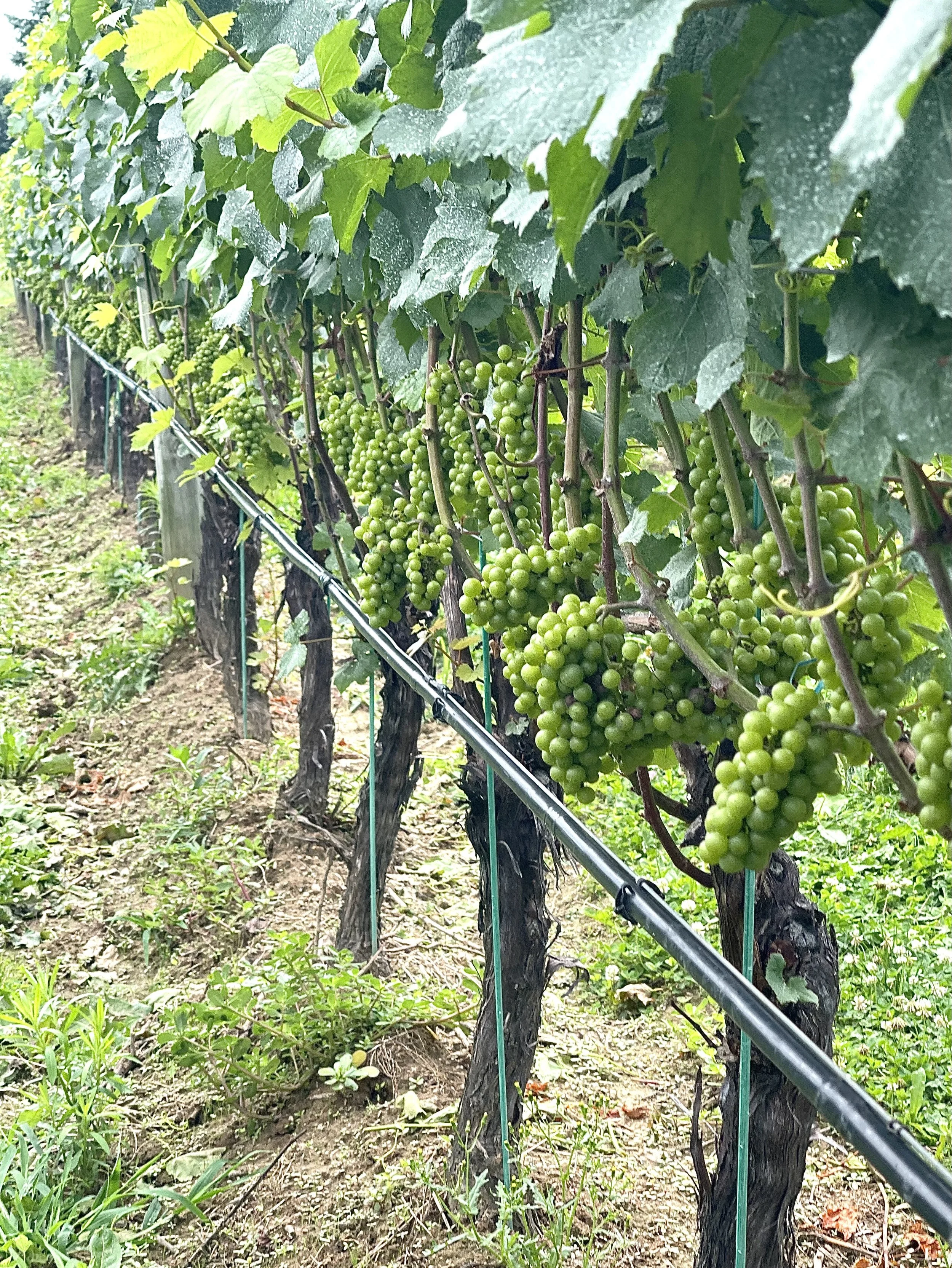
Chardonnay grapes destined for the Blanc de Blancs.
The Tasting
After my tour of the vineyards, I sat at the lounge’s long bar while Leo poured the wines I would taste. “People hear ‘We only make sparkling’ and wonder how you tell the wines apart. But each one of these is very different,” he told me, explaining how each grape contributes to the wine’s body and personality: “Chardonnay is the bones, Pinot Meunier is the flesh, and Pinot Noir is the soul.”
That’s what makes tasting through a lineup like this so enjoyable: each wine has its own personality. But as my stomach started rumbling, all I could think about was which one would pair best with my duck confit dinner that evening.
Brut Nature: The Tamale Wine
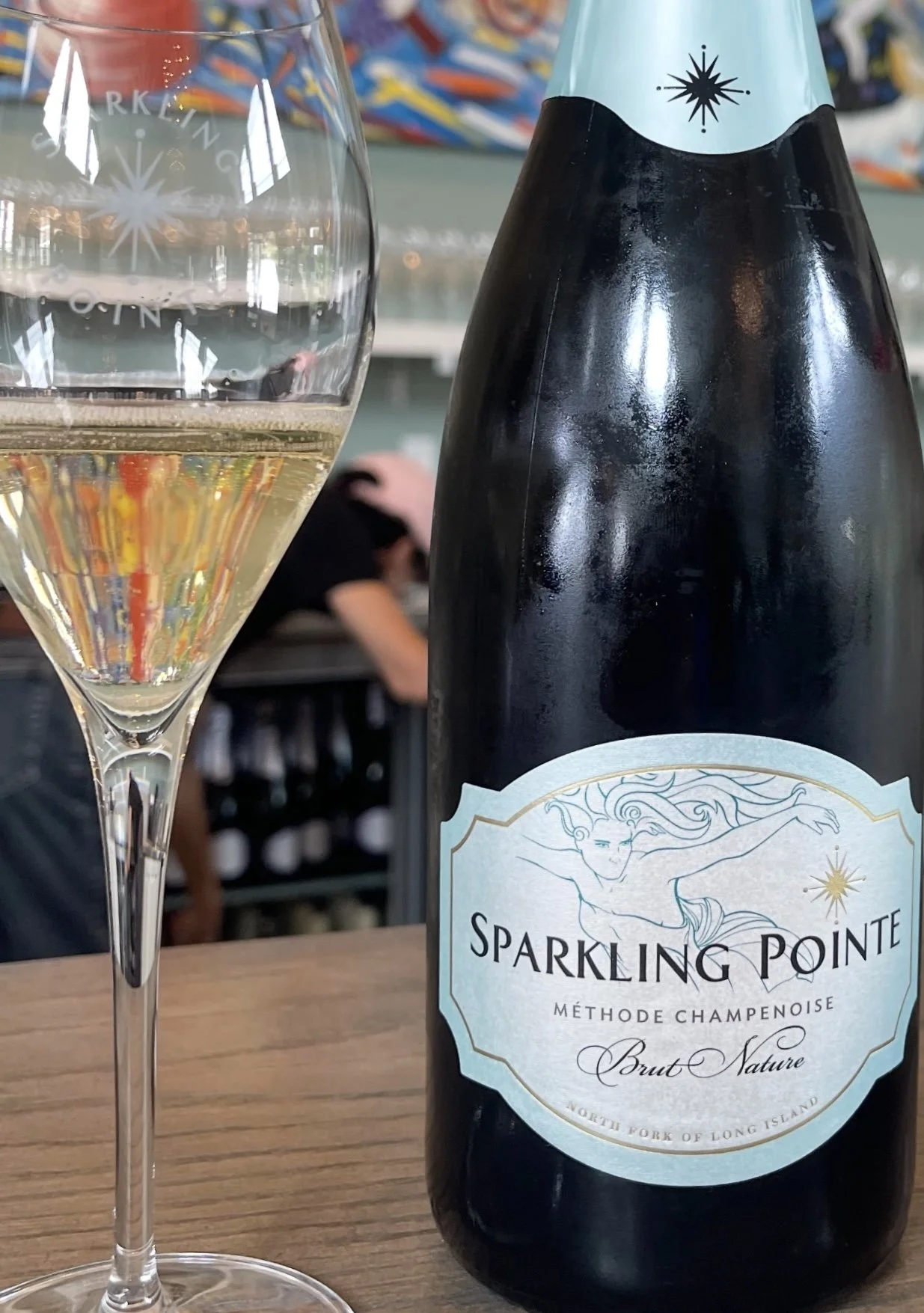
Made from 48% Pinot Noir, 45% Chardonnay, and 7% Pinot Meunier, this zero-dosage wine has no added sugar. “I’ve definitely had some Brut Natures that are just acid bombs, with green flavors,” said Leo. This one, however, was beautifully balanced, bright and focused but easy to drink on its own, with a hint of brioche on the lingering finish. It was one of my favorites, and it was easy to imagine how the bubbles and acidity cut right through the fat and heat of Leo’s tamale meal.
The NV Brut Nature sells for about $35-$42.
Boisseau Blanc de Blancs: The Seafood Wine
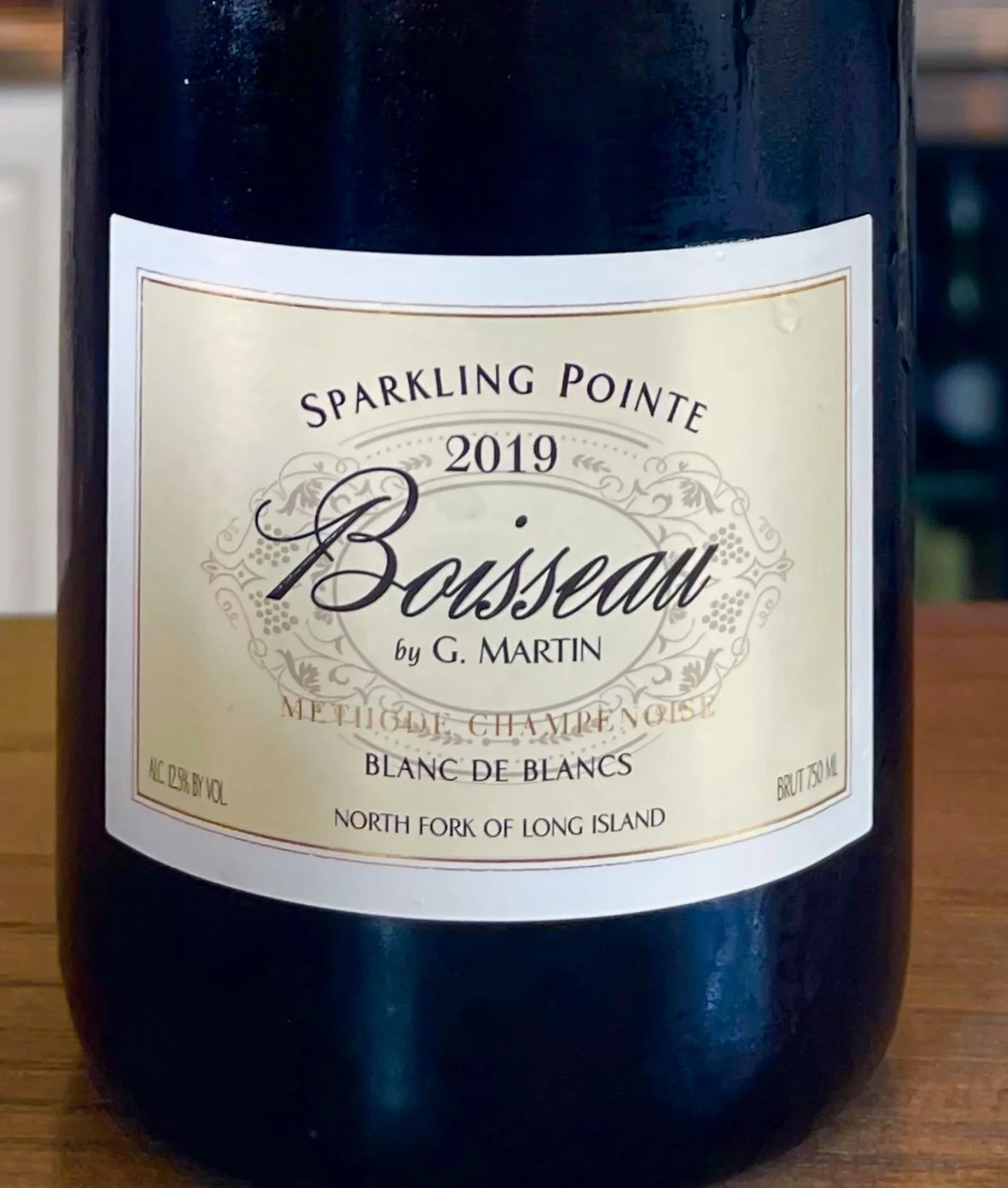
This 100% Chardonnay is from a vineyard about half a mile down the road, with some oak and long aging. Next to the Brut Nature, it’s rounder, with a little vanilla and more structure. “There’s just more there,” Leo said, and as I tasted it, I started thinking about different food pairings right away. I mentioned scallops, and Leo agreed. He added lobster rolls, a great suggestion, I thought.
Leo told me he eats a lot of lobster during the summer. It helps that, on Mondays, through Labor Day, a seafood truck parks at the winery from 4 to 7 p.m. So you can have a glass of bubbly and a buttery lobster roll while watching the sun slowly set over the vines.
The Boisseau Blanc de Blancs sells for $58 at the winery.
Brut Séduction: The Short Rib Wine
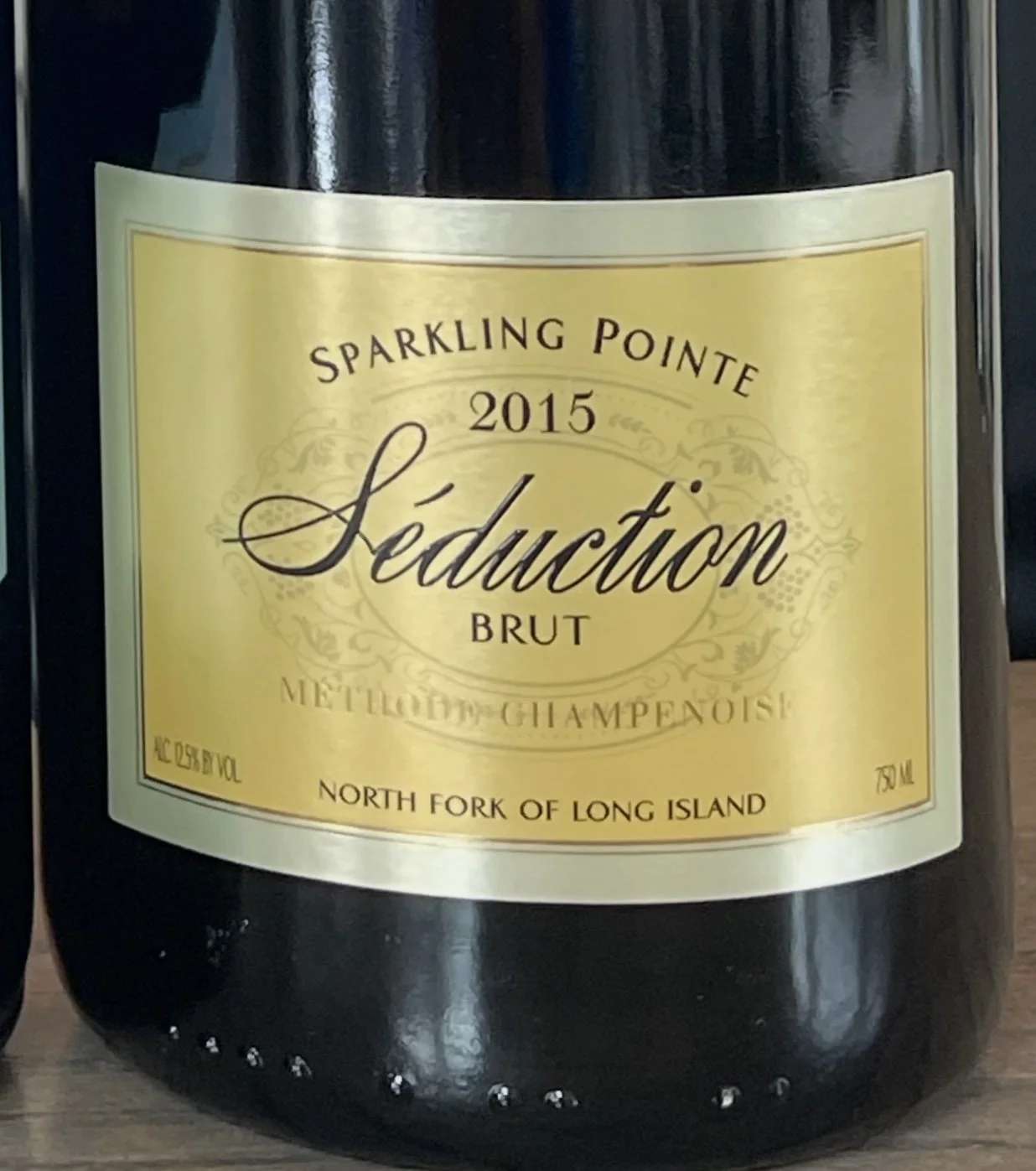
This wine was the one Leo seemed most excited for me to taste. It spends eight years on the lees, and the wine in my glass was more than ten years old. It’s made only from the best lots, in years that deserve it, so there was no 2016, and Leo thinks there may be no 2017. This was my other favorite of the tasting. Despite its age, it was vibrant and fresh, with a yeasty, brioche richness holding everything together.
Leo told me about a dinner he attended when he was still fairly new to the winery, where the chef served the Brut Séduction with short ribs. “I wondered what this was going to be like,” he said. “It was amazing, and it didn’t feel like one overpowered the other at all. I didn’t think that sparkling wines could do that with a heavier dish like short ribs.”
The Brut Seduction sells for about $60-$70.
Not Just For Celebrations
Three unique sparkling wines with three completely different dinners: tamales, scallops and lobster, short ribs. If sparkling wine for you means one bottle at midnight on New Year’s Eve, I have to tell you: you’re missing out!. These wines run the gamut from light and zippy to rich, oaky, and long-aged, so you can match the wine to whatever’s on the table. When I told Leo I could drink sparkling wine every day, he didn’t argue.
Leo lamented that New York restaurants often overlook local wines, even as they champion locally sourced food. “I love that they promote local ingredients, but I wish that translated to the wines, too. We’re right here,” he said.
He’s hopeful that producing smaller bottles might help. This season they’re experimenting with half-bottles, so a restaurant can sell a glass without the rest of the bottle going flat. Leo is confident that once people taste the wines, they’ll be won over. His approach to getting New York sparkling wine noticed is simple: “Get it in front of people, pour it, and let them be the judge.”
I’d add one thing: pour these wines with food, all kinds of food. And for those curious about my duck confit pairing, the winner was the 2015 Brut Séduction.