
A Thousand Years in the Making: The Story of Livio Felluga and the Abbey of Rosazzo
/These days, knowing what’s behind a bottle can be just as interesting as what’s in it. My winemaker friends tell me that the conversations have moved beyond barrel aging, tannic structure, and winemaking techniques to what connects a wine to a place: its history, culture, people, soils, and traditions. Where do the grapes grow? Did someone else cultivate the land before them? How do they care for the land today? And how do all of those things find their way into the glass?
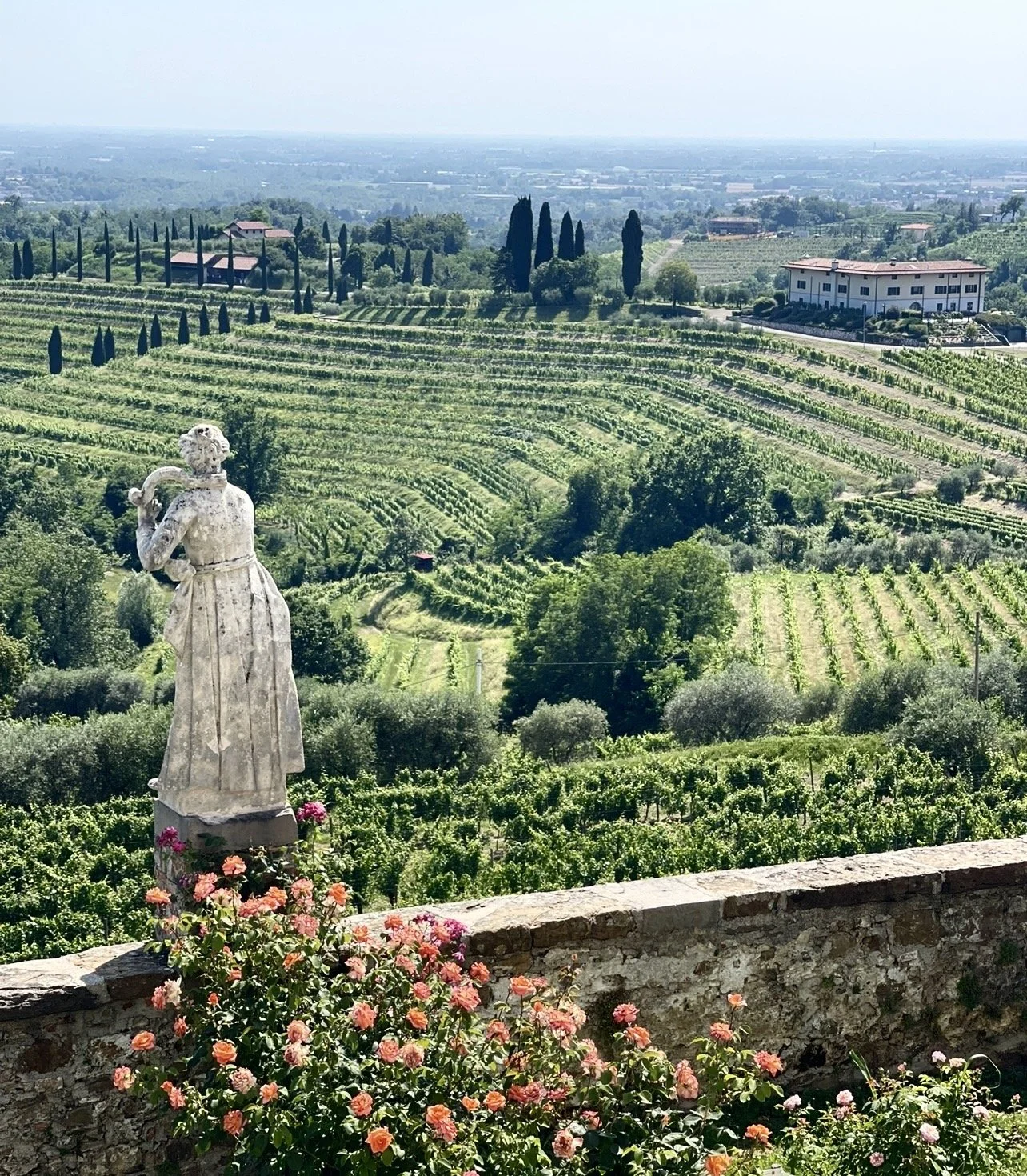
Vineyard Views from the Abbey
I thought about this during an afternoon at Abbazia di Rosazzo, an ancient, northern Italian abbey with more than 1,000 years of winemaking history. Walking through its gardens and vineyards, examining the unique soil, and stepping into the hallowed, centuries-old cellar (a small shrine to wine), I was reminded that with wine, as with life, the past informs the present.
Today, the Livio Felluga winery cares for the abbey’s vineyards, olive groves and wine cellar. In June, I joined Filippo Felluga, who oversees the agricultural side of the estate, and his niece Vittoria Felluga, the company’s Export Director, for two days exploring the family’s connection to this historic place and the wines it produces.
A Millennium of Winegrowing
Abbazia di Rosazzo is located in Friuli Venezia Giulia, between the Alps and the Adriatic Sea, bordering Austria and Slovenia. Many cultures, including Romans, Venetians, Austrians, and Slavs, have passed through the region over the centuries, influencing everything from its food and wine to its architecture and traditions.
The abbey sits on a hill in the Colli Orientali winemaking zone of Friuli, roughly halfway between the mountains and the sea, where geography and climate play a big role in the region’s long history of wine production. The Alps shield the vineyards from cold northern winds, while the Adriatic regulates temperatures. The result is warm days and cool nights, which help the grapes ripen while retaining their natural acidity.
Legend has it that a hermit named Alemanno came to the hill around 800 AD and established a small cellar and spiritual center. About two centuries later, Augustinian monks arrived and built the church in 1068. The Benedictines followed in 1091, and the abbey became an important center of learning. Agriculture and viticulture were central to life here. The monks produced wine for Mass, their own table, and the surrounding community, helping to establish viticulture in the area.
Walking through the stunning grounds, the first thing you notice is the fragrance of roses in the air. There’s no resisting the urge to stop and smell them, and I happily did so over and over again! Medieval documents from 1161 referred to the abbey as Monasterium Rosarum (the Monastery of the Roses), and the extensive gardens include 126 plantings from about 25 different rose families.
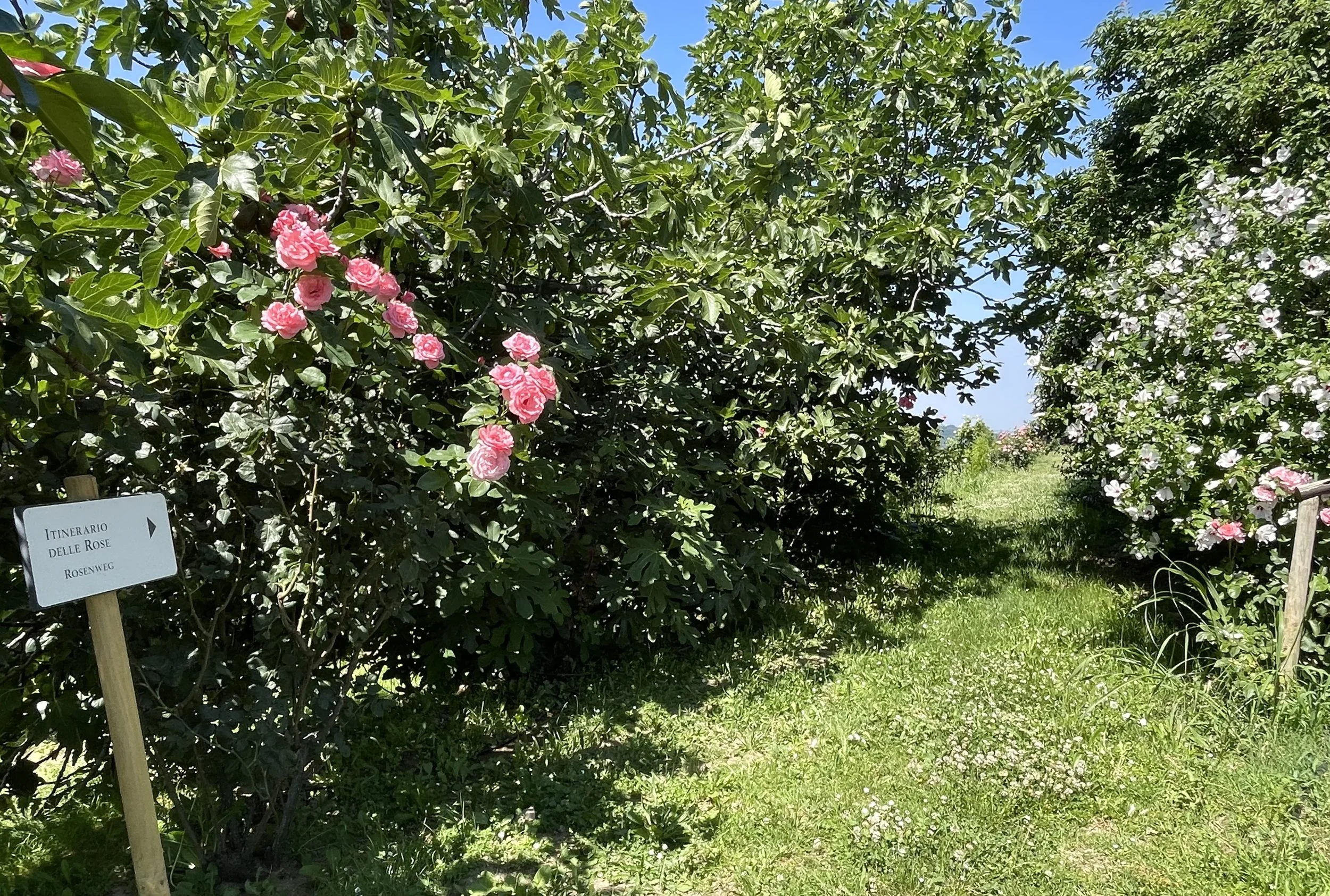
Entrance to the Abbey’s “Rose Path,” featuring several families of old roses.
The Livio Felluga Family Story
Livio Felluga was born in 1914 in Isola d’Istria, now part of Croatia, and moved to Trieste as a young boy. After serving during World War II, he returned to a region turned upside down. Farmers were leaving the land for jobs in manufacturing towns, and vineyards were being abandoned.
Livio saw an opportunity to rebuild the region’s viticulture. Beginning in the 1950s, he acquired land and planted vineyards, often on steep hillsides that required heavy manual labor. At the time, most local farmers produced wine for their neighbors and sold it in large glass demijohns. Livio envisioned something else: a winery that would bottle its own wines and put a name and sense of place on every bottle.
In 1956, he introduced what would become the winery’s iconic geographical map label, adapting an old topographical map of the Friuli area to show where his wines came from. It was an unusually forward-thinking idea at a time when there were no appellations or established ways of communicating Friulian terroir. The map became the winery’s signature and remains on its bottles today, 70 years later.
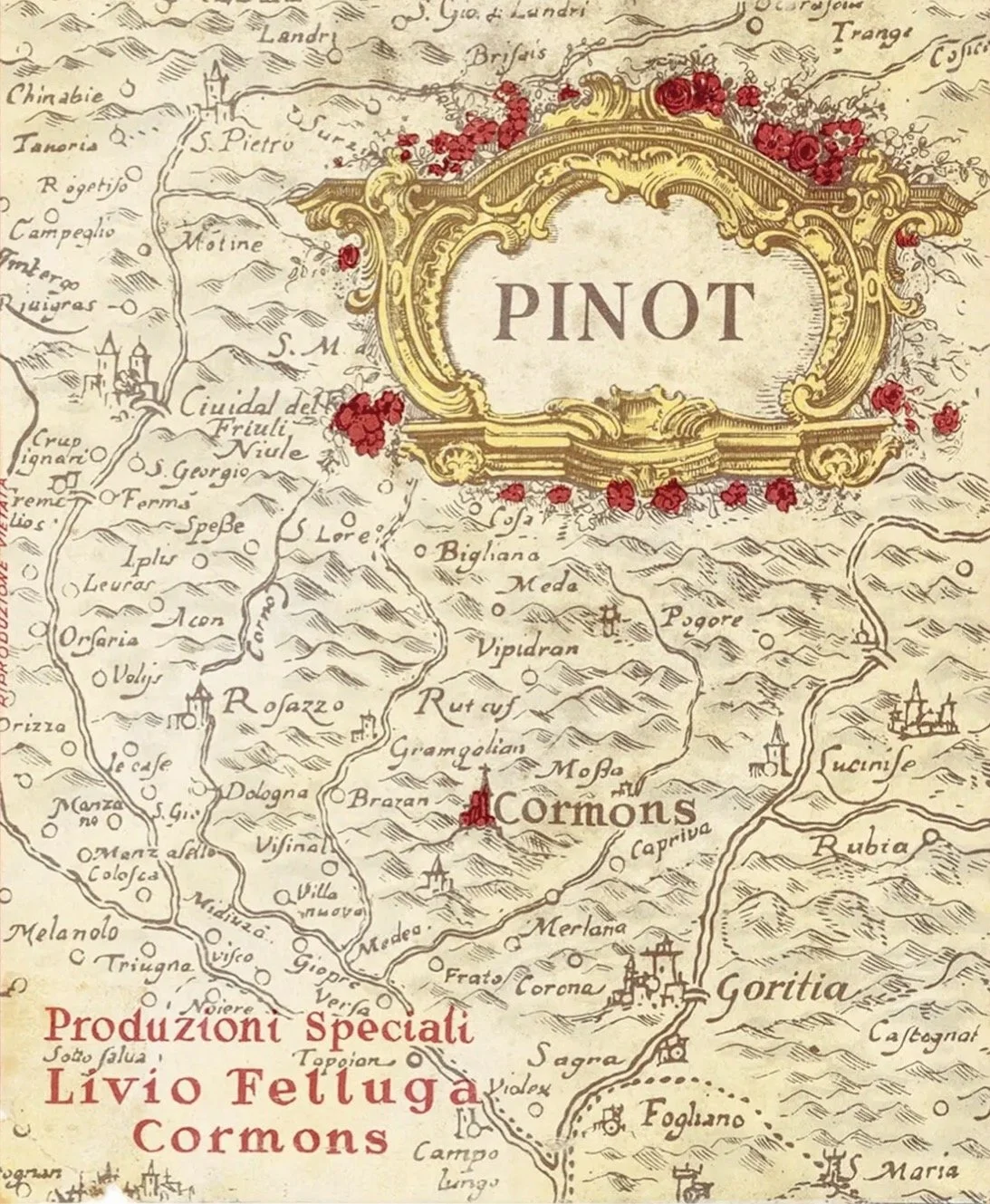
the geographical Map label. Photo courtesy of @LivioFelluga. All other photos by Lisa Denning.
Today, the Felluga estate covers 242 hectares (nearly 600 acres), with 187 hectares (462 acres) planted to vines. The property includes woods, olive groves, and other natural areas. The family grows 14 grape varieties, mostly whites, and makes 19 wines that reflect the estate's different sites.
The next generation of Fellugas continues the family business. Andrea is managing director and winemaker; Maurizio handles domestic sales; Filippo manages the vineyards; and Elda oversees tourism promotion. The third generation is already involved, with Vittoria and her cousin Laura promoting the wines worldwide.
The family’s focus on place, which began with Livio, eventually led them to Abbazia di Rosazzo. After years of negotiations with the Church, Livio Felluga was entrusted with the abbey’s agricultural operations, including the vineyards, olive groves, and ancient cellar. The first Abbazia di Rosazzo wine was released in 2009. Caring for the abbey’s winegrowing is a natural extension of the work Livio Felluga started decades earlier: restoring quality viticulture in the hills of Friuli.
From the Soils and Cellar to the Bottle
The vines surrounding Abbazia di Rosazzo grow on soils known as ponca, which formed 55 to 60 million years ago, when the area was underwater. Sediment turned to rock as the land rose, creating the hills where grapevines now thrive.
Walking through the vineyards, Filippo stopped to pick up a piece of ponca that looked like stone, but crumbled easily when he squeezed it. Ponca, Filippo explained, is great for grape growing because its unique mix of marl (chalky clay) and sandstone provides excellent drainage while retaining just enough water during dry spells.
“Here, the vines find a perfect balance, and that gives us very good grapes year after year,” Filippo explained. “It is always a matter of balance.”
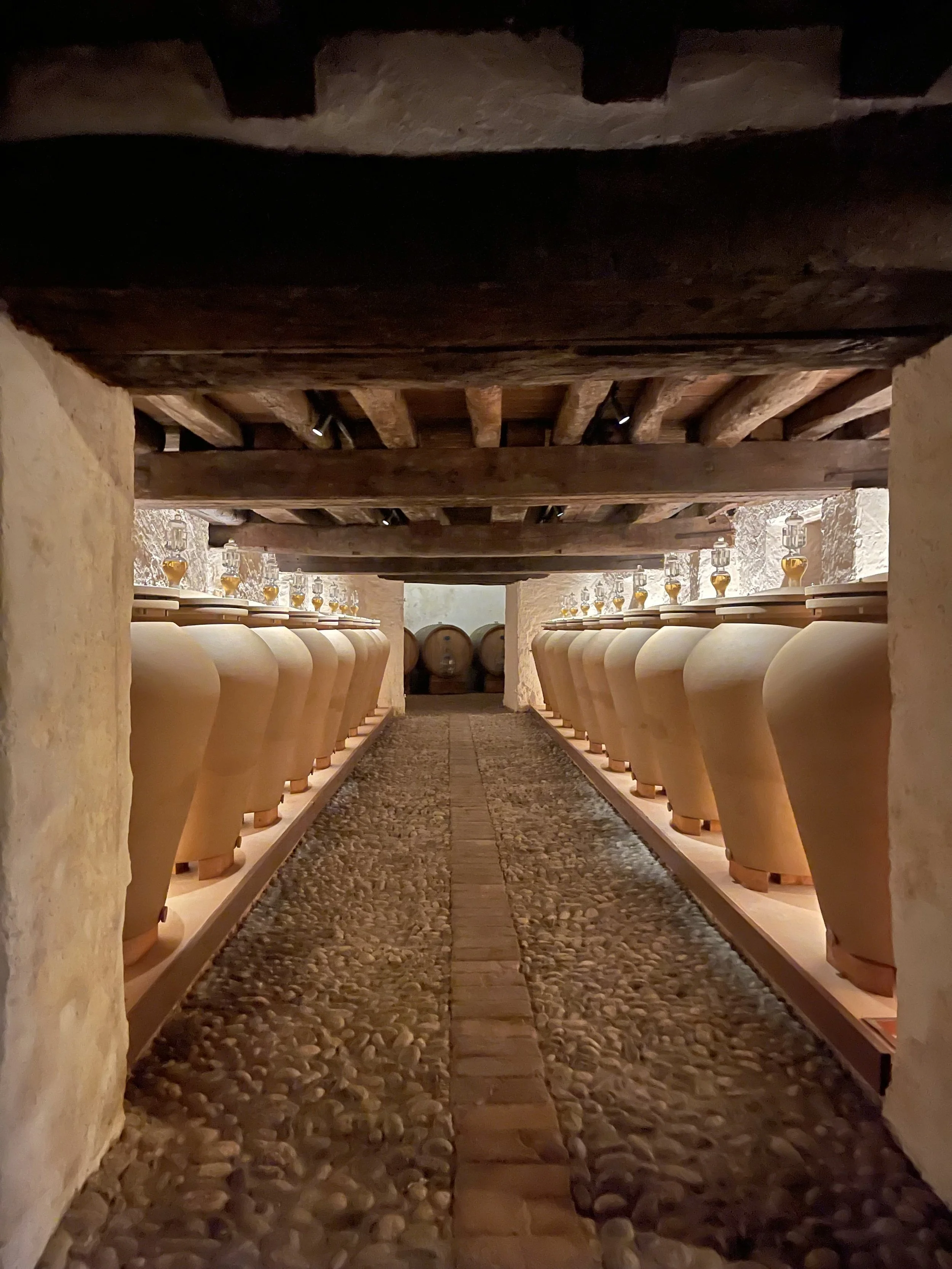
Next, we stopped at the 13th-century cellar, one of Italy's oldest, where 850 harvests have taken place. Before becoming a cellar, the space served as a prison beneath the abbot’s court. The Benedictines eventually began using it to store their most precious wines. The beautifully restored space now holds several clay amphorae, and the Livio Felluga team has begun aging Friulano wine in the 700-liter vessels to see how they evolve. The team is studying the cellar’s temperature, humidity, and atmosphere as it considers aging some of the winery’s best wines here.
“First, we need to make sure everything is perfect,” Filippo stated.
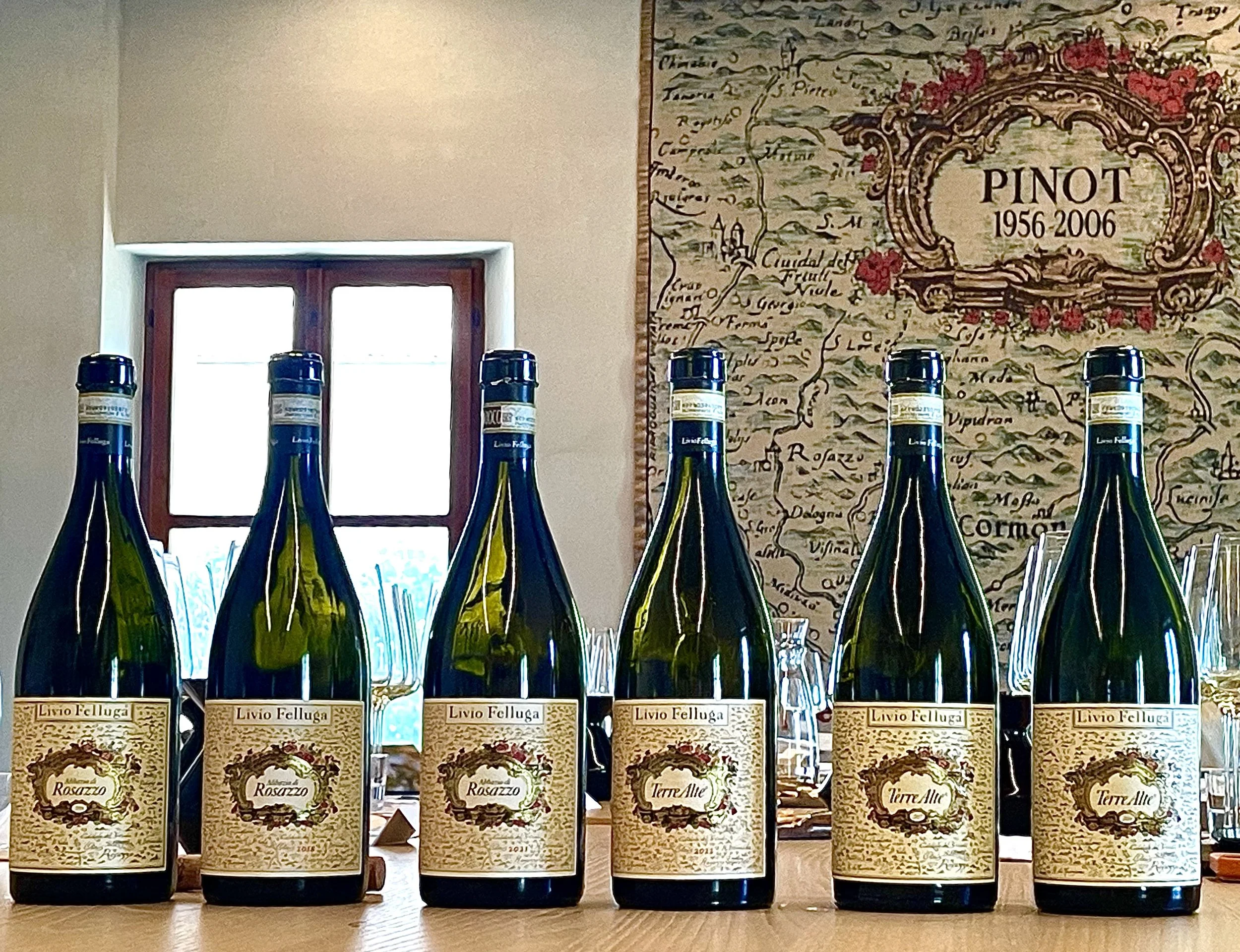
Next came a tasting of three vintages of Abbazia di Rosazzo DOCG: 2021, 2018, and 2016, alongside three of the iconic Terre Alte wines: 2022, 2017, and 2014.
The Abbazia di Rosazzo wine blends Friulano, Sauvignon Blanc, Pinot Bianco, Malvasia Istriana, and Ribolla Gialla from the historic vineyards surrounding the abbey. The wines are dry and savory with a pleasing touch of bitterness on the finish. The 2021 was fresh, mineral, and energetic, while the 2018, coming from a warmer vintage, showed more ripeness with a rounder, fuller body. The 2016 had evolved further, with deep savory notes, mature fruit, and a long, persistent finish.
Terre Alte has been one of Livio Felluga’s most important wines since its first vintage in 1981, and its grapes come from the broader Rosazzo hills (not the vines surrounding the abbey). Designed as a complex, age-worthy white from the estate’s best hilltop sites, it blends Friulano, Sauvignon Blanc and Pinot Bianco, and can be found on fine-dining wine lists around the world. The wines were lusher than those from the Abbazia di Rosazzo line, with the 2022 and 2017 dry and savory, with mineral and earthy notes, a hint of licorice, and a long finish. The 2014 had a more savory, earthy character, with sage notes, good freshness, and a lingering finish.
My biggest takeaway from the tasting was how mouthwateringly delicious these wines are, with a great balance of ripe fruit, zippy acidity, texture, minerality, and moderate alcohol. They are what I call ‘gastronomic wines’: meant to be paired with food since the bright acidity cuts right through fats and cleanses the palate between bites.
We ended our visit with lunch in the abbey’s stunning dining room, home to treasures like the recently restored 16th-century frescoes by Renaissance painter Francesco Torbido. Sitting down to a meal and more Livio Felluga wines in such a setting reminded me that getting to know the place behind a wine can be as enjoyable as tasting it.
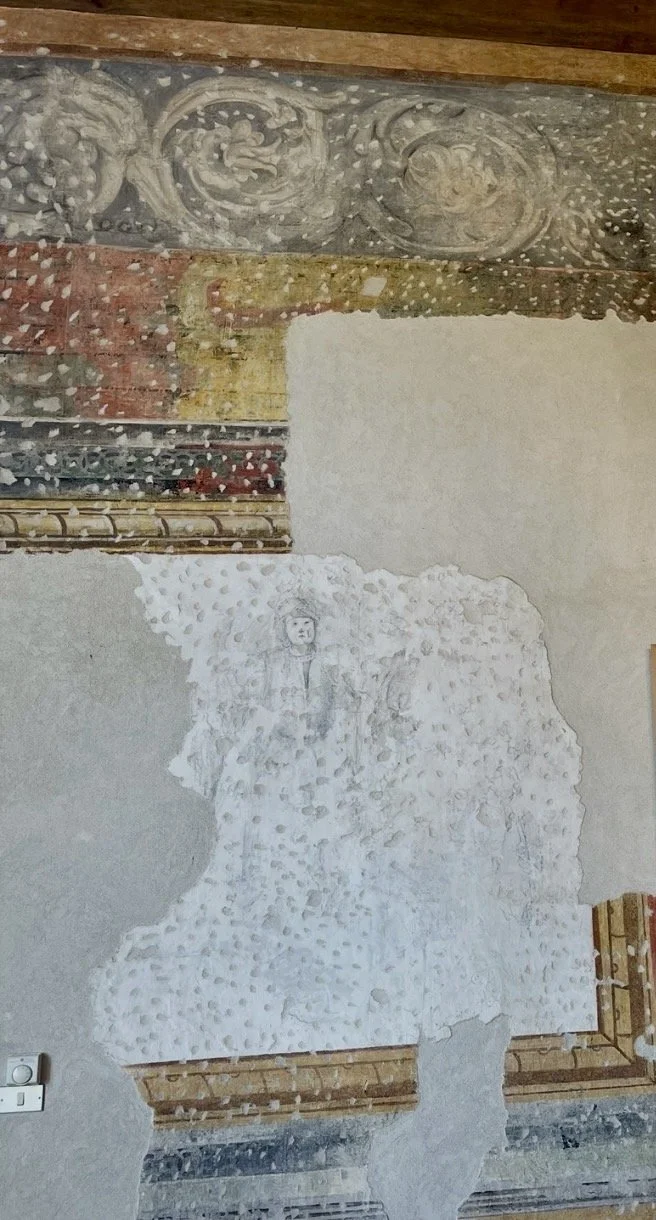
Close-up of the Dining room’s salvaged Frescoes, which date to 1535.
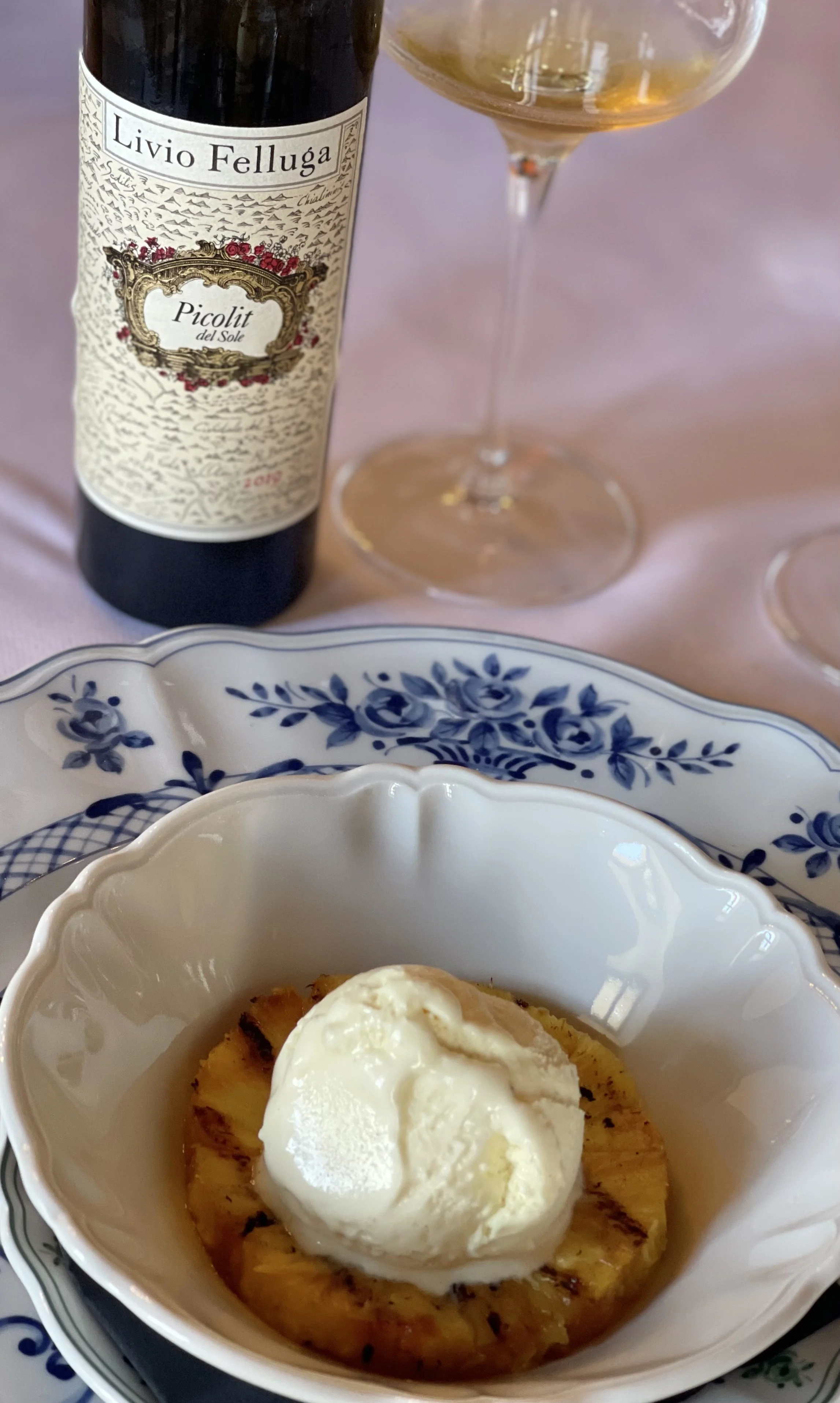
The afternoon’s final sip was a 2019 Picolit, a dessert wine that tastes like a mix of honey, caramel, and Peach with a sprinkling of white pepper. Paired with smoked pineapple topped with gelato, it was one of the best sweet wines I have ever tasted!
You, too, can visit this beautiful property. Abbazia di Rosazzo welcomes visitors to its new hospitality center for wine tastings and tours of the property, including the vineyards and historic cellars. Email esperienze@liviofelluga.it to plan your visit.
Many thanks to Filippo Felluga and Vittoria Felluga for taking the time to host our group of wine writers. Their enthusiasm for the family’s wines and vineyards came through in every tasting, meal, and tour. In a world where wine production is increasingly large-scale and can seem impersonal, it was refreshing to spend time with a family so passionate about the land, the wines, and the business.